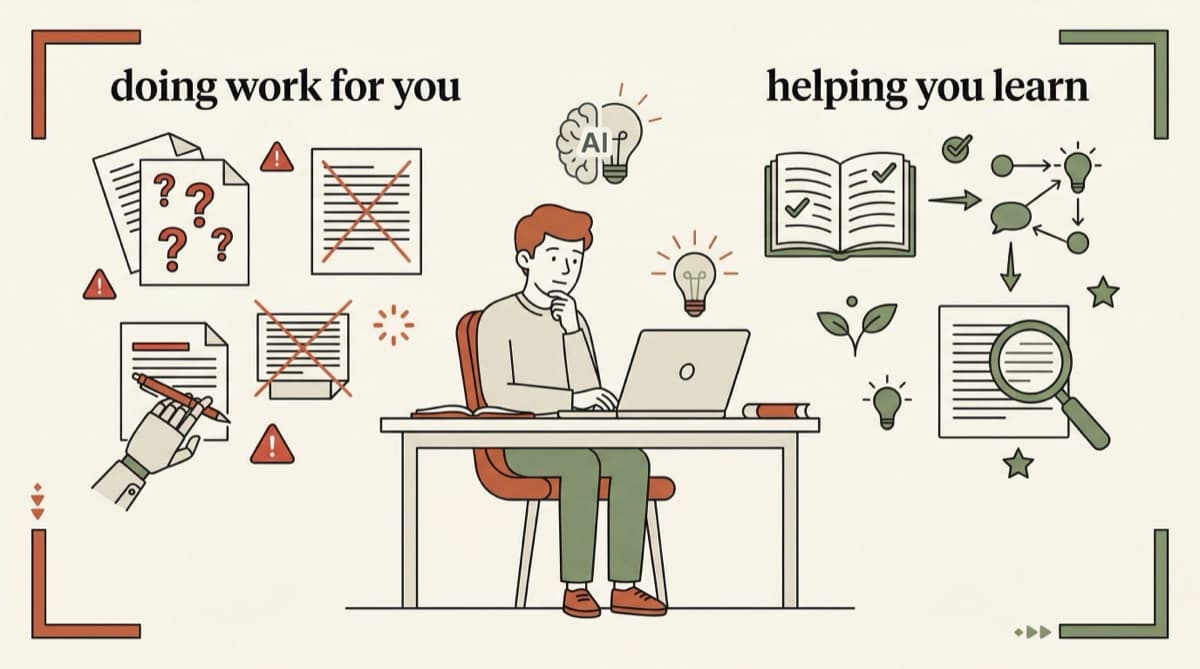
Let's be honest: most students waste hours studying ineffectively. They highlight entire textbooks, re-read notes for the tenth time, and cram the night before exams. Then they wonder why their grades don't reflect their effort.
The problem isn't how much you study. It's how you study.
Cognitive scientists have spent decades researching how humans learn and retain information. The strategies that actually work are often counterintuitive, which is why most students never discover them.
This guide covers 10 science-backed study strategies that will help you learn faster, remember longer, and perform better on exams. No fluff, no gimmicks, just proven techniques you can start using today.
1. Active Recall: Test Yourself Constantly
The Science: The "testing effect" shows that retrieving information from memory strengthens retention more than passive review. Students who test themselves retain 50% more information than those who re-read.
How to Do It:
- Close your notes and write down everything you remember
- Create flashcards and quiz yourself
- Use practice problems instead of reading solutions
- Turn headings into questions and answer them from memory
Deep Dive: Read our complete guide to Active Recall for detailed implementation strategies.
Active recall feels harder than passive review. That difficulty is exactly what makes it effective.
2. Spaced Repetition: Time Your Reviews Strategically
The Science: Hermann Ebbinghaus discovered the "forgetting curve" in 1885. Without review, we forget 80% of new information within 24 hours. Spaced repetition fights this by reviewing material at optimal intervals.
The Optimal Schedule:
- Day 1: Initial learning
- Day 2: First review
- Day 4: Second review
- Day 7: Third review
- Day 14+: Long-term maintenance
How to Do It:
- Use flashcard apps with built-in spaced repetition (Anki, Quizlet)
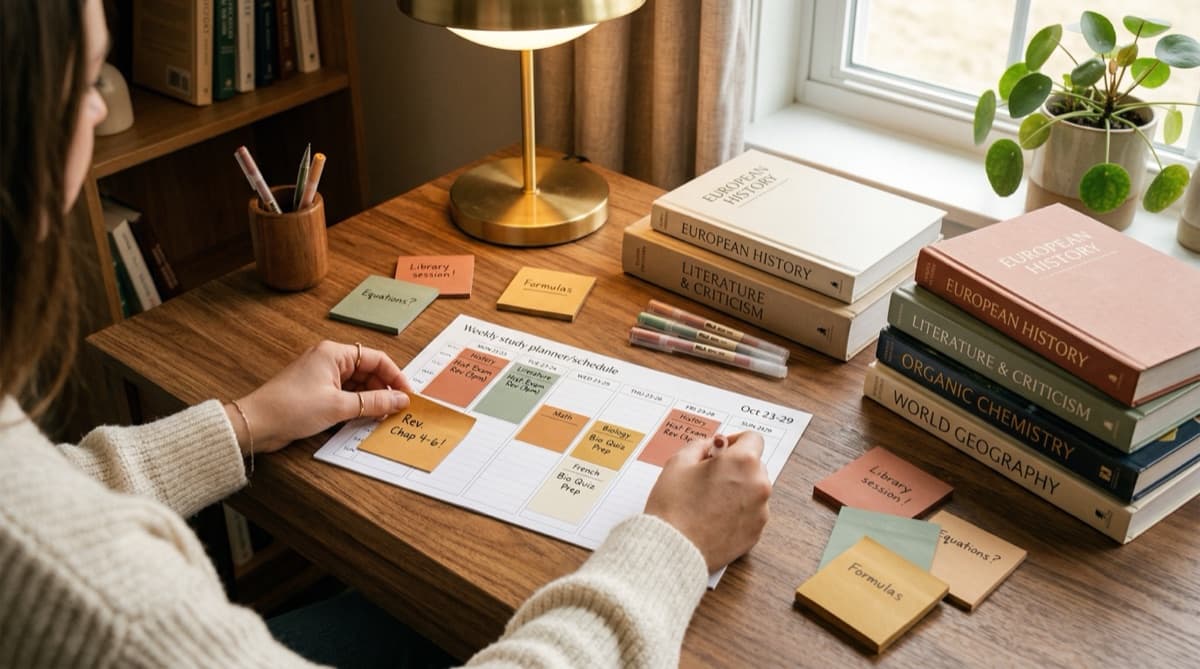
- Create a review calendar for your courses
- Don't cram everything into one session
Deep Dive: Learn the complete system in our Spaced Repetition guide, and grab our free Spaced Repetition Schedule template.
3. The Feynman Technique: Learn by Teaching
The Science: Teaching forces you to organize information coherently and exposes gaps in your understanding. Research shows that preparing to teach material improves comprehension and retention significantly.
The Four Steps:
- Choose a concept you want to understand
- Explain it as if teaching a 12-year-old
- Identify gaps where your explanation breaks down
- Review, simplify, and use analogies
How to Do It:
- Explain concepts out loud (even to yourself)
- Write explanations in simple language
- Use analogies to connect new ideas to familiar ones
- If you can't explain it simply, you don't understand it yet
Deep Dive: Master this technique with our complete Feynman Technique guide.
4. Effective Note-Taking: Capture for Future You
The Science: The generation effect shows that producing information leads to better memory than passively receiving it. Taking notes in your own words beats transcribing verbatim.
Proven Note-Taking Methods:
- Cornell Method: Divide your page into notes, cues, and summary sections (Get the template)
- Outline Method: Hierarchical organization of main points and details
- Mind Mapping: Visual representation of concept relationships
- Lecture Summary Framework: Capture the what, why, and how (Get the template)
Key Principles:
- Paraphrase, don't transcribe
- Focus on main ideas, not every detail
- Leave space for later additions
- Review and organize within 24 hours
Deep Dive: Read our Cornell Notes guide for the most research-backed method.
5. Interleaving: Mix Up Your Practice
The Science: Blocked practice (studying one topic until mastery before moving on) feels effective but produces inferior results. Interleaved practice (mixing different topics or problem types) leads to better long-term retention and transfer.
How to Do It:
- Alternate between subjects or topics in a study session
- Mix different types of problems rather than doing all of one type
- Review old material while learning new material
- Resist the urge to "master" one thing before moving on
Example: Instead of doing 20 algebra problems, then 20 geometry problems, alternate between them randomly.
This feels harder and more frustrating. That's the point.
6. Elaboration: Connect New to Known
The Science: Memory works through associations. New information that connects to existing knowledge is easier to encode and retrieve. Elaboration means expanding on new material by asking "how" and "why" questions.
How to Do It:
- Ask "How does this work?" and "Why is this true?"
- Create analogies between new concepts and things you already understand
- Generate examples from your own experience
- Explain how different concepts relate to each other
Example: Learning about osmosis? Connect it to what happens when you soak in a bathtub too long.
7. Dual Coding: Combine Words and Visuals
The Science: The brain processes verbal and visual information through different channels. Using both creates multiple memory traces, making information easier to recall.
How to Do It:
- Draw diagrams while taking notes
- Create mind maps for complex topics
- Visualize processes and sequences
- Convert text information into charts or graphs
- Use color coding meaningfully
Don't just add pictures for decoration. Make visuals that represent the actual concepts and relationships.
8. Chunking: Break Down Complex Information
The Science: Working memory can only hold about 4-7 items at once. Chunking combines individual pieces of information into meaningful units, effectively expanding your working memory capacity.
How to Do It:
- Group related information together
- Create acronyms or mnemonics
- Find patterns in seemingly random information
- Build hierarchies from details to main concepts
Example: The number 8005551234 is hard to remember. 800-555-1234 is much easier because it's chunked into meaningful units.
9. Sleep and Exercise: The Physical Foundation
The Science: Sleep isn't just rest. It's when your brain consolidates memories and clears metabolic waste. Sleep-deprived students perform significantly worse on tests, even if they studied more.
Sleep Guidelines:
- Get 7-9 hours per night (especially before exams)
- Avoid all-nighters (they hurt more than they help)
- Review material before bed to enhance consolidation
- Keep a consistent sleep schedule
Exercise Benefits:
- Increases blood flow to the brain
- Promotes neuroplasticity
- Reduces stress and anxiety
- Improves focus and attention
Even a 20-minute walk before studying can improve learning.
10. Eliminate Distractions: Protect Your Focus
The Science: It takes an average of 23 minutes to refocus after an interruption. Multitasking doesn't exist. What feels like multitasking is actually rapid task-switching, which degrades performance on all tasks.
How to Do It:
- Put your phone in another room (not just on silent)
- Use website blockers during study sessions
- Study in a dedicated location
- Tell others when you're unavailable
- Use the Pomodoro Technique: 25 minutes focused, 5 minutes break
Create a Distraction-Free Environment:
- Clear desk
- Consistent study location
- Noise-canceling headphones or white noise
- All materials ready before starting
Putting It All Together: A Complete Study System
Here's how to combine these techniques into a practical study routine:
Before Class
- Review previous notes briefly (spaced repetition)
- Preview the upcoming material
- Prepare questions
During Class
- Take notes in your own words (generation effect)
- Use the Cornell Method
- Mark confusing concepts for later review
Within 24 Hours
- Review and organize notes
- Add cue questions and summaries
- Create flashcards for key concepts
- Do your first active recall session
Weekly
- Interleave review of different subjects
- Test yourself using active recall
- Use spaced repetition for scheduled reviews
- Apply the Feynman Technique to challenging concepts
Before Exams
- Use our Exam Prep Checklist
- Focus on active recall, not re-reading
- Get proper sleep (seriously)
- Do practice problems under test conditions
Common Study Myths to Avoid
Myth: Highlighting Helps You Learn
Reality: Highlighting is passive. It creates an illusion of learning without actual encoding. Instead, write summaries in your own words.
Myth: Re-reading is Effective
Reality: Re-reading produces minimal learning gains. Active recall is far more effective.
Myth: You Have a "Learning Style"
Reality: The learning styles theory (visual, auditory, kinesthetic) has been debunked. Everyone benefits from multi-modal learning.
Myth: Cramming Works
Reality: Cramming might help you pass tomorrow's test, but the information won't stick. Spaced practice wins for long-term retention.
Myth: More Hours = Better Results
Reality: Quality beats quantity. Two hours of focused, active studying beats six hours of distracted re-reading.
Tools to Accelerate Your Learning
For Active Recall
- Anki (flashcards with spaced repetition)
- Quizlet (social flashcard platform)
- Practice problems and past exams
For Note-Taking
- NoteTube — an AI note-taking app that generates notes from any content
- Notion or Obsidian (digital organization)
- Our free study templates
For Focus
- Forest (phone blocking)
- Freedom (website blocking)
- Pomodoro timers
Start Today
You don't need to implement all 10 strategies at once. Start with the highest-impact changes:
- Replace re-reading with active recall (biggest single change)
- Space out your study sessions (fight the forgetting curve)
- Get enough sleep (non-negotiable foundation)
Then gradually add other techniques as they become habits.
The best students aren't necessarily the smartest. They're the ones who study smarter. With these evidence-based strategies, you can join them.
Want AI-powered study materials? NoteTube creates instant notes, summaries, and quiz questions from any video, PDF, or article. Use our YouTube video summarizer for lectures or the AI PDF summarizer for research papers. Stop spending hours creating study materials manually. Start learning faster today.
Create Perfect Notes in 30 Seconds
NoteTube uses AI to generate structured notes from any video, PDF, article, or text. Start free today.