If you've ever re-read your notes multiple times only to forget everything during the exam, you're not alone. Most students rely on passive study methods that feel productive but deliver poor results.
Active recall is different. It's the single most effective study technique backed by decades of cognitive science research. Students who use active recall consistently outperform their peers by 50% or more on exams.
In this guide, you'll learn exactly what active recall is, why it works, and how to implement it in your study routine starting today.
What is Active Recall?
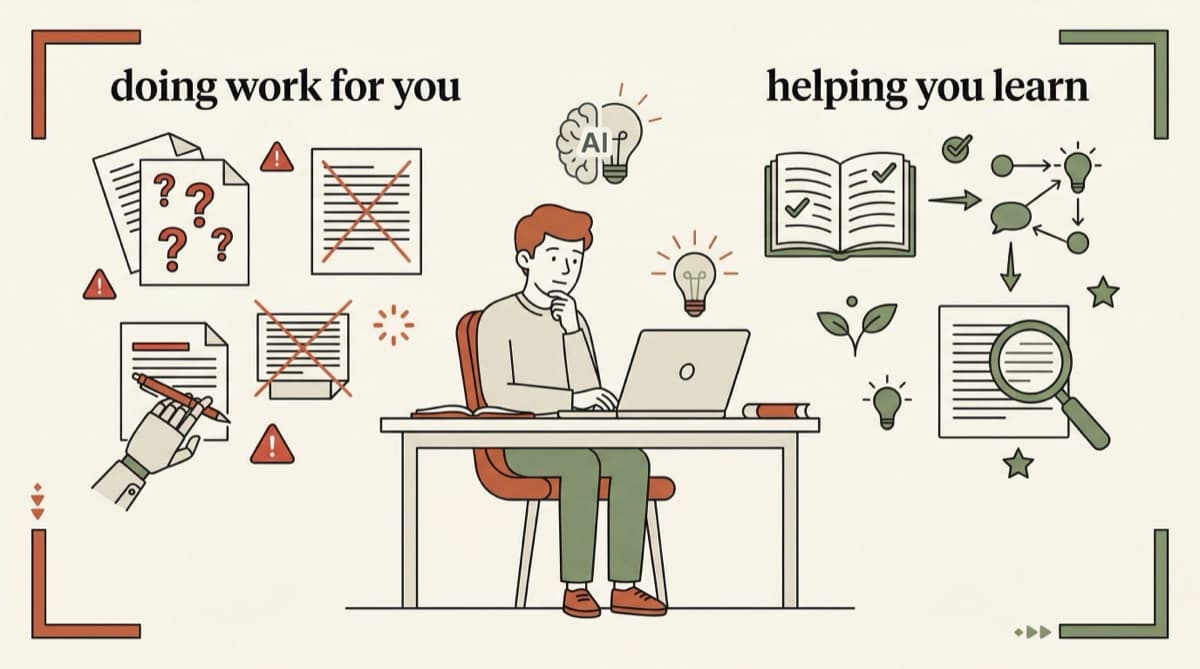
Active recall is a learning strategy that involves actively retrieving information from your memory rather than passively reviewing it. Instead of re-reading your notes or highlighting textbooks, you test yourself on the material.
The key difference:
- Passive review: Reading notes, watching videos, highlighting text
- Active recall: Closing your book and trying to remember what you just learned
Every time you successfully retrieve information from memory, you strengthen the neural pathways associated with that knowledge. This makes it easier to recall in the future, especially under pressure like during an exam.
The Science Behind Active Recall
Active recall isn't just a study hack. It's supported by over 100 years of cognitive psychology research.
The Testing Effect
In 2006, researchers Roediger and Karpicke conducted a landmark study comparing different study methods. Students who tested themselves on material retained 50% more information after one week compared to students who simply re-read the content.
This phenomenon is called the "testing effect" or "retrieval practice effect." The act of retrieving information from memory is itself a powerful learning event.
Why Retrieval Strengthens Memory
When you attempt to recall information:
- You identify gaps: You quickly discover what you actually know vs. what you think you know
- You strengthen connections: Successful retrieval reinforces neural pathways
- You improve organization: Your brain reorganizes information for easier future access
- You build retrieval routes: You create multiple pathways to access the same information
Desirable Difficulties
Psychologist Robert Bjork introduced the concept of "desirable difficulties" in learning. Strategies that make learning feel harder in the short term often lead to better long-term retention.
Active recall is harder than passive review. That difficulty is precisely what makes it effective.
How to Use Active Recall: 5 Proven Methods
1. The Blank Page Method
After reading a chapter or watching a lecture:
- Close your book or pause the video
- Take out a blank piece of paper
- Write down everything you can remember
- Check your notes and fill in the gaps
- Repeat until you can recall everything
This simple technique forces retrieval and immediately shows you what you've actually learned.
2. Flashcards Done Right
Flashcards are powerful but often misused. Here's how to maximize their effectiveness:
- Write your own cards: The process of creating cards is itself a learning activity
- One concept per card: Keep cards focused and atomic
- Use questions, not definitions: "What is active recall?" not "Active recall: a study method..."
- Include context: Add examples or applications when relevant
Combine flashcards with spaced repetition for maximum retention.
3. Practice Problems
For technical subjects like math, science, or programming:
- Study the concept or formula
- Close your materials
- Attempt practice problems without looking at solutions
- Check your work and understand any mistakes
- Repeat with similar problems
The struggle of solving problems independently is where real learning happens.
4. The Feynman Technique
Named after physicist Richard Feynman, this method combines active recall with teaching. Learn more in our complete guide to the Feynman Technique.
The basic process:
- Choose a concept you want to learn
- Explain it as if teaching a 12-year-old
- Identify gaps in your explanation
- Review and simplify
If you can't explain something simply, you don't understand it well enough.
5. Cornell Note-Taking with Self-Testing
The Cornell Method is perfectly designed for active recall:
- Take notes in the right column during class
- Create questions in the left cue column afterward
- Cover the notes and test yourself using only the questions
- Write a summary at the bottom from memory
Get our free Cornell Notes template to get started.
Active Recall Study Schedule
Here's how to incorporate active recall into your weekly routine:
During Class or While Learning
- Take concise notes (don't transcribe everything)
- Mark concepts that seem important or confusing
- Leave space for questions
Within 24 Hours
- Review your notes briefly
- Create questions or flashcards
- Do your first active recall session
Days 2-3
- Test yourself without looking at notes
- Focus extra time on concepts you struggled to recall
- Create additional practice problems if needed
Day 7 and Beyond
- Do another active recall session
- Space out future reviews using spaced repetition
- Use the Exam Prep Checklist to stay organized
Common Mistakes to Avoid
1. Giving Up Too Quickly
When you can't recall something, resist the urge to immediately check your notes. Struggle with it for at least 30 seconds. The effort of trying to remember, even unsuccessfully, strengthens memory.
2. Not Checking Your Answers
Active recall only works if you verify your responses. Incorrect recall without correction can reinforce wrong information.
3. Skipping Difficult Material
We naturally avoid topics we find challenging. But difficult material is exactly where active recall provides the most benefit.
4. Relying Only on Recognition
Being able to recognize correct answers (like in multiple choice) is different from being able to produce them. Practice free recall, not just recognition.
Combine Active Recall with Other Techniques
Active recall is powerful on its own, but combining it with complementary techniques amplifies results:
- Spaced Repetition: Space out your active recall sessions for optimal retention
- Feynman Technique: Use teaching as a form of active recall
- Interleaving: Mix different topics in your practice sessions
- Elaboration: Connect new information to what you already know
Tools to Support Active Recall
Digital Flashcard Apps
- Anki (free, powerful spaced repetition)
- Quizlet (social features, pre-made decks)
- RemNote (combines notes and flashcards)
Note-Taking with Built-in Recall
NoteTube automatically generates questions and summaries from any video, PDF, or article. As an AI note-taking app built for students, it gives you instant active recall materials without the manual work of creating flashcards.
Physical Tools
- Blank paper for the blank page method
- Index cards for manual flashcards
- Our printable study templates
Start Using Active Recall Today
Active recall might feel uncomfortable at first. You'll realize how much you thought you knew but actually didn't. That discomfort is a sign it's working.
Start with one subject. After your next study session:
- Close all materials
- Write down everything you remember
- Check what you missed
- Test yourself again tomorrow
Within a week, you'll notice the difference. Within a month, your exam performance will transform.
The best students aren't necessarily the smartest. They're the ones using evidence-based study strategies like active recall. Now you can be one of them.
Want to go deeper? Read our complete guide to The Science of Learning — covering 7 evidence-based study methods including active recall, spaced repetition, and more.
Ready to supercharge your study sessions? NoteTube creates instant notes, summaries, and quiz questions from any learning material. Try it free and see how much faster you can learn.
Create Perfect Notes in 30 Seconds
NoteTube uses AI to generate structured notes from any video, PDF, article, or text. Start free today.