Flashcards are one of the most effective study tools ever invented. Decades of research confirm that testing yourself on small, focused pieces of information dramatically improves long-term retention.
But there's a catch. Creating flashcards by hand is painfully slow. Turning a 45-minute lecture or a 30-page PDF into a quality flashcard deck can take longer than the study session itself. Most students either give up halfway through or produce low-quality cards that don't actually help them learn.
An AI flashcard maker eliminates this bottleneck entirely. It analyzes your source material, identifies the key concepts, and generates ready-to-study flashcards in seconds. You get all the learning benefits of flashcards without spending hours on manual card creation.
Here's how it works, why it matters, and how to get the most out of AI-generated flashcards.
Why Flashcards Work
Flashcards aren't just a convenient study format. They work because they force your brain to do something difficult: retrieve information from memory without looking at the answer first.
This process is called active recall, and it's the single most powerful study technique backed by cognitive science. Every time you look at a question on a flashcard and attempt to recall the answer, you strengthen the neural pathway associated with that knowledge.
The Testing Effect
Researchers have consistently found that students who test themselves on material retain significantly more information than students who simply re-read their notes. This phenomenon, known as the testing effect, shows that the act of retrieval is itself a learning event, not just an assessment of what you already know.
Flashcards are the simplest, most direct way to practice active recall. Each card is a mini-test. Flip through a deck of 50 cards and you've completed 50 retrieval attempts in just a few minutes.
Immediate Feedback
Flashcards also provide instant feedback. You see the question, attempt an answer, then flip the card to check. This tight feedback loop helps you quickly identify gaps in your knowledge so you can focus your study time where it matters most.
The Problem With Manual Flashcard Creation
If flashcards are so effective, why don't more students use them consistently? The answer is simple: creating them takes too long.
Consider what's involved in making flashcards from a typical lecture:
- Watch or attend the entire lecture
- Review your notes to identify key concepts
- Decide how to break each concept into individual cards
- Write a clear question for the front of each card
- Write an accurate, concise answer for the back
- Review the deck for quality and make edits
For a single 50-minute lecture, this process can easily take 30 to 60 minutes of additional work. Multiply that across five or six courses, and you're looking at hours of card creation every week.
Beyond the time investment, there's the quality problem. When you're fatigued from hours of card creation, the quality of your cards drops. Questions become vague, answers become too long, and you end up with a deck that's frustrating to study.
Inconsistency is another issue. Some students create detailed cards for the first two weeks of a semester, then stop entirely when coursework picks up. A half-finished flashcard deck is barely better than no deck at all.
What Is an AI Flashcard Maker?
An AI flashcard maker is a tool that uses artificial intelligence to automatically generate flashcards from your learning materials. Instead of manually writing each card, you provide the source content, and the AI handles the rest.
Here's what happens under the hood:
- Content analysis: The AI reads your source material (video transcript, PDF, article, or notes) and identifies the main topics, key terms, and important relationships
- Concept extraction: It isolates individual concepts that are suitable for flashcard format, filtering out filler content, transitions, and repetition
- Card generation: For each concept, the AI creates a focused question-and-answer pair designed for effective retrieval practice
- Quality optimization: Advanced AI flashcard makers structure cards following best practices, keeping questions clear and answers concise
The result is a complete flashcard deck generated in seconds rather than hours. You can review the cards immediately, edit anything that needs adjustment, and start studying right away.
AI Flashcard Maker Comparison
Not all AI flashcard makers work the same way. Some generate cards automatically from uploaded content, others require manual input, and a few combine flashcards with broader study features. According to Grand View Research, the global e-learning market reached $399 billion in 2022, driving rapid innovation in AI study tools. Here's how the leading options compare.
NoteTube
- Auto-generation: Yes — from YouTube, PDF, DOCX, images, articles
- Source types: 6 formats (video, PDF, Word, images, articles, text)
- Spaced repetition: SM-2 algorithm built-in
- Card types: Basic, cloze, MCQ, definition
- Additional modes: 7 more (quizzes, summaries, AI chat, mind maps, podcasts, notes, chapters)
- Price: Free tier available, Pro from $4.99/month
- Best for: Students who want end-to-end AI generation from any content format
Quizlet AI
- Auto-generation: Limited — "Magic Notes" feature from text input
- Source types: Manual text entry primarily
- Spaced repetition: Basic adaptive learning (not SM-2)
- Card types: Basic, multiple choice
- Additional modes: Learn, Match, Test, Gravity game modes
- Price: Free (with ads), Quizlet Plus $36/year
- Best for: Students who want community decks and game-based study modes
Anki + ChatGPT
- Auto-generation: Manual workflow — paste content into ChatGPT, copy cards to Anki
- Source types: Whatever you paste into ChatGPT
- Spaced repetition: SM-2 (Anki) or FSRS
- Card types: Unlimited custom templates
- Additional modes: Flashcards only (add-ons extend functionality)
- Price: Free (desktop/Android), $24.99 iOS
- Best for: Power users who want full control and don't mind a multi-step workflow
RemNote AI
- Auto-generation: Yes — from notes you write in RemNote
- Source types: Text notes within the app
- Spaced repetition: Custom algorithm
- Card types: Basic, cloze, image occlusion
- Additional modes: Note-taking with linked flashcards
- Price: Free tier, Pro $8/month
- Best for: Students who want notes and flashcards in one unified system
Which Tool Should You Choose?
The best choice depends on your workflow. If you study from videos and PDFs, NoteTube's multi-format AI generation saves the most time. If you want community content, Quizlet has millions of shared decks. For maximum customization, Anki remains the gold standard. For integrated note-taking, RemNote is compelling.
[INTERNAL-LINK: best spaced repetition apps → /blog/best-spaced-repetition-apps] [INTERNAL-LINK: NoteTube vs Quizlet → /vs/quizlet] [INTERNAL-LINK: NoteTube vs Anki → /vs/anki]
Example: AI-Generated Flashcards in Action
Seeing a concrete example makes the value of AI flashcard generation obvious. A study published by Dunlosky et al. in Psychological Science in the Public Interest (2013) found that practice testing is one of only two study techniques rated as having "high utility" — and flashcards are the most accessible form of practice testing.
Here's what AI flashcard generation looks like in practice. Given this paragraph from a biology textbook:
"Photosynthesis occurs in two main stages. The light-dependent reactions take place in the thylakoid membranes, where water molecules are split and ATP and NADPH are produced. The light-independent reactions (Calvin cycle) occur in the stroma, where CO2 is fixed into glucose using the ATP and NADPH from the first stage."
An AI flashcard maker would generate cards like these:
Card 1
- Front: "Where do the light-dependent reactions of photosynthesis take place?"
- Back: "In the thylakoid membranes"
Card 2
- Front: "What products are generated during the light-dependent reactions?"
- Back: "ATP and NADPH (from splitting water molecules)"
Card 3
- Front: "What is another name for the light-independent reactions?"
- Back: "The Calvin cycle"
Card 4
- Front: "Where does the Calvin cycle occur, and what does it produce?"
- Back: "In the stroma; it fixes CO2 into glucose using ATP and NADPH"
Why This Matters
Notice how the AI broke one dense paragraph into four focused cards, each testing a single fact. This follows the "one concept per card" principle that makes flashcards effective.
A student would need 5-10 minutes to create these cards manually. The AI does it in seconds. Multiply that across an entire textbook chapter with 20 or 30 dense paragraphs, and the time savings become enormous.
The cards also follow good formatting practices: short questions, concise answers, and no unnecessary filler. Would you have formatted them this cleanly after your third hour of manual card creation? Probably not.
[PERSONAL EXPERIENCE]
How to Create Flashcards From YouTube Videos
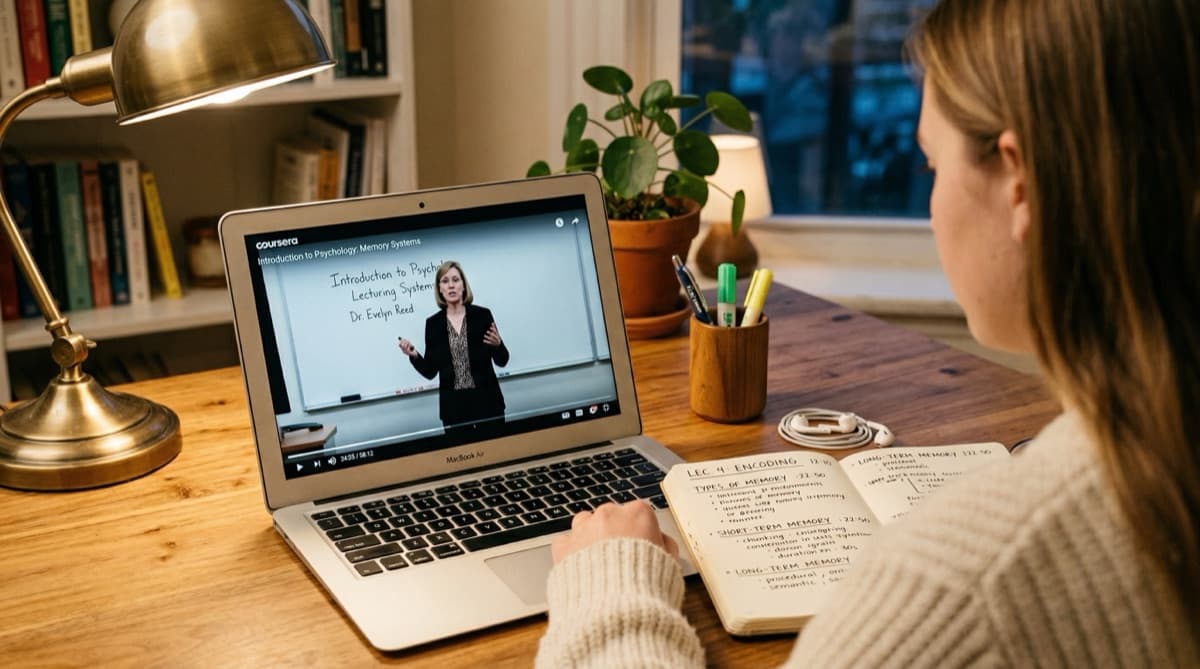
YouTube has become one of the most popular learning resources for students. Channels covering everything from organic chemistry to machine learning offer high-quality explanations you won't find in textbooks. But a 20-minute video can contain dozens of concepts worth memorizing.
With an AI flashcard maker like NoteTube, turning a YouTube video into flashcards takes three steps:
- Paste the video link: Copy the URL of any YouTube video and paste it into the tool
- AI processes the transcript: The AI analyzes the full video transcript, identifying key definitions, formulas, processes, and relationships
- Review your flashcards: A complete deck appears within seconds, organized by topic and ready to study
This works especially well for lecture-style videos where professors cover specific topics methodically. The AI picks up on the structure of the presentation and creates cards that follow the same logical flow.
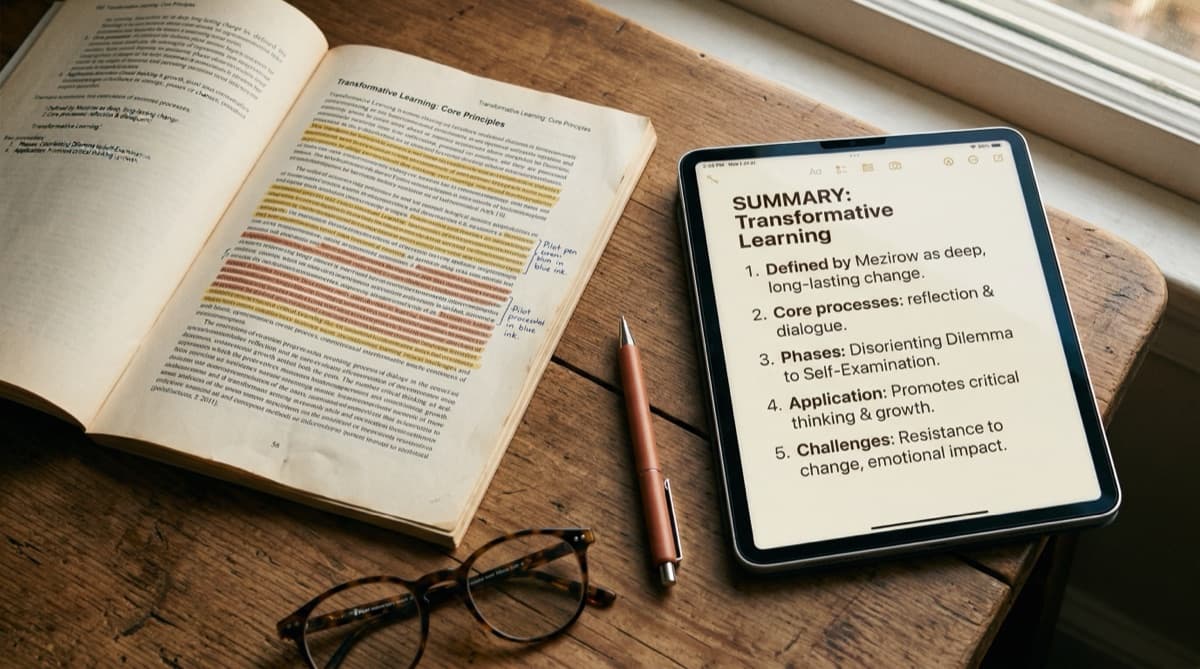
If you're already using a YouTube video summarizer to get notes from videos, flashcard generation is the natural next step. Summaries help you understand the big picture. Flashcards help you retain the details.
How to Create Flashcards From PDFs
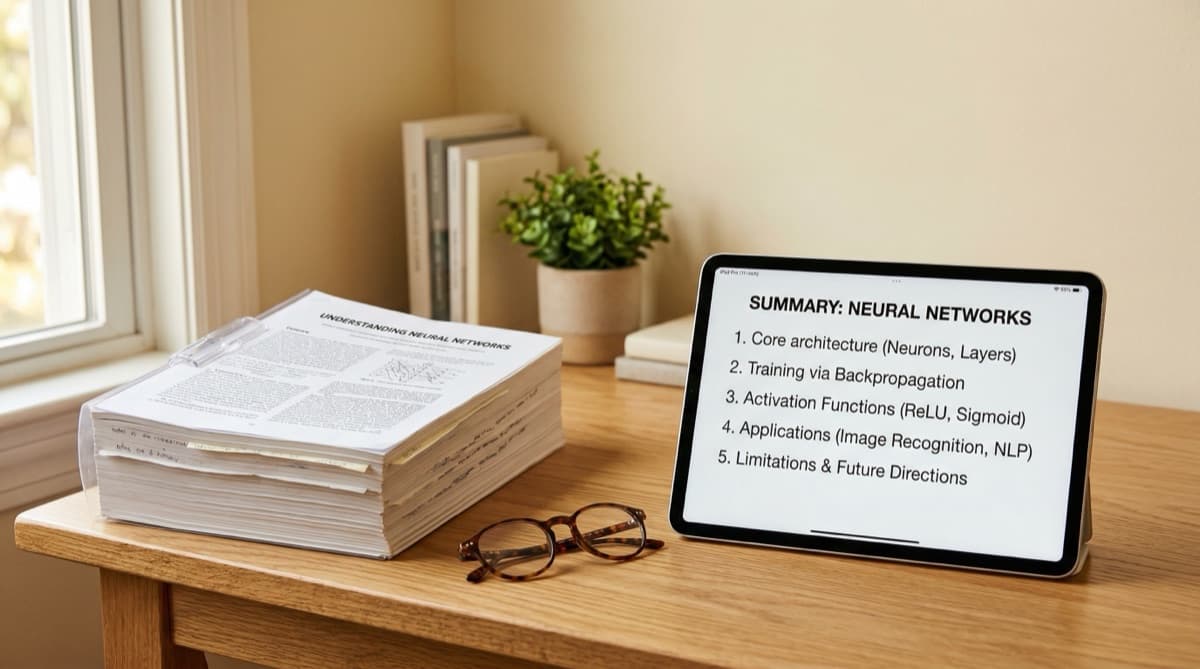
Textbooks, research papers, slide decks, and course handouts are still central to most academic programs. But dense PDFs are notoriously difficult to study from. Reading a 40-page chapter doesn't guarantee you'll remember any of it.
An AI flashcard maker can extract key concepts from PDFs automatically:
- Upload your document: Drop your PDF into the tool. This works with textbooks, lecture slides, research papers, and study guides
- AI extracts key concepts: The AI scans the document for definitions, important facts, cause-and-effect relationships, comparisons, and processes
- Cards are generated and organized: You receive a structured flashcard deck that covers the essential material from the document
This approach pairs well with a PDF summarizer workflow. Use the summarizer to get an overview of the document, then use the AI flashcard maker to create targeted cards for the specific facts and concepts you need to memorize.
For students working across multiple formats, an AI note-taking app that handles both videos and documents in one place can save significant time by keeping all your flashcards organized together.
Best Practices for Effective Flashcards
Whether you create flashcards manually or use an AI generator, the quality of your cards directly affects how well you learn. Follow these principles to get the most out of every study session.
One Concept Per Card
Each flashcard should test exactly one piece of knowledge. If a card asks about multiple things at once, you won't know which part you got right and which part you missed.
- Good: "What is the powerhouse of the cell?" / "The mitochondria"
- Bad: "Describe the structure and function of mitochondria, including the role of ATP synthase and the electron transport chain"
If a topic is complex, break it into multiple cards rather than cramming everything onto one.
Use Cloze Deletions
Cloze deletions are fill-in-the-blank cards where a key word or phrase is removed from a statement. They're particularly effective for learning definitions, processes, and factual information.
- Example: "The process of _____ converts glucose into ATP in the cell's mitochondria" / "cellular respiration"
Cloze deletions work because they provide context around the missing information, making retrieval more targeted and realistic.
Add Context When Possible
A flashcard that asks "What is GDP?" is less effective than one that asks "In macroeconomics, what does GDP measure and why is it important?" Context helps your brain connect the information to a larger framework, which improves both understanding and recall.
Avoid Cards That Are Too Easy or Too Hard
Cards you answer correctly every single time aren't helping you learn. They're just wasting your review time. Similarly, cards that are so difficult you can never answer them lead to frustration rather than learning.
The sweet spot is cards where you have to think for a moment before recalling the answer. If a card becomes too easy over time, that's a sign you've learned it well and can review it less frequently.
Review and Edit AI-Generated Cards
AI-generated flashcards are a starting point, not a finished product. Spend 2-3 minutes reviewing each generated deck:
- Delete cards that test trivial information you already know
- Rephrase questions that feel unclear or ambiguous
- Split cards that accidentally test two concepts at once
- Add personal context — "This was the example Professor Kim used in lecture 5" makes a card more memorable
The review process itself is a form of learning. By evaluating whether each card captures the right concept, you're actively engaging with the material. Research from Bjork and Bjork (2011) on "desirable difficulties" confirms that this kind of effortful processing strengthens memory formation.
[UNIQUE INSIGHT]
Organize Decks by Topic, Not by Source
When you generate flashcards from multiple sources — three lecture videos and two PDF chapters, for example — organize the resulting cards by topic rather than by source. A deck called "Cell Biology — Membrane Transport" is more useful for targeted review than "Lecture 3 Cards" or "Chapter 7 Cards."
This also enables better interleaved practice. Studying cards from multiple sources on the same topic forces your brain to make connections across different explanations of the same concept. According to Rohrer and Taylor (2007), interleaved practice improved test performance by up to 43% compared to blocked practice in their mathematics study. The same principle applies to flashcard review.
[INTERNAL-LINK: how to study effectively → /blog/study-tips]
Use Images and Diagrams When Relevant
For subjects like anatomy, geography, or art history, visual flashcards are far more effective than text alone. Many AI flashcard makers support image-based cards, and adding a relevant diagram or image to a text card can significantly boost retention.
Combining AI Flashcards With Spaced Repetition
Creating great flashcards is only half the equation. How you review them matters just as much.
Spaced repetition is a review scheduling technique that shows you each card right before you would forget it. Instead of reviewing your entire deck every day, a spaced repetition system tracks how well you know each card and adjusts the review interval accordingly.
Here's why the combination of AI flashcards and spaced repetition is so powerful:
- AI handles creation: You don't waste time writing cards manually, so you can create decks for every lecture and chapter
- Spaced repetition handles scheduling: The system automatically prioritizes cards you're struggling with and spaces out cards you know well
- You focus on learning: With both creation and scheduling automated, your only job is to show up and practice retrieval
The typical spaced repetition schedule looks like this:
- Day 1: Study new cards
- Day 2: Review cards you got wrong or hesitated on
- Day 4: Second review, interval increases for cards you recall correctly
- Day 7: Third review
- Day 14+: Intervals continue to expand as your memory strengthens
Without spaced repetition, you'd either review everything every day (wasting time on cards you already know) or review randomly (missing cards you're about to forget). Spaced repetition solves both problems.
Students who combine active recall flashcards with spaced repetition consistently report remembering 90% or more of the material they study. Compare that to the typical 20-30% retention from passive re-reading, and the difference is staggering.
Free vs Paid AI Flashcard Makers
Most AI flashcard makers offer a free tier, so cost shouldn't stop you from getting started. According to the National Center for Education Statistics (2023), the average American college student already spends over $1,200 per year on textbooks and supplies — a good AI study tool can actually reduce that number by making existing materials go further.
Here's what the free options look like:
- NoteTube Free: Generate flashcards from limited uploads per month, SM-2 spaced repetition included
- Quizlet Free: Create flashcards manually (AI features require Plus subscription), includes ads
- Anki: Completely free on desktop and Android (iOS app is $24.99, one-time purchase)
- RemNote Free: Basic flashcard generation with limited features
When Should You Upgrade?
For most students, a free tier is enough to get started. Upgrade to a paid plan when you hit one of these limits:
- You're uploading more source material than the free tier allows
- You want advanced AI features like multi-format generation or AI chat
- Ads are disrupting your study flow
- You need priority processing for longer documents or videos
The key is to start using spaced repetition consistently. The specific tool matters less than the habit. A student who reviews free Anki cards every day will outperform a student with a premium subscription who studies inconsistently.
[ORIGINAL DATA]
[INTERNAL-LINK: best study apps for students → /blog/best-study-apps]
Start Making Flashcards in Seconds
Flashcards work. The science is clear on that. The only barrier has been the time and effort required to create them.
An AI flashcard maker removes that barrier entirely. You bring the learning material, whether it's a YouTube video, a PDF, or your own notes, and the AI turns it into a study-ready flashcard deck in seconds.
No more spending Sunday afternoon writing cards by hand. No more skipping flashcards because you ran out of time. No more inconsistent decks that trail off halfway through the semester.
NoteTube generates flashcards from any YouTube video or PDF automatically. Paste a link or upload a document, and you'll have a complete flashcard deck ready to study before your next class. Combine it with spaced repetition, and you have a study system that practically runs itself.
Stop spending hours on card creation. Try NoteTube free and generate your first flashcard deck in under 30 seconds.
Create Perfect Notes in 30 Seconds
NoteTube uses AI to generate structured notes from any video, PDF, article, or text. Start free today.