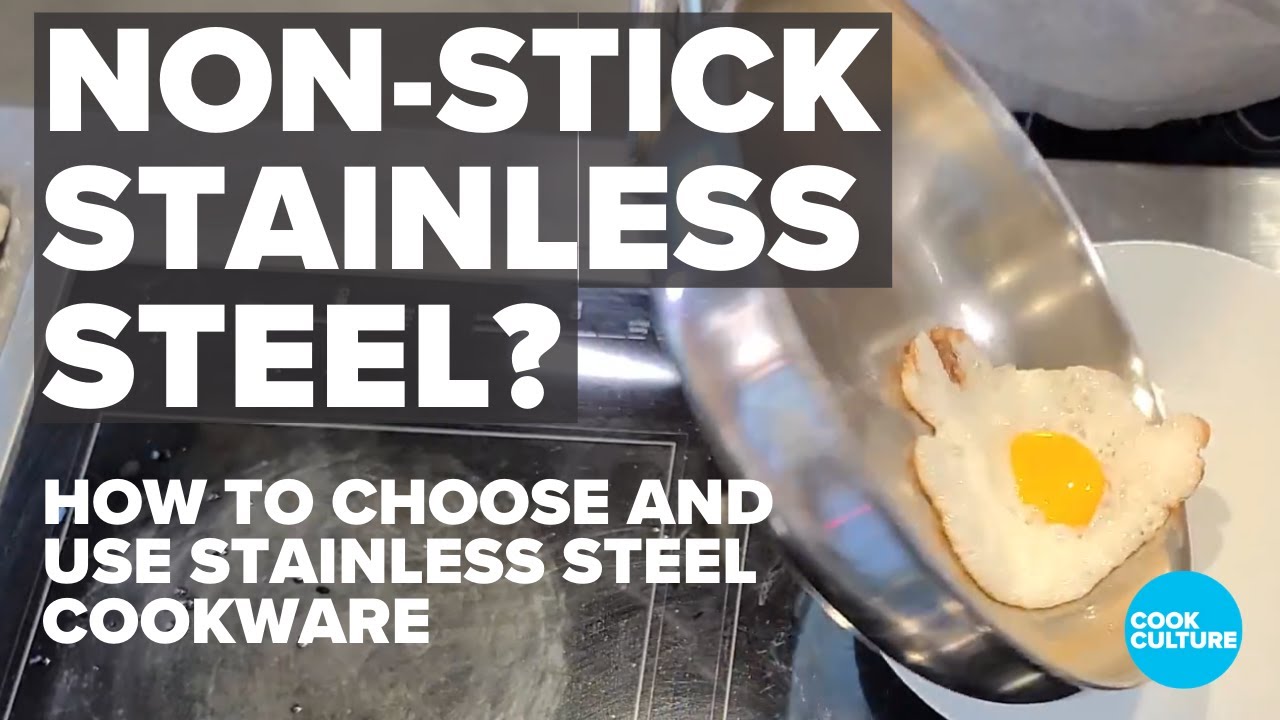
How to choose and use the right Stainless Steel Cookware for you.
Cook Culture
Overview
This video explains how to choose and use high-quality stainless steel cookware. It emphasizes that while stainless steel is versatile, understanding its construction and how it interacts with heat is crucial for optimal performance. The video differentiates between clad and encapsulated cookware, highlighting clad as dominant in the high-end market. Key factors for quality include weight, which indicates better heat distribution and retention. The presenter demonstrates how superior cookware offers a wider 'sweet spot' for cooking, making it more forgiving and consistent, unlike lighter, cheaper pans that require more precise heat management. The video concludes with practical demonstrations and recommendations for top-tier brands.
Save this permanently with flashcards, quizzes, and AI chat
Chapters
- Stainless steel cookware is a versatile staple, but quality varies significantly.
- The cooking surface is stainless steel, but the core (for heat conductivity) can be aluminum, copper, or alloys.
- Clad cookware features layers of metal (like a sandwich) bonded together, common in high-end options.
- Encapsulated cookware has a disc adhered to the bottom, also a valid construction method.
- Weight is a primary indicator of quality in stainless steel cookware.
- Heavier pans heat up faster, retain heat better, and disperse it more evenly.
- While technique can compensate for lighter pans, higher quality cookware offers a larger 'sweet spot' for optimal cooking.
- Overheating can lead to sticking, browning, and burnt-on residue, especially with lower-quality pans.
- The sheer variety of stainless steel cookware can be overwhelming, with significant price differences.
- Higher prices often reflect superior construction, materials, and the resulting wider cooking 'sweet spot'.
- Trusted retailers and brands (like All-Clad and Demeyere) can help guide purchasing decisions.
- Investing in high-quality cookware provides a luxury of consistency and forgiveness in daily cooking.
- The 'mercury effect' (water beading and bouncing) is a visual cue for proper pan preheating.
- Using room temperature ingredients (like eggs) is crucial to avoid drastic temperature changes that cause sticking.
- Demonstrations show how higher-quality pans (e.g., 5-ply and 7-ply) handle heat more predictably than lighter pans.
- Even with slight overheating, superior pans remain more forgiving, allowing for successful cooking of eggs with minimal sticking and easy cleanup.
- Stainless steel is the most versatile cookware type available.
- Mastering its use involves understanding your heat source (hob), cookware thickness, and using techniques like the water test to gauge readiness.
- Experimenting with different burners on your stove is important, as they have varying power levels.
- High-quality stainless steel, particularly brands like Demeyere, offers superior performance, comfort (handles), and aesthetics (finish, non-rivets).
Key takeaways
- Weight is a reliable indicator of stainless steel cookware quality, signifying better heat performance.
- High-quality stainless steel cookware offers a wider 'sweet spot' for cooking, making it more forgiving and consistent.
- Proper preheating and using room-temperature ingredients are essential for preventing sticking in stainless steel pans.
- The 'mercury effect' is a useful visual test to determine if your pan is adequately preheated.
- Investing in premium brands like Demeyere or All-Clad provides a more enjoyable and less stressful cooking experience.
- Understanding your specific stovetop's heat output is as important as understanding your cookware.
- Stainless steel is exceptionally versatile, capable of achieving browning, caramelization, and near non-stick results when used correctly.
Key terms
Test your understanding
- How does the weight of stainless steel cookware relate to its cooking performance?
- What is the 'sweet spot' in cooking, and how does cookware quality affect its size?
- Explain the 'mercury effect' and how it helps in using stainless steel cookware.
- Why is it important to use room-temperature ingredients when cooking with stainless steel?
- What are the key differences between clad and encapsulated stainless steel cookware construction?