10:24
How the U.N. Voted to Change the Map
The World from A to Z with Carl Azuz
Overview
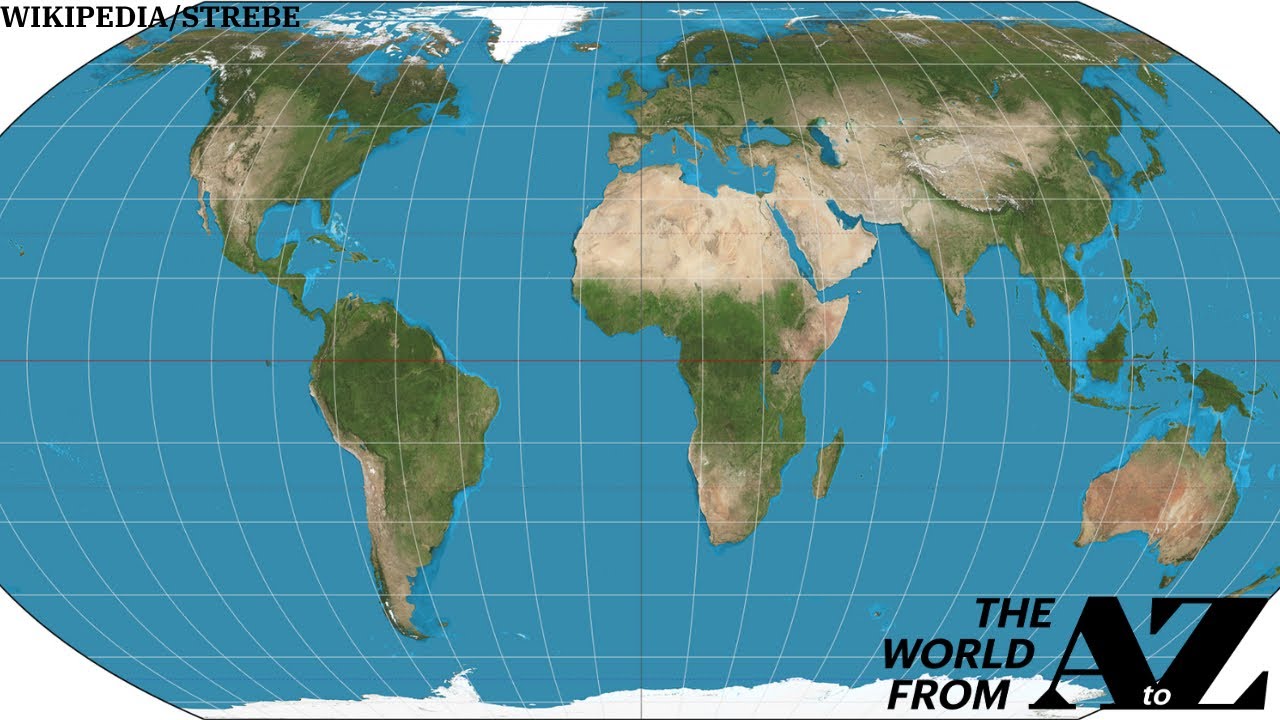
This video discusses the United Nations' recent adoption of the Equal Earth map, a projection that more accurately represents the relative sizes of continents and countries compared to the traditional Mercator projection. It explores the reasons behind this change, the implications for global perception, and the political considerations involved. The video also touches upon the history and cultural significance of blue jeans, highlighting their evolution from workwear to a fashion staple, and briefly mentions other news items like a puppetry festival and a kitten using a DIY mobility device.
How was this?
Save this permanently with flashcards, quizzes, and AI chat
Chapters
- The UN has voted to adopt the Equal Earth map, a 2018 projection designed for more accurate representation of landmass sizes.
- This new map contrasts with the widely used Mercator projection, which distorts the perceived size of countries (e.g., making Greenland appear much larger than Africa).
- The adoption was sponsored by an African nation, aiming to improve the global perception of the African continent.
- While the vote was nearly unanimous, the US voted against it, citing political concerns about its potential use for distracting agendas.
- The UN's adoption does not ban the Mercator projection or mandate the use of the Equal Earth map, acknowledging that no flat map can perfectly represent a spherical Earth.
Understanding the shift to the Equal Earth map is crucial because it influences how we visually perceive global geography, potentially impacting geopolitical understanding and awareness of continental proportions.
The Equal Earth map shows Africa as significantly larger relative to Greenland than the traditional Mercator map, correcting the visual distortion where Greenland appears almost as large as Africa on older maps.
- Blue jeans, originating from Levi Strauss and Jacob Davis's patent in 1873, were initially designed as durable work pants for laborers like miners and sailors.
- The fabric, denim, is reinforced with a diagonal weave and metal rivets for added strength.
- Jeans gained wider popularity beyond workwear in the 1930s through marketing that encouraged casual wear, further boosted by Hollywood endorsements.
- By the 1970s, high-fashion brands like Calvin Klein elevated jeans to a fashion statement, expanding their market appeal.
- The introduction of 'Casual Fridays' in the 1990s allowed jeans into workplaces, and their acceptance in professional settings has continued to grow.
The journey of blue jeans illustrates how a practical garment can transform into a global cultural icon through marketing, changing social norms, and enduring design.
Levi Strauss and Jacob Davis patented their riveted denim pants in 1873, creating a durable garment that became essential for laborers and eventually a fashion staple.
- A large-scale puppetry festival in Craiova, Romania, features giant marionettes and attracts international artists.
- A shelter kitten named Gelato received a custom-made mobility device constructed from household items and later a 3D-printed one to help it walk.
- Autonomous delivery robots in Chicago became tangled and confused, requiring rerouting and safeguards to prevent future incidents.
These brief segments highlight creativity in art, ingenuity in animal care, and the evolving challenges of new technologies.
A kitten named Gelato, unable to walk, was fitted with a temporary mobility aid made from rulers and toy car parts by a vet tech.
Key takeaways
- The Mercator projection, while familiar, significantly distorts the perceived size of landmasses, a visual bias addressed by newer maps like Equal Earth.
- Geographical representations can have political implications, influencing how nations and continents are perceived globally.
- The UN's adoption of the Equal Earth map is a symbolic endorsement rather than a mandate, reflecting the complexity of global consensus.
- The evolution of blue jeans demonstrates how functional clothing can transcend its original purpose to become a significant cultural and fashion item.
- Technological advancements, from durable workwear to autonomous robots, continuously reshape daily life and present new challenges.
- Human ingenuity and compassion are evident in creative solutions for both artistic expression and aiding those in need, like the puppetry festival and the kitten's mobility device.
Key terms
Mercator projectionEqual Earth mapCartographyLandmass distortionUnited NationsBlue jeansDenimLevi StraussJacob DavisAutonomous robots
Test your understanding
- What is the primary difference between the Mercator projection and the Equal Earth map in terms of visual representation?
- Why did the United States vote against the UN's adoption of the Equal Earth map?
- How did blue jeans transition from purely functional workwear to a mainstream fashion item?
- What does the UN's vote on the Equal Earth map signify, and what are its limitations?
- How does the story of the kitten Gelato illustrate problem-solving and creativity?