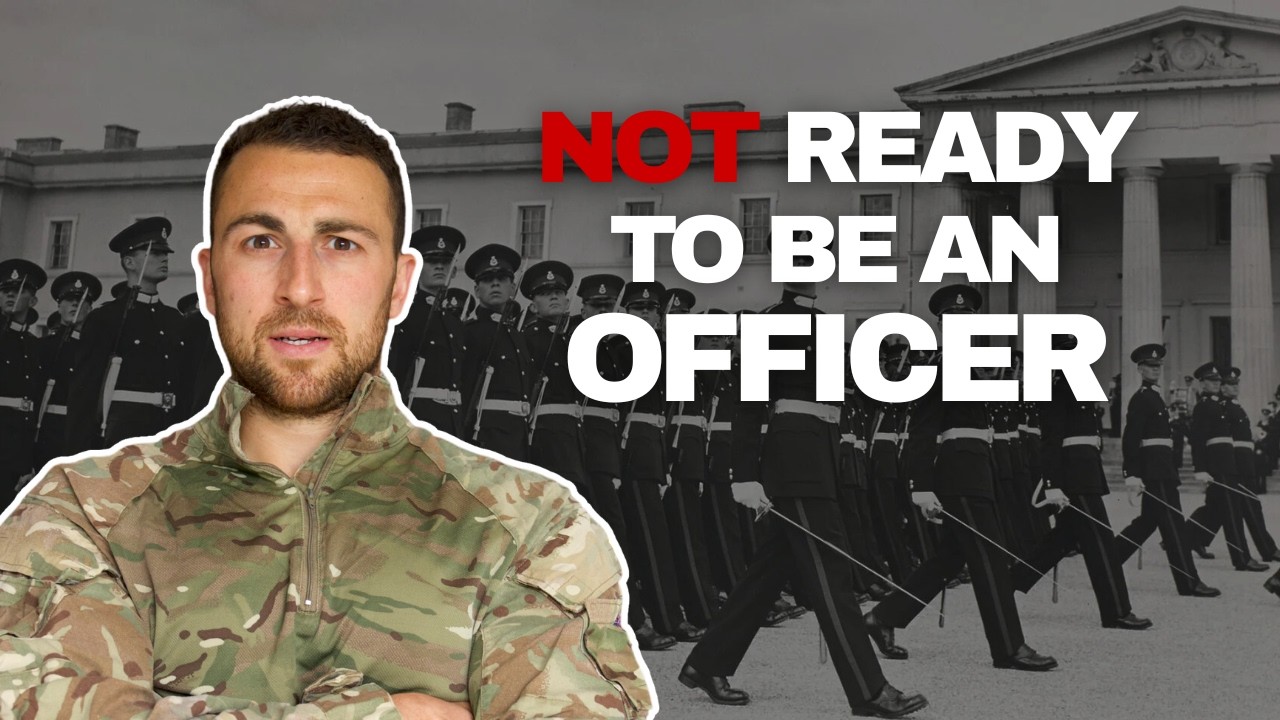
The Leadership Mistakes That Stop You Becoming an Army Officer
The Army Bloke
Overview
This video explores common leadership mistakes that prevent individuals from succeeding as army officers, particularly during the AOSB (Army Officer Selection Board) and Sandhurst training. It breaks down leadership into four distinct levels: self, team, organizational, and strategic, emphasizing that effective leadership begins with self-mastery. The content focuses on developing self-leadership through discipline, consistency, and ownership, and then applying these principles to team leadership, highlighting that leadership potential can be demonstrated even without a formal title. The core message is to cultivate leadership qualities proactively rather than just preparing to pass specific tests.
Save this permanently with flashcards, quizzes, and AI chat
Chapters
- Leadership is often discussed, but actions reveal true readiness, especially for aspiring army officers.
- The military framework defines four levels: Self (leading oneself), Team (direct leadership of small groups), Organizational (leading larger units through others), and Strategic (top-level decision-making).
- Success in higher levels of leadership is impossible without first mastering self-leadership.
- The video will focus on the critical first two levels: Self and Team leadership, as these are foundational for aspiring officers.
- AOSB assesses leadership potential, not just experience; this potential is uncovered through observed qualities, not just stated achievements.
- Individuals often fail by focusing on passing tests (like specific AOSB assessments) rather than developing the underlying competencies.
- Self-leadership involves proactively improving fitness, staying informed on current affairs through analysis, and developing communication skills.
- Key components of self-leadership are discipline (doing what needs to be done without external motivation), consistency over intensity (long-term effort beats short bursts), and ownership (taking personal responsibility for progress).
- Team leadership involves direct influence and engagement with a group, typically a platoon in the army context.
- Aspiring officers will have opportunities to practice team leadership during training (e.g., at Sandhurst), not just after being formally appointed.
- AOSB assesses how individuals influence a group, looking for respect, enthusiasm, and the ability to inspire others to follow.
- You do not need a formal leadership title to be a leader within a team; demonstrating leadership qualities in any role is vital.
- For aspiring officers, leadership is not just a role but their core 'trade' or specialization.
- Passion for leadership should be the primary driver for choosing an officer career path.
- Preparation for selection processes like AOSB should focus on developing inherent qualities, not just passing specific tests.
- The army's ethos encourages striving to 'be the best' by continuously seeking improvement beyond the minimum requirements.
Key takeaways
- True leadership readiness is demonstrated through actions, not just words or aspirations.
- Self-leadership, characterized by discipline, consistency, and ownership, is the non-negotiable foundation for all other forms of leadership.
- Focus on developing core leadership competencies rather than solely preparing to pass specific selection tests.
- You can and should demonstrate leadership qualities within a team, regardless of your formal position or title.
- Consistency in effort over time is more effective for skill development than sporadic, intense bursts of activity.
- Proactive personal development in areas like fitness, communication, and current affairs is essential for demonstrating leadership potential.
- Leadership is a continuous journey of improvement, not a destination, and requires a genuine passion for the craft.
Key terms
Test your understanding
- Why is self-leadership considered the most critical level for aspiring leaders?
- How can an individual demonstrate leadership potential within a team without holding a formal leadership position?
- What are the three core components of self-leadership discussed in the video, and why are they important?
- Explain the difference between focusing on passing tests and developing leadership competencies for selection processes like AOSB.
- How does consistency over intensity contribute to long-term leadership development?