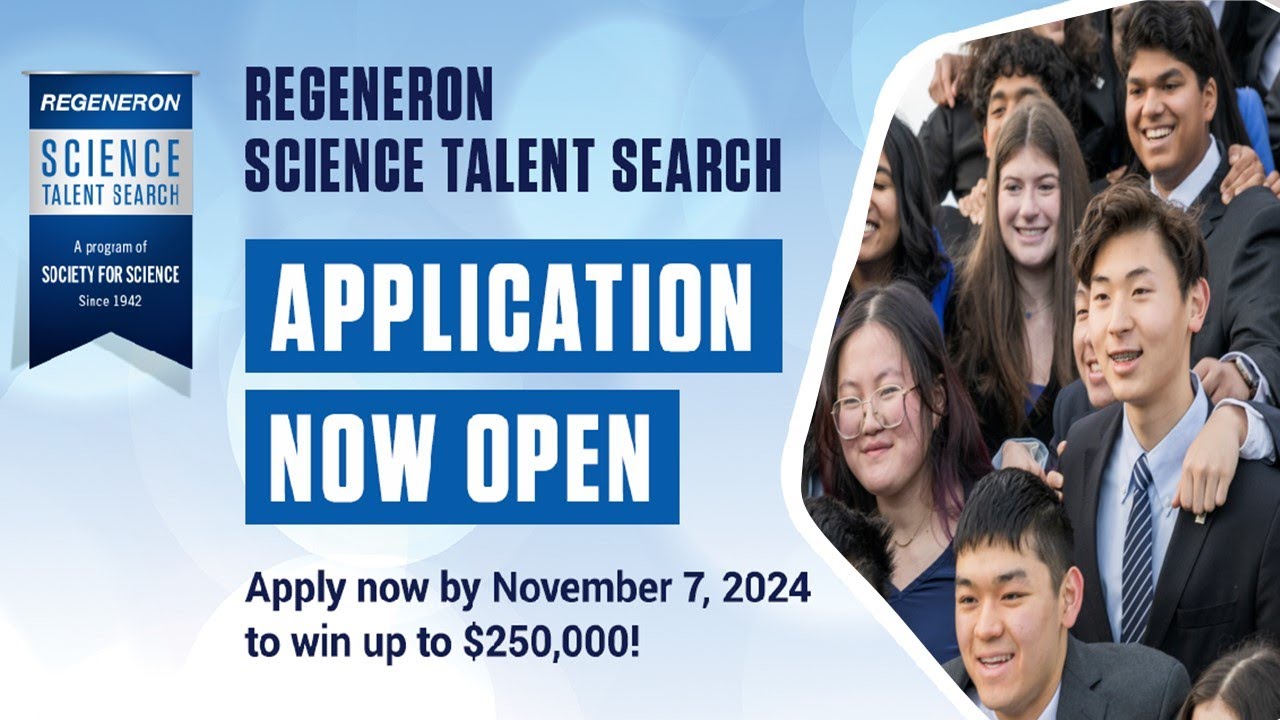
Regeneron STS: What Makes a Top 40 Finalist? Application Advice for Entrants
Regeneron STS
Overview
This video provides comprehensive advice for students applying to the Regeneron Science Talent Search (STS), focusing on what makes a Top 40 finalist. The presenters, Ally Stiefel and Elaine Edwards from the Society for Science, clarify that STS is not just about research aptitude but seeks future leaders in STEM. They detail the holistic application review process, emphasizing honesty, proper crediting of all assistance, and clear communication of individual contributions. The video debunks common myths, such as the importance of specific research fields or high school prestige, and highlights that passion, leadership, and genuine effort are key indicators of success. It also covers eligibility, application deadlines, and the importance of submitting on time and without AI-generated content.
Save this permanently with flashcards, quizzes, and AI chat
Chapters
- Regeneron STS is the nation's oldest and most prestigious science research competition for high school students.
- It seeks future leaders in STEM, not just those with scientific aptitude.
- The competition offers significant prize money, with a $250,000 top prize and millions more for other students and schools.
- Eligibility requires being a 12th-grade student living in the US (or US citizens abroad) who has conducted an individual research project adhering to STS rules.
- STS is distinct from other STEM competitions; it values passion for science alongside leadership qualities.
- Success is not limited to lifelong science fair participants; first-time researchers can also excel.
- The program aims to cut through rumors about 'secret sauces' for winning, emphasizing effective communication of one's work and its significance.
- STS looks for individuals who are passionate about science and demonstrate leadership within their communities, which can manifest in various ways beyond traditional STEM clubs.
- STS employs a holistic review process, considering the entire application package rather than specific cutoffs for grades or scores.
- Supplemental materials and post-deadline updates are not accepted to ensure fairness.
- Each application is reviewed by multiple PhD scientists, with projects often read 4-7 times for thoroughness.
- A critical part of the review includes checking for adherence to rules, plagiarism, AI-generated content, and proper disclosure of all assistance received.
- Finalists make a genuine effort, dedicating sufficient time to their applications rather than rushing.
- They ensure all paperwork is complete, signed, and dated, especially for projects involving human participants or animals.
- Finalists meticulously credit all support, including mentors, programs, and sources for images and data.
- Involvement in diverse extracurricular activities (breadth or depth) and demonstrated leadership skills are common traits.
- There is no specific research subject that performs best; applicants should pursue topics of genuine interest.
- High school prestige or geographic region does not guarantee success; application numbers from certain areas are higher, not due to inherent advantage.
- Perfect grades or test scores are not required; the review process considers context and extenuating circumstances.
- Flawless grammar is not essential; clarity and content are prioritized over grammatical perfection, and AI-generated text is discouraged.
- Focus on conveying your unique self and what makes you special.
- Clearly articulate your specific individual contributions to the research project.
- Thoroughly document and credit everyone who helped you, no matter how small their contribution.
- Passion, leadership, and student contribution are consistently valued by evaluators who are mindful of context.
- The application process itself is a learning experience, encouraging self-reflection and ethical scientific practice.
Key takeaways
- Regeneron STS seeks future leaders in STEM, valuing passion and community involvement alongside research excellence.
- A holistic review process means every part of your application is considered, with no single factor being determinative.
- Honesty and meticulous crediting of all assistance, mentors, and sources are paramount to avoid disqualification.
- Focus on clearly communicating your individual contributions and the 'why' behind your research and actions.
- Don't be discouraged by perceived barriers like research topic trends, school prestige, or academic scores; genuine effort and passion matter most.
- Avoid using AI for application content; focus on authentic self-expression and clear, thorough writing.
- Start your application early to allow ample time for thoughtful completion and to avoid last-minute issues.
- The application process is an opportunity to reflect on your scientific journey, leadership skills, and impact.
Key terms
Test your understanding
- How does the Regeneron STS define 'future leaders in STEM,' and how can an applicant demonstrate this quality?
- What are the key components of the STS holistic review process, and why is it important for applicants to understand?
- Why is proper crediting of all assistance and sources crucial in the STS application, and what are the consequences of failing to do so?
- What common myths about what makes a successful STS applicant should students disregard, and what should they focus on instead?
- How can an applicant effectively communicate their individual contributions to a research project, especially if it involved collaboration or prior work?