9:02
Globalization and Trade and Poverty: Crash Course Economics #16
CrashCourse
Overview
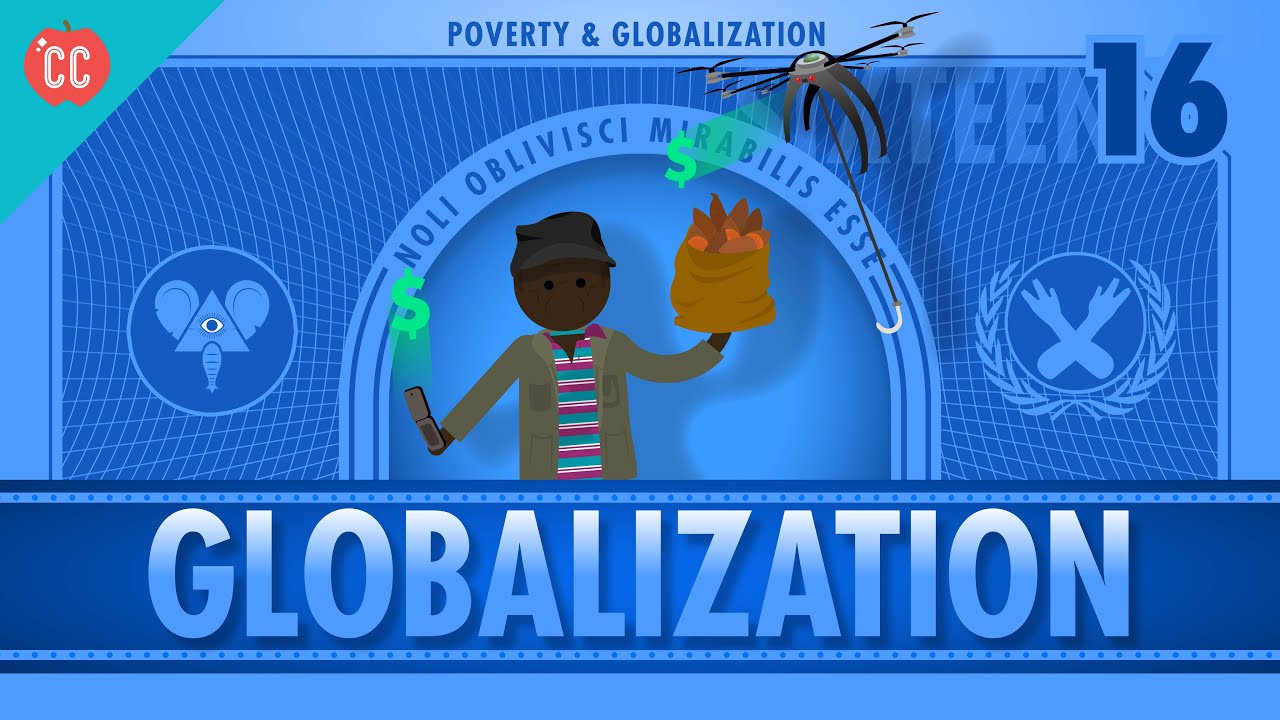
This video explores the complex relationship between globalization, trade, and poverty reduction. It defines extreme poverty and highlights the significant progress made in reducing its prevalence, largely attributed to increased global trade and interconnectedness. The video discusses how free trade and technological advancements, like mobile phones, have spurred economic growth in developing nations. It also examines the controversial aspects of globalization, including labor exploitation and environmental concerns, while presenting arguments for its benefits in lifting people out of poverty and the potential of microcredit as a tool for economic empowerment.
How was this?
Save this permanently with flashcards, quizzes, and AI chat
Chapters
- Poverty is defined differently across countries; the US poverty line is an income below $11,770 annually.
- Extreme poverty, defined by the UN, is severe deprivation of basic human needs like food, water, sanitation, health, shelter, education, and information.
- The UN defines extreme poverty as living on less than $1.25 per day.
- Significant progress has been made in reducing extreme poverty, with numbers dropping from 1.9 billion to 836 million, though climate change poses a future threat.
Understanding the definitions and scale of poverty is crucial for appreciating the challenges and the progress made in addressing this global issue.
The UN's Millennium Development Goal to eradicate extreme poverty by 2015, which saw a reduction from 1.9 billion to 836 million people living in extreme poverty.
- Globalization and free trade are identified as the greatest contributors to reducing extreme poverty.
- Increased global trade, facilitated by free trade agreements and technological advancements, allows goods, services, and ideas to move more freely.
- Technologies like mobile phones enable 'leapfrogging,' allowing developing countries to adopt advanced, cost-effective technologies and access services like mobile banking and market information for farmers.
- International trade creates opportunities for people to sell their products and labor in a global marketplace, even if the conditions are not ideal by developed country standards.
Recognizing globalization's role helps explain the observed decline in extreme poverty and highlights the interconnectedness of global economies.
Mobile phones are presented as a transformative technology, providing access to banking, education, and market prices for farmers, bypassing the need for extensive traditional infrastructure.
- Companies seek the cheapest production locations, often leading to labor-intensive products being made in countries with low wages and weak regulations.
- This process creates winners (corporations, consumers) and losers (high-wage workers in developed countries whose jobs are outsourced).
- Low-wage workers in developing countries may earn above-average wages for their region and benefit from multiplier effects on local businesses, despite potentially hazardous conditions.
- The Bangladeshi apparel industry is cited as an example where low-wage manufacturing is crucial for the national economy, even if it involves 'sweatshop' conditions.
This chapter delves into the ethical and economic trade-offs of globalization, showing how it can simultaneously create opportunities and exploitation.
The Bangladeshi apparel industry, described as largely consisting of 'sweatshops,' is essential for the country's economy and provides employment that keeps it afloat.
- Opponents view outsourcing as exploitation and economic colonialism, advocating for protectionist policies like tariffs.
- Arguments against globalization often stem from the lack of regulations in developing countries regarding minimum wage, safe working conditions, environmental protection, and child labor.
- Proponents argue that growing economies create more labor opportunities, leading to increased competition for workers and higher wages over time.
- Public awareness and international pressure are increasing, pushing companies and countries to improve worker protections.
Understanding the criticisms and counterarguments provides a balanced perspective on globalization's impact and the ongoing debate surrounding its practices.
The US publication 'The List of Goods Produced by Child Labor or Forced Labor' serves as an example of how public awareness and international pressure can lead to scrutiny and potential improvement in labor practices.
- A major criticism of globalization is its potential unsustainability due to environmental impacts like deforestation, pollution, and climate change.
- Rising living standards can increase demand for consumer goods, further straining planetary resources.
- The future challenge lies in lifting the remaining poor out of poverty while ensuring the planet remains livable.
- Enabling individuals and developing countries to participate in the economy is a key strategy for poverty reduction.
This section highlights the critical long-term challenge of balancing economic growth with environmental preservation.
The potential for increased demand for cars, meat, and smartphones as living standards rise, exacerbating environmental issues like pollution and climate change.
- Microcredit involves providing small loans, typically around $100, to low-income individuals, often women, in rural areas.
- These loans enable borrowers to fund small businesses and income-generating activities, fostering entrepreneurship.
- Muhammad Yunus won the Nobel Peace Prize for implementing microcredit, which has since spread globally through various organizations.
- While not a complete solution, microcredit empowers individuals to participate in the economy on their own terms and utilize their innovative capacity for sustainable income.
Microcredit offers a tangible example of how economic participation can directly improve lives and empower individuals, especially women, in developing communities.
Muhammad Yunus's initiative in Bangladesh, where small loans of about $100 allowed individuals, primarily women, to start small businesses and improve their livelihoods.
Key takeaways
- Extreme poverty has significantly decreased globally, largely due to increased globalization and trade.
- Globalization offers economic opportunities by connecting developing economies to the global marketplace, but it also presents ethical challenges regarding labor conditions and environmental impact.
- Technological advancements like mobile phones play a crucial role in 'leapfrogging' development stages in poorer nations.
- While some jobs created by globalization involve difficult conditions, they often represent the best available economic opportunities for individuals in developing countries.
- Addressing poverty requires not only economic growth but also a focus on sustainability and environmental protection.
- Microcredit is a powerful tool for economic empowerment, enabling individuals to start businesses and improve their lives by participating in the economy.
- The debate around globalization involves balancing economic benefits with the need for fair labor practices, worker protections, and environmental responsibility.
Key terms
Extreme PovertyPoverty LineGlobalizationFree TradeLeapfroggingOutsourcingMultiplier EffectProtectionist PoliciesMicrocreditEconomic Colonialism
Test your understanding
- What is the UN's definition of extreme poverty, and how does it differ from a national poverty line?
- How has globalization contributed to the reduction of extreme poverty, and what role do technological advancements play?
- What are the main arguments for and against globalization concerning labor conditions in developing countries?
- Why is sustainability a critical concern for the future of globalization and poverty reduction efforts?
- How does microcredit function as a tool for economic empowerment, and what are its limitations?