9:54
Every Type of API Simply Explained in 9 Minutes!
Codist
Overview
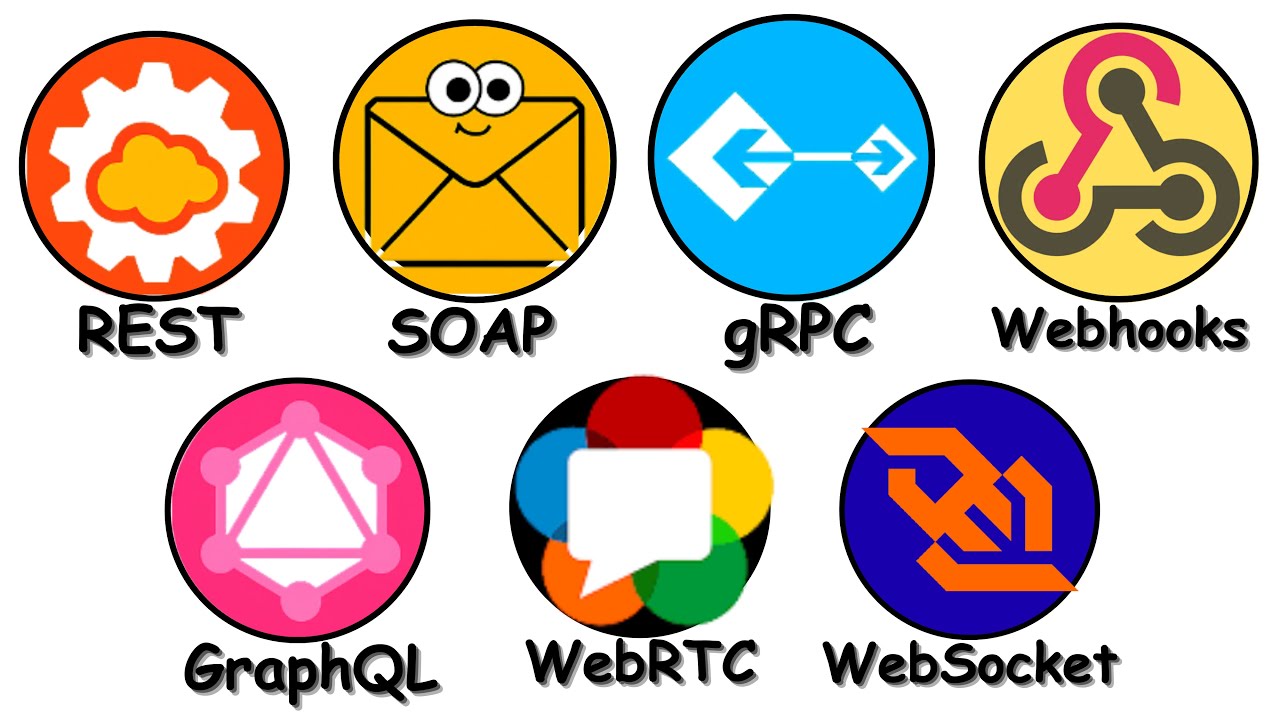
This video explains various types of APIs, which are interfaces allowing different software applications to communicate. It covers REST, SOAP, gRPC, GraphQL, Webhooks, WebSockets, and WebRTC, detailing their core functionalities, use cases, and how they differ. The explanations use analogies like restaurant waiters, business contracts, and race cars to make complex concepts accessible. The video emphasizes the trade-offs between different API types, focusing on factors like speed, data format, reliability, and real-time capabilities, providing a guide for choosing the right API for specific development needs.
How was this?
Save this permanently with flashcards, quizzes, and AI chat
Chapters
- REST APIs act as intermediaries, similar to a waiter, facilitating communication between applications and servers.
- REST (Representational State Transfer) uses standard HTTP methods (GET, POST, PUT, DELETE) for data operations.
- REST is stateless, meaning each request is independent, allowing for scalability.
- It is platform-independent, enabling various devices and applications to interact with the same API.
REST is the most common type of API, and understanding its principles is fundamental to web development and how modern applications interact.
A social media app using a GET request to fetch a user's profile information in JSON format.
- SOAP (Simple Object Access Protocol) is a more formal and structured communication protocol.
- It enforces strict rules for messages, typically wrapped in XML with specific envelope, header, and body structures.
- SOAP is protocol-independent, usable over HTTP, SMTP, TCP, and others.
- Its built-in standards for error handling and security make it reliable for critical systems like banking and healthcare.
SOAP is crucial for enterprise-level applications where guaranteed reliability, security, and strict transaction management are paramount.
Money transfer transactions between banks likely utilize SOAP APIs for secure and accurate processing.
- gRPC is a high-performance framework based on the Remote Procedure Call (RPC) concept, allowing functions to be called across networks.
- It uses Protocol Buffers (Protobuf) to serialize data into a compact binary format, making it much faster than text-based formats like JSON.
- gRPC leverages HTTP/2 for efficient communication, supporting multiple requests over a single connection.
- It offers four communication patterns: request-response, server streaming, client streaming, and bidirectional streaming.
gRPC provides significant performance advantages over REST, making it ideal for microservices, real-time applications, and scenarios demanding low latency.
Comparing gRPC's speed to REST is like sending a zipped file instantly versus mailing a handwritten letter.
- GraphQL, developed by Facebook, is a query language for APIs that allows clients to request precisely the data they need.
- It solves the problems of overfetching (receiving more data than necessary) and underfetching (requiring multiple requests) common with REST.
- Clients specify exactly which fields they want in a single request to a single endpoint.
- GraphQL supports real-time updates via subscriptions and is self-documenting.
GraphQL offers frontend developers greater flexibility and efficiency in data retrieval, optimizing performance for mobile and modern applications.
Requesting only a user's name and email via GraphQL, instead of their entire profile as might happen with REST.
- Webhooks enable an API to send automated messages or data to other applications when specific events occur.
- They are often called 'reverse APIs' because the server initiates the communication (pushes data) rather than the client requesting it (polling).
- An application provides a callback URL, and the service sends a POST request with event details to that URL.
- Webhooks are essential for real-time updates and automating workflows across different services.
Webhooks eliminate the need for constant polling, providing instant, efficient updates and enabling seamless integration between applications.
GitHub sending a webhook notification when new code is pushed to a repository.
- WebSockets establish a persistent, full-duplex communication channel between a client and a server.
- After an initial handshake, the connection remains open, allowing both client and server to send data at any time.
- This enables real-time features like live chat, stock tickers, and game updates.
- Data can be sent as plain text, JSON, or binary formats.
WebSockets are critical for applications requiring instant, continuous, and bidirectional data flow between users and servers.
Receiving a chat message or a live stock price update the moment it happens.
- WebRTC (Web Real-Time Communication) is a framework for direct peer-to-peer communication between browsers or apps.
- It enables real-time audio, video, and data transfer without necessarily routing through a central server.
- WebRTC handles complex networking details like NAT traversal and adaptive bitrate streaming.
- It powers applications like video conferencing, online gaming, and collaborative tools.
WebRTC facilitates seamless, high-quality real-time communication directly between users, reducing server load and improving performance for interactive applications.
Video and audio data being sent directly from your device to another participant's device during a Zoom or Google Meet call.
Key takeaways
- APIs are essential tools that enable software applications to communicate and share data efficiently.
- REST APIs are widely used for their simplicity and statelessness, suitable for many web applications.
- SOAP APIs offer robust security and reliability, making them suitable for financial and enterprise systems.
- gRPC prioritizes performance and efficiency through binary serialization and HTTP/2, ideal for microservices.
- GraphQL provides flexible data fetching, allowing clients to request exactly what they need, thus avoiding over/underfetching.
- Webhooks and WebSockets enable real-time communication by allowing servers to push data to clients, eliminating the need for constant polling.
- WebRTC facilitates direct peer-to-peer communication for rich real-time experiences like video calls without central servers.
- The choice of API depends heavily on the specific requirements for performance, reliability, data structure, and real-time needs.
Key terms
APIRESTHTTP Methods (GET, POST, PUT, DELETE)StatelessSOAPXMLgRPCProtocol Buffers (Protobuf)GraphQLOverfetchingUnderfetchingWebhooksWebSocketsWebRTCPeer-to-Peer (P2P)
Test your understanding
- What is the primary difference in communication style between REST and SOAP APIs?
- How does gRPC achieve higher performance compared to REST APIs?
- Explain the problem that GraphQL's query language is designed to solve.
- Why are Webhooks sometimes referred to as 'reverse APIs'?
- What is the main advantage of using WebSockets over traditional HTTP for real-time applications?
- In what scenarios would WebRTC be the most suitable technology for communication?