6:53
Washed Coffee Processing
Cafe Imports
Overview
This video details the washed coffee processing method, also known as the wet process, commonly used in regions like Central and South America. It explains the step-by-step journey of coffee cherries from selective hand-picking to drying, emphasizing the removal of fruit pulp and mucilage. The process involves depulping, fermentation, washing, sorting, and controlled drying to achieve a clean coffee seed ready for export. The video highlights the importance of quality control at each stage and responsible water management.
How was this?
Save this permanently with flashcards, quizzes, and AI chat
Chapters
- The washed (or wet) process is a common coffee processing method found globally, especially in Central and South America.
- Its primary goal is to quickly and thoroughly remove the coffee fruit from the seed, allowing the seed to dry within its protective parchment layer.
- This method is efficient in climates with cool nights and good daytime sun exposure.
- It can also be a space-saving technique for small producers who manage processing on their own property.
Understanding the washed process is crucial for appreciating how different processing methods impact the final coffee bean's quality and flavor profile.
The video follows a producer in the highlands of Peru to illustrate the practical application of this method.
- Coffee cherries are harvested when ripe, indicated by their color (dark red, bright red, purple, or yellow depending on variety).
- Cherries are selectively picked by hand and brought to a receiving point.
- Before depulping, cherries are weighed, rinsed, and undergo an initial quality sort.
- A float test, where cherries are submerged in water and floating ones are removed, can identify defects.
The initial steps of harvesting and sorting are critical for ensuring that only high-quality cherries enter the processing stream, preventing defects from affecting the entire batch.
At the farm in Peru, cherries are delivered to a mechanical depulping machine after being weighed and rinsed.
- Whole coffee fruit is passed through a depulper, a machine that separates the seed from its outer skin (pulp).
- Depulping ideally occurs within 8-12 hours of harvest to prevent spoilage.
- After depulping, seeds are covered in a sticky layer of fruit material called mucilage, which must be removed.
- The removed pulp can be repurposed for compost or fuel, or discarded.
Efficiently removing the pulp and preparing for mucilage removal is essential for the subsequent fermentation and washing stages, directly influencing the bean's cleanliness.
The mechanical depulper squeezes the seed out of the tough cherry skin.
- Seeds are transferred to fermentation tanks, where the mucilage is softened.
- This example uses an 'open fermentation' style, where seeds are not submerged in water overnight.
- Fermentation is carefully controlled for time and temperature to aid mucilage breakdown.
- The next day, seeds are submerged in water and agitated vigorously to wash away the softened mucilage.
- This washing process may be repeated multiple times to ensure the seeds are clean and only covered by parchment.
Fermentation and washing are the core steps of the 'washed' process, directly impacting the bean's flavor by removing fruit sugars and influencing its final clarity.
The producer inspects the fermented mucilage by touch to gauge its stickiness before washing.
- Water used in the washing process must be treated or disposed of carefully to prevent environmental contamination from fruit mucilage.
- During washing, any seeds that float are removed as they may be damaged or defective.
- After washing, a final quality sort is performed, often using specialized tools to remove remaining husks or defective beans.
- This sorting results in a uniform batch of clean coffee seeds.
Responsible water management is an ethical and environmental necessity, while rigorous sorting at this stage guarantees the highest quality final product.
A portable sorting table is used in Peru to remove defective beans and remaining husks after washing.
- Cleaned coffee seeds, still in their parchment layer, are spread thinly on drying patios or tarps.
- The drying environment is controlled for temperature and airflow to ensure efficient and even drying.
- Coffee is raked several times daily to prevent clumping and promote uniform moisture reduction.
- Drying continues until the beans reach an internal moisture content of approximately 11%, which can take 1-2 weeks.
- After drying, coffee rests in sacks in a warehouse before final processing and export.
Controlled drying is crucial for preserving the coffee's quality and preventing mold or spoilage, directly affecting its shelf life and flavor potential.
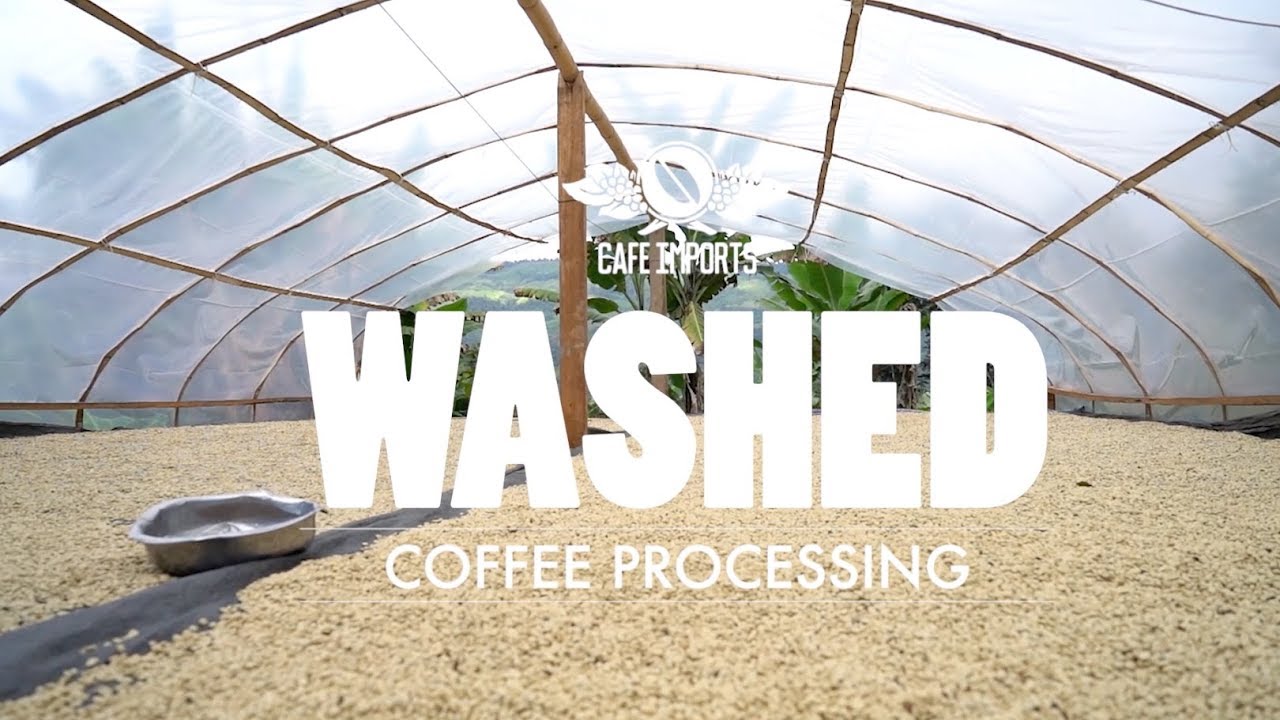
Coffee is spread on tarps on a wooden patio under a plastic cover, and raked regularly with a wooden tool.
Key takeaways
- The washed process prioritizes removing fruit pulp and mucilage early to achieve a clean coffee bean.
- Fermentation, though brief and controlled, is a key step in softening mucilage for easier removal.
- Vigorous washing and multiple rinses are necessary to thoroughly clean the coffee seeds.
- Environmental responsibility is paramount, requiring careful management of wastewater from the washing process.
- Quality control, including float tests and manual sorting, is integrated throughout the washed process.
- Controlled drying is essential for preserving the quality and preventing defects in the final coffee bean.
- The washed process generally results in a cleaner, brighter cup profile compared to other methods.
Key terms
Washed processWet processDepulpingPulpMucilageFermentationParchment layerFloat testDrying patiosMoisture content
Test your understanding
- What is the primary objective of the washed coffee processing method?
- How does fermentation contribute to the washed process, and why is it controlled?
- What are the environmental considerations associated with the washing stage of coffee processing?
- Describe the role of depulping and mucilage removal in preparing coffee seeds for drying.
- Why is controlled drying and resting important after the washed processing steps?