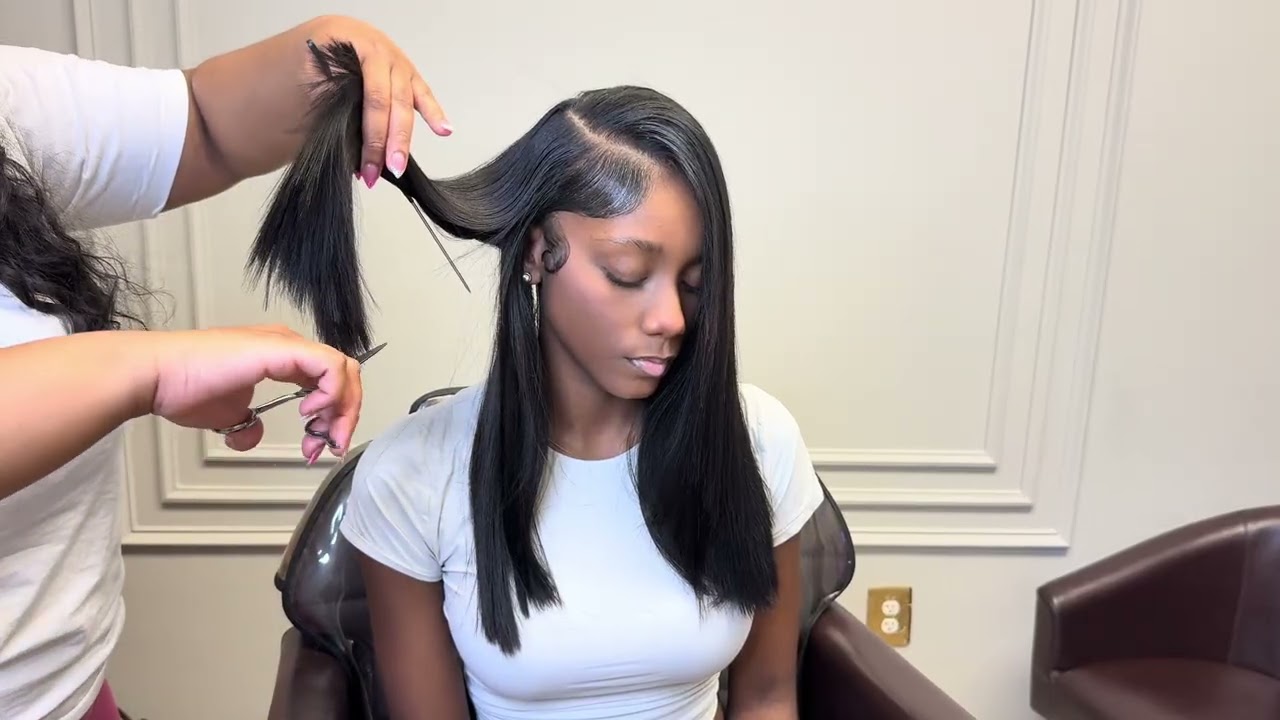
Layering & Curling Mastery
Kemani Moore
Overview
This tutorial demonstrates a comprehensive approach to layering and curling hair extensions, focusing on techniques that create a natural, voluminous, and long-lasting style. It covers precise cutting methods, emphasizing point cutting to preserve length and achieve specific shapes like face-framing V-cuts and feathered layers. The video then details a systematic curling process using a specific curling iron and holding spray, highlighting the importance of sectioning, heat control, and consistent technique for both sides of the head, including detailed instructions for styling the bangs. Finally, it touches on the importance of a clean finish and blending the leave-out for a polished look.
Save this permanently with flashcards, quizzes, and AI chat
Chapters
- Ensure hair extensions are straightened before cutting.
- Begin face framing by starting at the jawline and cutting downwards in an inverted V shape.
- Utilize point cutting (using the tips of scissors with an open-and-close motion) instead of blunt cutting to maintain hair length and create softer lines.
- Encourage the client to turn their head to ensure evenness and identify areas needing refinement.
- A white cape is recommended for better visibility of the hair during the cutting process.
- Start layering with the bangs, pulling the section forward and point cutting downwards from the shortest length.
- Work in sections, incorporating hair from the previously cut section into the new section to ensure seamless blending.
- Pull hair out diagonally towards you to establish the shortest layer and maintain control during point cutting.
- Perform three rounds of layering to build depth and movement without sacrificing significant length.
- Cutting into the hair at a downward angle, rather than straight across, creates a feathered or textured look.
- After the initial layering, go back in to clean up the ends, ensuring no thin or wispy ends remain, as these can affect curl formation.
- The 'cleanup' round involves cutting into the hair with a downward motion, pulling sections downward rather than straight out, to sharpen the layered effect.
- This final cutting stage is essential for ensuring the hair bounces back well after curling and achieves a polished, cohesive look.
- Use a rat tail comb for combing out to ensure precision and a clean finish, especially around the bang area and leave-out.
- Directing curls with hands during the combing-out process helps shape the final style and ensures control over the look.
- Use a 1.75-inch curling iron (T3 Body Waver recommended) and ensure the iron is consistently pointed to the left, regardless of which side of the head is being curled.
- Clamp the hair, twist, and slide the curling iron down the hair shaft, ensuring the ends are caught.
- Hold each curl for 7-10 seconds to allow heat to penetrate and set the curl.
- Apply a strong-hold spray (Sebastian recommended) after releasing each curl to maintain its shape.
- Curl in small, manageable sections to ensure even heat distribution and consistent results across all strands.
- When curling the bangs, bring the hair towards the side you are curling (left side of the head, bring hair to the left barrel) and ensure the curling iron does not touch the forehead.
- Use a hand as a barrier between the curling iron and the forehead for safety.
- After curling, use a rat tail comb to meticulously comb out the curls, ensuring they are defined and bouncy.
- Pay close attention to blending the leave-out with the extensions using hairspray and combing for a natural, seamless finish.
- Final adjustments can be made by re-curling sections if needed or using the comb to smooth flyaways and perfect the overall shape.
Key takeaways
- Point cutting is essential for preserving hair length and creating soft, blended layers, distinguishing professional cuts from blunt ones.
- Layering hair in multiple rounds, incorporating previous sections into new ones, builds depth and movement without drastic length reduction.
- Consistent curling technique, including iron direction, heat duration, and section size, is key to achieving uniform, lasting curls.
- Using a strong-hold spray after each curl is crucial for the longevity of the style.
- A meticulous cleanup and combing-out process, especially with a rat tail comb, refines the look and ensures the hair bounces correctly.
- Blending the leave-out with extensions using product and careful combing creates a natural and polished finish.
- Heat control on the curling iron is vital to prevent damage to natural hair, especially near the client's leave-out.
Key terms
Test your understanding
- What is the primary benefit of using point cutting over blunt cutting when layering hair?
- How does performing multiple rounds of layering contribute to the final hairstyle?
- Why is it important to use a white cape during the cutting process?
- Describe the technique for curling hair with a curling iron to achieve consistent results.
- What steps should be taken to ensure the leave-out blends seamlessly with the extensions after curling?