33:57
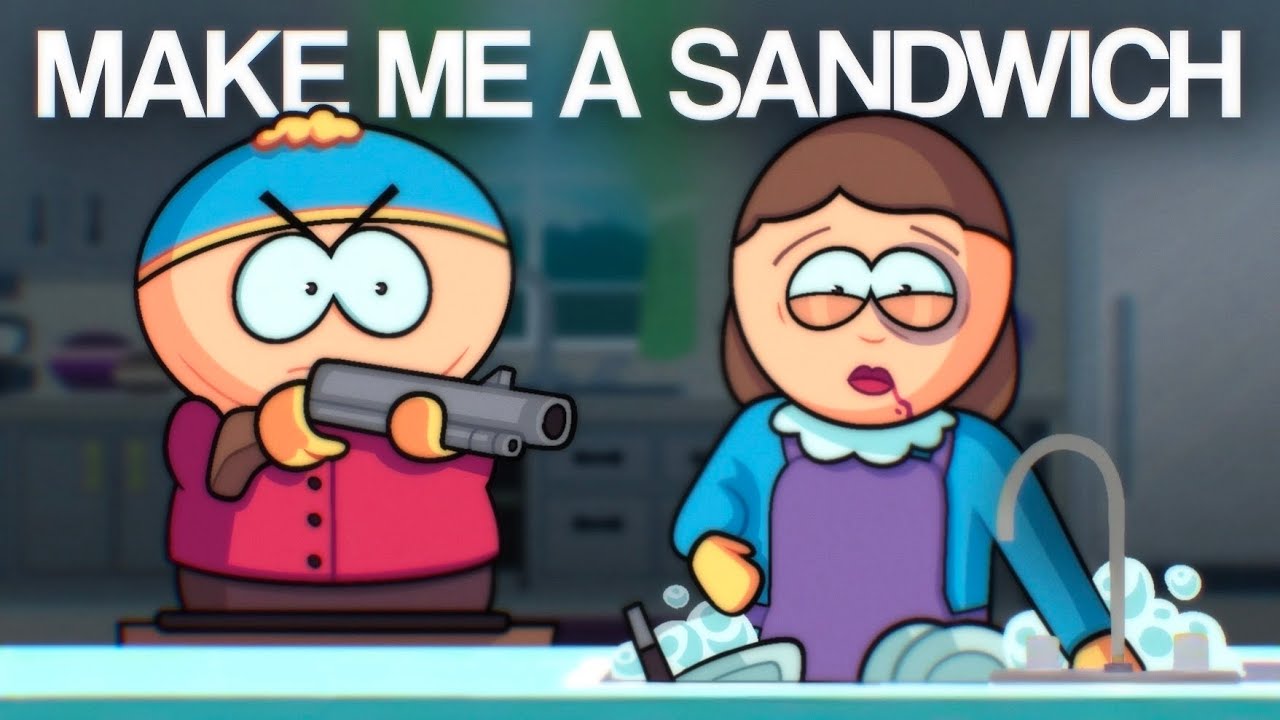
South Park’s Most Sexist Episodes
Scribbl
Overview
This video analyzes several episodes of South Park that have been criticized for sexist content, focusing on how the show uses humor to explore and sometimes perpetuate harmful stereotypes about women. It examines episodes that feature offensive jokes about mothers, the objectification of women, and the portrayal of female characters in demeaning or stereotypical roles. The analysis highlights South Park's controversial approach to comedy, often pushing boundaries to comment on societal issues, but frequently resorting to crude and offensive humor, particularly concerning gender dynamics.
How was this?
Save this permanently with flashcards, quizzes, and AI chat
Chapters
- The episode 'Cartman's Mom is a Dirty' establishes a running gag about Cartman's mother's promiscuity, setting an early tone for demeaning female characters.
- Cartman's search for his father leads to multiple potential fathers, including Chief Running Water (implying Cartman is Black) and Mr. Garrison, highlighting the absurdity and offensive nature of the plot.
- The episode uses a DNA test plot device, which is ultimately unresolved, emphasizing the show's tendency to create controversial scenarios without providing clear resolutions.
- This early episode demonstrates South Park's willingness to use offensive stereotypes for humor, particularly targeting women's sexuality and family roles.
This chapter illustrates how South Park began its pattern of using offensive stereotypes, particularly against women, as a core comedic element from its early seasons.
Cartman's confrontation with his mother about his paternity, leading to a series of absurd revelations about potential fathers like Chief Running Water and Mr. Garrison.
- In 'Succubus,' Chef is influenced by his new girlfriend, Veronica, who espouses feminist ideals and leads him away from his friends.
- The episode frames Veronica as a 'succubus,' a creature that drains men's life force, which is a metaphor for how the show portrays relationships where women negatively impact men.
- The boys' attempts to break up Chef and Veronica highlight a resistance to the idea of Chef finding happiness outside their group, and the show's portrayal of Veronica is largely negative.
- The episode culminates in Chef marrying Veronica, only to have him snap out of it when the 'succubus' is 'cast away,' reinforcing a negative view of marriage and female influence.
This episode shows how South Park can use supernatural or metaphorical elements to criticize or mock relationships and feminist ideas, often portraying women as manipulative or destructive.
Chef's friends believing Veronica is a 'succubus' who is draining Chef's life force and convincing him to abandon his friends.
- In 'Fat Butt and Pancake Head,' Cartman creates a music video about Jennifer Lopez, satirizing her persona and Latino culture with offensive stereotypes.
- The episode features a plot where Cartman impersonates J.Lo, leading to a bizarre romance with Ben Affleck, highlighting the show's tendency to sexualize and trivialize celebrities.
- The real J.Lo appears and confronts Cartman's impersonation, leading to a violent resolution where Cartman is beaten by the real J.Lo.
- The episode critiques celebrity culture and the superficiality associated with fame, using J.Lo as a target for crude humor and gendered insults.
This episode demonstrates South Park's approach to celebrity satire, often resorting to personal attacks and gender-based insults rather than nuanced social commentary.
Cartman, disguised as J.Lo, engaging in a romantic relationship with Ben Affleck, which is then interrupted by the real J.Lo.
- In 'Up the Down Steroid,' Jimmy and Timmy participate in the Special Olympics, while Cartman attempts to cheat his way to a prize.
- Jimmy takes steroids to enhance his performance, leading to aggressive behavior and a violent outburst towards his girlfriend, showcasing the dangers of performance enhancement.
- The episode uses the Special Olympics as a backdrop for offensive jokes about disabilities and Cartman's manipulative schemes.
- The portrayal of Jimmy's steroid-induced rage, including violence against his girlfriend, is presented as a dark, uncomfortable comedic element, highlighting the show's willingness to push boundaries with sensitive topics.
This episode exemplifies South Park's controversial use of sensitive topics like disability and steroid abuse for shock value, including a disturbing depiction of domestic violence.
Jimmy, under the influence of steroids, violently berating and threatening his girlfriend.
- The episode 'Teacher Stu' features Cartman as a hall monitor who abuses his power, while the main plot revolves around a teacher, Miss Stevenson, and her inappropriate relationship with a student, Ike.
- The show satirizes the reaction to such relationships, with the police initially eager to arrest the teacher but changing their tune when they realize the student is Canadian, highlighting a cynical view of justice.
- Cartman's abuse of power as hall monitor is contrasted with his eventual role in helping to expose the teacher, showing a rare instance of his actions leading to a positive outcome.
- The episode uses dark humor to address the taboo subject of teacher-student relationships, ultimately framing the teacher's actions as driven by alcohol and a desire for a 'dream vacation,' before she is apprehended.
This chapter examines South Park's controversial handling of taboo subjects like teacher-student relationships, using dark humor and satire to comment on societal reactions and hypocrisy.
Miss Stevenson's inappropriate relationship with Ike, and the police's initial eagerness to arrest her, which changes upon learning Ike is Canadian.
- In 'Breast Cancer Show Ever,' Wendy challenges Cartman to a fight after he mocks breast cancer awareness, initiating a gender-based conflict.
- Cartman attempts to avoid the fight through various schemes, including faking illness and manipulating his mother, showcasing his cowardice and manipulative nature.
- Wendy eventually defeats Cartman in a violent confrontation, serving as a cathartic moment for viewers offended by Cartman's misogyny.
- The episode uses the fight as a metaphor for larger gender conflicts and Wendy's growth as a character who stands up against Cartman's hateful rhetoric.
This episode provides a rare instance where a female character, Wendy, directly confronts and defeats Cartman, offering a sense of justice for viewers tired of his misogynistic behavior.
Wendy's physical fight with Cartman after he mocks breast cancer awareness, resulting in Cartman's defeat.
- In 'Dances with Smurfs,' Cartman uses his position as morning announcer to spread propaganda against Wendy, falsely accusing her of wanting to kill Smurfs.
- Cartman's smear campaign creates a 'girl hate' movement among the younger students, fueled by his misogynistic rhetoric and fabricated evidence.
- Wendy cleverly turns Cartman's tactics against him by implying he was an undercover operative sent to destroy Smurf Village, dismantling his coalition.
- This episode highlights how easily misinformation and gendered attacks can be spread and manipulated, even within a school setting, and Cartman's ultimate scapegoating.
This chapter illustrates the power of propaganda and gendered attacks in manipulating public opinion, showing how Cartman weaponizes misinformation against Wendy.
Cartman's morning announcements falsely accusing Wendy of wanting to kill Smurfs, leading to a school-wide frenzy.
- The episode 'Eat, Pray, Queef' introduces the 'Queef Sisters,' female counterparts to Terrance and Phillip, whose flatulence humor is deemed unsanitary by the boys.
- The episode sparks a 'gender war' at South Park Elementary when the girls retaliate against the boys' criticism, highlighting a double standard in comedy.
- The show critiques how humor perceived as acceptable from men (Terrance and Phillip) is seen as disgusting or inappropriate from women.
- Ultimately, the episode suggests that the 'queefing' was a metaphor for women seeking freedom from patriarchal control, though this message is delivered through crude and offensive humor.
This episode uses crude humor to explore gender double standards in comedy and societal expectations, questioning why certain behaviors are acceptable for men but not for women.
The introduction of the 'Queef Sisters' and the subsequent 'gender war' at school after their show is criticized.
- In 'Stupid Spoiled Whore,' Paris Hilton opens a store in South Park, representing superficiality and consumerism, which upsets Wendy.
- Butters is adopted by Paris Hilton and becomes her 'dog,' Mr. Biggles, highlighting his exploitation and the show's critique of celebrity culture.
- The episode satirizes the idea of being 'stupid spoiled,' showing how easily young girls can be influenced by materialistic trends.
- The narrative critiques the superficiality of celebrity culture and its impact on children, using Paris Hilton as a symbol of excess and exploitation.
This episode critiques celebrity culture and its potential for exploitation, using Paris Hilton and Butters to highlight themes of materialism and superficiality.
Butters being adopted by Paris Hilton and treated as her pet dog, Mr. Biggles.
- In 'Butters' Bottom Bitch,' Butters starts a business selling kisses, which escalates into him becoming a pimp for the girls selling kisses.
- The episode satirizes the pimping industry and the exploitation of women, with Butters unknowingly participating in illegal activities.
- A police officer goes undercover and also engages in questionable behavior, blurring the lines between law enforcement and criminal activity.
- Butters eventually realizes the negative aspects of the pimp lifestyle and chooses genuine connection over financial gain, though the episode's humor is derived from the morally dubious premise.
This episode uses a shocking premise to explore themes of exploitation and the dark side of capitalism, with Butters inadvertently becoming a pimp.
Butters organizing girls to sell kisses and taking a cut, essentially becoming a pimp.
Key takeaways
- South Park frequently uses offensive stereotypes, particularly against women, as a primary source of humor.
- The show often satirizes celebrity culture and societal trends through crude and exaggerated portrayals.
- Episodes frequently explore gender dynamics, often by highlighting perceived double standards or perpetuating misogynistic tropes.
- South Park's humor relies heavily on shock value and pushing boundaries, sometimes addressing sensitive topics like disability, sexual relationships, and exploitation in controversial ways.
- While sometimes aiming for social commentary, the show's execution often prioritizes offensive jokes over nuanced discussion.
- Female characters are frequently depicted in stereotypical roles or as antagonists to the male characters, with notable exceptions like Wendy who directly challenges Cartman.
- The show's satire can be inconsistent, sometimes critiquing harmful behavior while simultaneously employing it for comedic effect.
Key terms
Sexist StereotypesObjectificationSatireMisogynyGender Double StandardsShock ValueTaboo SubjectsPropagandaExploitationCelebrity Culture
Test your understanding
- How does South Park utilize sexist stereotypes in its humor, and what are the potential consequences of this approach?
- What are some common themes related to gender dynamics that appear across the analyzed South Park episodes?
- How does the show's satire of celebrity culture and societal trends often rely on offensive or demeaning portrayals?
- In what ways do episodes like 'Breast Cancer Show Ever' and 'Dances with Smurfs' depict female characters challenging male-dominated narratives?
- What is South Park's typical approach to addressing sensitive or taboo subjects, and how does this contribute to its controversial reputation?