28:34
If I Started SaaS in 2026, Here’s My B2B Content Strategy for $1M ARR
Rob Walling
Overview
This video explains a content strategy for B2B SaaS companies aiming for $1 million in Annual Recurring Revenue (ARR), focusing on the five stages of customer awareness. The speaker, drawing from personal experience and industry examples, outlines how to map content to each awareness stage, from unaware prospects to those ready to purchase. The core idea is to create targeted content that meets potential customers where they are in their buying journey, rather than producing generic, top-of-funnel material. It emphasizes prioritizing content creation by starting with the most aware customers and working backward, providing actionable advice for founders and marketers.
How was this?
Save this permanently with flashcards, quizzes, and AI chat
Chapters
- Content marketing is crucial for B2B SaaS growth, even for companies relying on outbound sales.
- A lack of a strategic framework led to ineffective early content marketing efforts (personal anecdote).
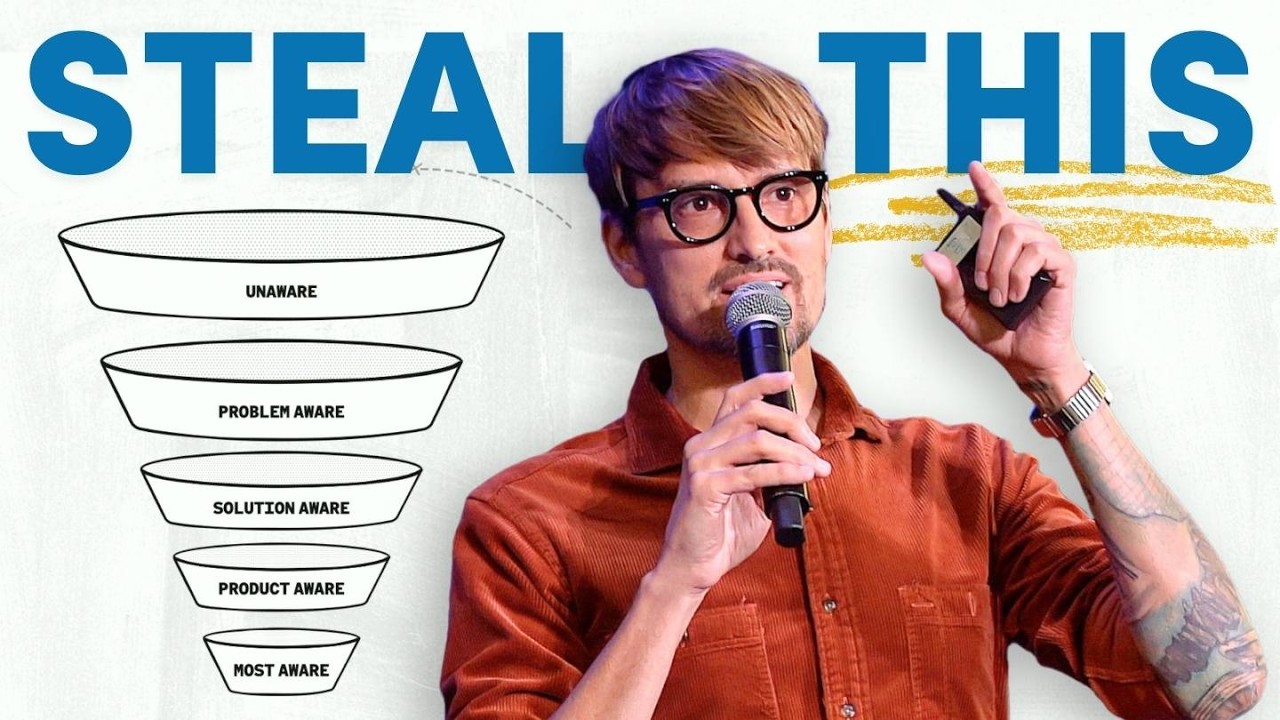
- The five stages of customer awareness provide a framework for prioritizing content.
- This framework is adapted for B2B contexts, moving beyond common B2C applications.
Understanding the customer's journey through awareness stages is essential for creating content that resonates and drives conversions, preventing wasted marketing efforts.
The speaker's early attempt at content marketing for 'velvet mail' (later Drip) failed due to generic, untargeted content, highlighting the need for a strategic approach.
- Stage 1: Unaware - Prospects don't know they have a problem or a need for improvement.
- Stage 2: Problem Aware - Prospects know they have a problem but are unfamiliar with potential solutions.
- Stage 3: Solution Aware - Prospects know about solutions in general but not specific products.
- Stage 4: Product Aware - Prospects are aware of specific products and are comparing them to competitors.
- Stage 5: Most Aware - Prospects are educated, close to purchasing, and may be comparing specific features or looking for deals.
Identifying which stage a prospect is in allows for the creation of highly relevant content that guides them effectively towards a purchase decision.
A realtor unaware of the need for more leads (Stage 1) progresses to searching 'how to get more buyers' (Stage 2), then 'email marketing software' (Stage 3), and finally 'Mailchimp vs. Klaviyo' (Stage 4/5).
- Directly asking prospects during sales calls about their purchase timeline and competitors provides insight.
- Analyzing the keywords prospects use indicates their awareness level (e.g., informational vs. transactional keywords).
- Utilizing tools like Semrush or Similarweb can help identify keyword intent (Navigational, Informational, Commercial, Transactional).
These methods provide practical ways to gauge where a prospect is in their buying journey, enabling more effective sales and marketing interactions.
Keywords like 'best email marketing software' suggest a solution-aware prospect (Stage 3), while 'buy email marketing software coupon' indicates a most-aware prospect (Stage 5).
- Unaware stage content should be high-level and educational (e.g., 'how to become a great facilitator').
- Problem-aware stage content addresses specific pain points with templates or guides (e.g., 'contract templates', 'add subtitles to video').
- Solution-aware stage content discusses categories of solutions (e.g., 'best email marketing software').
- Product-aware stage content involves comparisons, alternatives, and case studies (e.g., 'Mailchimp alternatives', 'customer success stories').
- Most-aware stage content focuses on features, demos, knowledge bases, and compliance (e.g., 'detailed feature breakdowns', 'security and compliance documentation').
Tailoring content to each awareness stage ensures that marketing efforts attract and nurture leads effectively throughout the entire sales funnel.
Sewell provides 'contract templates' for problem-aware prospects, while Userlist offers 'onboarding guides' for solution-aware prospects and 'alternative to HubSpot' pages for product-aware prospects.
- It's often more effective to start content creation at the 'Most Aware' stage (Stage 5) and work backward.
- This approach ensures immediate value for high-intent leads and builds a foundation for broader funnel content.
- Content initially created for marketing can also serve as valuable sales enablement material.
- Companies like HubSpot and Drip demonstrate sophisticated content strategies across all awareness stages.
Starting with bottom-of-funnel content provides quicker wins and supports sales closing, while building upwards creates a comprehensive strategy for long-term growth.
Ruben's approach for Sewell includes content on security and compliance (Stage 5), addressing critical concerns for buyers nearing a decision.
Key takeaways
- A strategic framework based on customer awareness stages is essential for effective B2B content marketing.
- Generic, top-of-funnel content is less effective than content tailored to specific awareness levels.
- Understanding the five stages (Unaware, Problem Aware, Solution Aware, Product Aware, Most Aware) is key to guiding prospects.
- Keywords and direct sales conversations are primary methods for identifying a prospect's awareness stage.
- Content should evolve from broad educational topics to specific feature comparisons and documentation as awareness increases.
- For new SaaS businesses, prioritizing content for the 'Most Aware' stage can yield faster results and support sales.
- Content marketing, when strategically aligned with awareness stages, also serves as powerful sales enablement material.
Key terms
B2B Content StrategyCustomer Awareness StagesUnawareProblem AwareSolution AwareProduct AwareMost AwareKeyword IntentNavigational KeywordsInformational KeywordsCommercial KeywordsTransactional KeywordsSales Enablement
Test your understanding
- How does understanding the five stages of customer awareness help a B2B SaaS company prioritize its content marketing efforts?
- What are the key differences in content focus between a 'Problem Aware' prospect and a 'Product Aware' prospect?
- Describe three methods for identifying which stage of awareness a potential customer is in.
- Why might a new SaaS company benefit from starting its content strategy at the 'Most Aware' stage rather than the 'Unaware' stage?
- How can content created for marketing purposes also function as effective sales enablement material for different awareness stages?