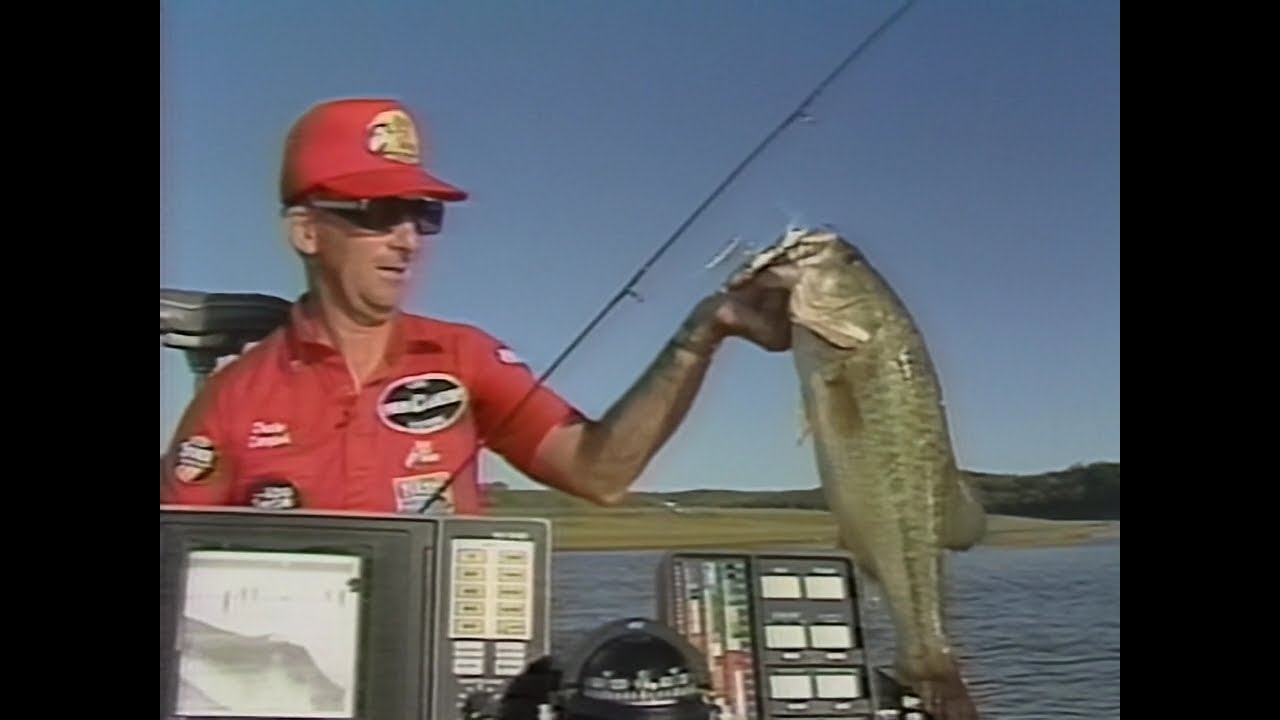
Charlie Campbell - Topwater Bass Fishing (1988)
Old School Bass Fishing Vids
Overview
This video provides a comprehensive guide to topwater bass fishing, focusing on techniques, lure selection, and essential gear. The presenter, Charlie Campbell, shares his expertise on how to effectively use various topwater lures, emphasizing the importance of rod and reel choice, line management, and knot tying. He details different lure types, their specific actions, and the best times of year to use them. The video also touches on modern fishing technology like depth finders and graphs, and offers practical advice on casting, retrieving, and handling snags. Finally, it highlights key strategies for locating fish and provides crucial tips for setting the hook and enjoying the experience responsibly.
Save this permanently with flashcards, quizzes, and AI chat
Chapters
- Topwater fishing is highly enjoyable because you can visually track your lure and see strikes in real-time.
- Unlike underwater fishing where strikes are often unseen, topwater offers an exciting visual experience.
- Successful topwater fishing relies on making good casts and skillfully working the lure to mimic natural prey.
- The visual aspect of topwater fishing is compared to basketball, where seeing the ball in action is crucial.
- A light action rod with a flexible tip is recommended for effectively working topwater lures like walkers.
- A strong, dependable reel with durable gears is crucial to handle large fish without equipment failure.
- Regularly changing fishing line is vital, as old line develops kinks and memory that hinder casting and increase backlash.
- Stretching and straightening line before fishing can improve casting distance and reduce tangles.
- 14-pound test line is a good all-around choice for topwater, balancing strength with allowing lures to work properly; 10-pound test is suitable for smaller lures.
- Using a reliable snap, like an interlocking snap, allows for quick lure changes and is strong enough for most fishing situations.
- Snaps are ideal for lures with a wobbling or back-and-forth motion.
- For lures that pull straight without much wobble, tying directly to the lure is recommended.
- The Palomar knot is a strong and reliable knot for connecting line to snaps or lures, ensuring the knot's strength matches the line's strength.
- Always wet the knot before tightening to ensure it slips smoothly and doesn't damage the line.
- Minnow-style lures can be grouped by their action: some move side-to-side, while others have a more linear back-and-forth motion.
- Lures like the 'Repella' have a unique side-to-side action, distinct from typical wobbling lures.
- Some minnow lures, like stick baits, sit lower in the water and require a slower retrieve with pauses.
- Tuning lures is essential; if a lure pulls unevenly, minor adjustments with pliers can correct its action.
- Different minnow lures require different retrieval cadences; varying the speed and pauses is key.
- Lures with single or dual spinners on the back add flash and sound, attracting fish, especially in warmer water.
- Dual-spinner lures like the 'Devil's Horse' and 'Wood Chopper' create significant water disturbance.
- It's crucial that spinners on dual-spinner lures rotate in opposite directions to prevent the lure from rolling.
- If spinners rotate in the same direction, they can be adjusted using pliers to create the correct opposing action.
- These lures can be worked with short, quick jerks or a combination of fast and slow retrieves.
- Popping and chugging baits create a commotion on the surface, mimicking injured baitfish.
- These lures can be worked with rapid, continuous 'chugging' or with a series of pops followed by pauses.
- Walking baits, like the Zara Spook and Wood Walker, are worked with a side-to-side 'walking the dog' motion.
- Mastering the 'walking the dog' technique involves precise wrist twitches to make the lure dart erratically.
- Targeting specific areas like logs and cover with walking baits can be highly effective.
- Classic lures like the Jitterbug and Crazy Crawler have their own inherent actions and are effective, especially at night.
- Modified classic lures, such as adding a rubber skirt to a Baby 13, can enhance their appeal.
- Specialty lures like the Kingfisher, with its spoon-like face and tail, offer unique actions that can entice hesitant fish.
- These lures often combine surface commotion with subsurface action when retrieved.
- Experimenting with different lure types and modifications can unlock new fishing opportunities.
- Modern fishing technology, including multi-selector devices, depth finders, and graphs, provides valuable data on water temperature, pH, and fish location.
- This technology helps anglers make informed decisions about lure color, depth, and optimal fishing spots.
- Understanding thermoclines and pH gradients can indicate where fish are likely to be holding.
- Using a graph to locate schools of baitfish can help pinpoint areas where bass might be feeding.
- When a topwater strike is missed, quickly switching to a fast-moving lure like a spinnerbait or rattle trap can capitalize on the fish's heightened activity.
- Targeting specific structures like cedar trees and submerged logs is a highly effective strategy for finding bass.
- Using polarized sunglasses helps spot submerged cover that might not be visible otherwise.
- When a lure gets snagged, gently jiggling the rod and line, rather than pulling hard, can often free it safely.
- The most critical tip for topwater fishing: do not jerk the rod to set the hook immediately on a strike; wait until you feel the weight of the fish.
- Allowing the fish to fully commit to the lure before setting the hook significantly increases hook-up ratios.
Key takeaways
- Topwater fishing offers a visually engaging and exciting angling experience.
- Proper gear selection, including rod action, reel strength, and line condition, is fundamental for success.
- Mastering knot-tying with strong knots like the Palomar knot ensures reliable connections.
- Different topwater lures have unique actions that require specific retrieval techniques.
- Understanding how to tune lures and adjust spinner direction is key to optimal performance.
- Varying retrieval speeds and pauses, and employing techniques like 'walking the dog,' can trigger aggressive strikes.
- Modern technology can aid in locating fish and making informed lure choices.
- Crucially, delay setting the hook on a topwater strike until the fish is felt to significantly improve hook-up rates.
Key terms
Test your understanding
- Why is topwater fishing considered more enjoyable than underwater fishing by many anglers?
- What are the key characteristics of a good rod and reel for topwater bass fishing?
- How does line condition affect casting performance, and what steps can be taken to mitigate issues?
- Describe the 'walking the dog' technique and explain why it is effective for certain lures.
- What is the most important tip regarding hook setting when a fish strikes a topwater lure, and why?