ANS 3 29 7
haifa imtiyaz
Overview
This video explains the adrenergic receptors (alpha and beta) and their functions in the body, focusing on their roles in the sympathetic nervous system. It details the locations and actions of alpha-1, alpha-2, beta-1, beta-2, and beta-3 receptors, illustrating how they influence various physiological processes like heart rate, blood pressure, and smooth muscle activity. The latter part of the video classifies and discusses sympathetic drugs, including catecholamines (endogenous and exogenous) and non-catecholamines (alpha and beta agonists), highlighting their clinical uses, mechanisms of action, and adverse effects, particularly in conditions like shock, asthma, and hypertension.
Save this permanently with flashcards, quizzes, and AI chat
Chapters
- Adrenergic receptors are activated by norepinephrine and epinephrine, part of the sympathetic nervous system.
- There are two main types: alpha and beta receptors, each with subtypes (alpha-1, alpha-2, beta-1, beta-2, beta-3).
- Understanding receptor location and function is crucial for comprehending drug actions and side effects.
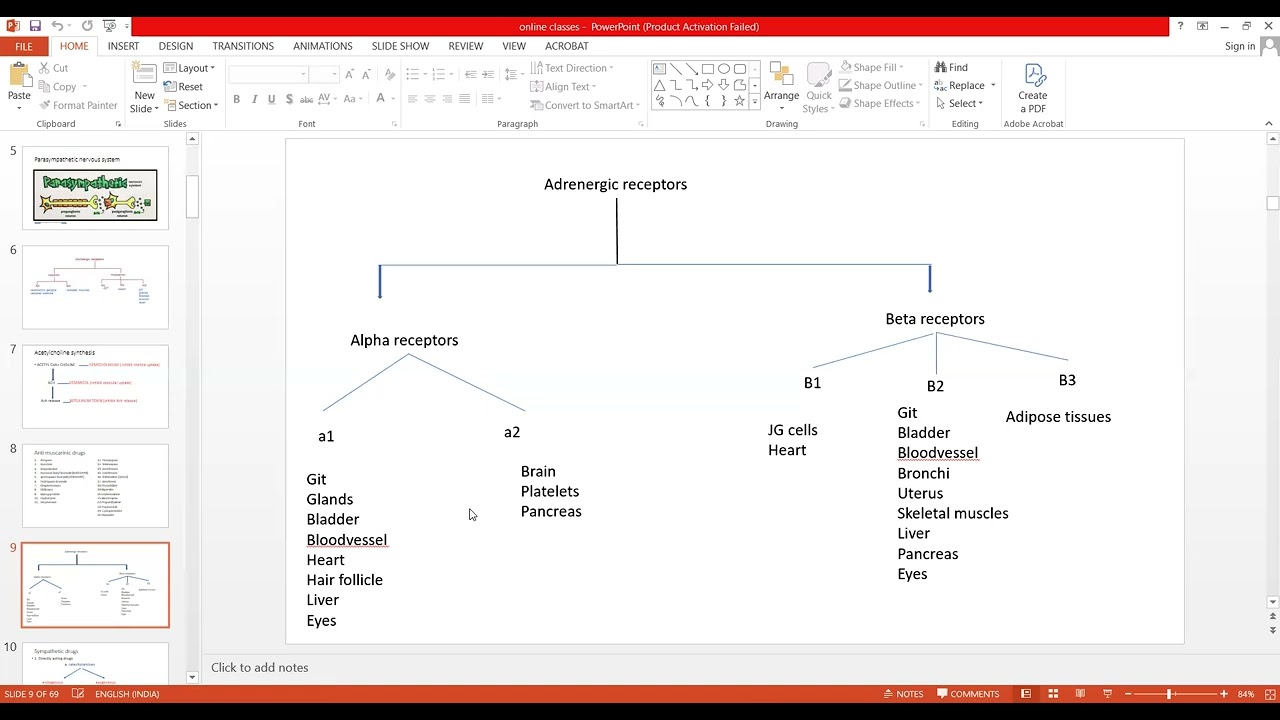
- Alpha-1 receptors are found in the GI tract, glands, bladder, blood vessels, heart, hair follicles, liver, and eyes.
- Alpha-1 actions generally oppose parasympathetic effects, e.g., decreasing GI motility, causing urinary retention, and vasoconstriction.
- Alpha-2 receptors are located in the brain, platelets, and pancreas, where they inhibit neurotransmitter release, promote platelet aggregation, and decrease insulin secretion.
- Beta-1 receptors are primarily in the heart and juxtaglomerular cells of the kidney, increasing heart rate and contractility, and promoting renin release.
- Beta-2 receptors are found in the bronchi, uterus, skeletal muscles, liver, pancreas, and eyes, causing bronchodilation, uterine relaxation, skeletal muscle contraction, and increased glucose production.
- Beta-3 receptors are located in adipose tissue and stimulate lipolysis (fat breakdown).
- Sympathetic drugs are classified as directly acting (catecholamines and non-catecholamines) or indirectly acting.
- Catecholamines (endogenous like adrenaline, noradrenaline; exogenous like dobutamine) have rapid onset but poor CNS penetration.
- Non-catecholamines include alpha and beta agonists with varied therapeutic uses.
- Indirectly acting drugs, like cocaine and amphetamines, work by inhibiting neurotransmitter reuptake.
- Alpha-1 agonists like phenylephrine are used as nasal decongestants and mydriatics.
- Alpha-2 agonists like clonidine and methyldopa are used as antihypertensives, with methyldopa being safe in pregnancy.
- Beta-2 agonists like salbutamol and terbutaline are used for asthma and as uterine relaxants.
- Indirectly acting drugs increase neurotransmitter levels, leading to increased blood pressure.
- A scenario involving a lion illustrates the activation of sympathetic receptors during a 'fight or flight' response.
- The most activated receptors in such a situation are typically beta-1 (for increased heart function) and beta-2 (for skeletal muscle activation needed for running or fighting).
- Complex scenarios require integrating knowledge of multiple receptor functions to determine the primary response.
Key takeaways
- Adrenergic receptors (alpha and beta) mediate the body's 'fight or flight' response.
- Alpha-1 receptors generally cause vasoconstriction and decreased GI/bladder activity, while alpha-2 receptors inhibit neurotransmitter release and promote platelet aggregation.
- Beta-1 receptors primarily increase cardiac function and renin release, while beta-2 receptors cause bronchodilation and uterine relaxation.
- Sympathetic drugs are classified based on their direct or indirect action and the receptors they target.
- Catecholamines are potent but short-acting sympathetic agents with limited CNS penetration.
- Non-catecholamine agonists have diverse uses, from treating asthma (beta-2 agonists) to hypertension (alpha-2 agonists).
- Understanding receptor locations and drug mechanisms is essential for predicting therapeutic effects and adverse reactions like rebound hypertension or hypertensive crisis.
Key terms
Test your understanding
- What is the primary difference in location and function between alpha-1 and alpha-2 adrenergic receptors?
- How do beta-1 and beta-2 receptors contribute differently to the body's response during a stressful situation?
- Explain the mechanism by which indirectly acting sympathetic drugs increase blood pressure.
- Why is methyldopa considered a safe antihypertensive medication during pregnancy?
- What is rebound hypertension, and which class of adrenergic drugs is most associated with it?