AI-Generated Video Summary by NoteTube
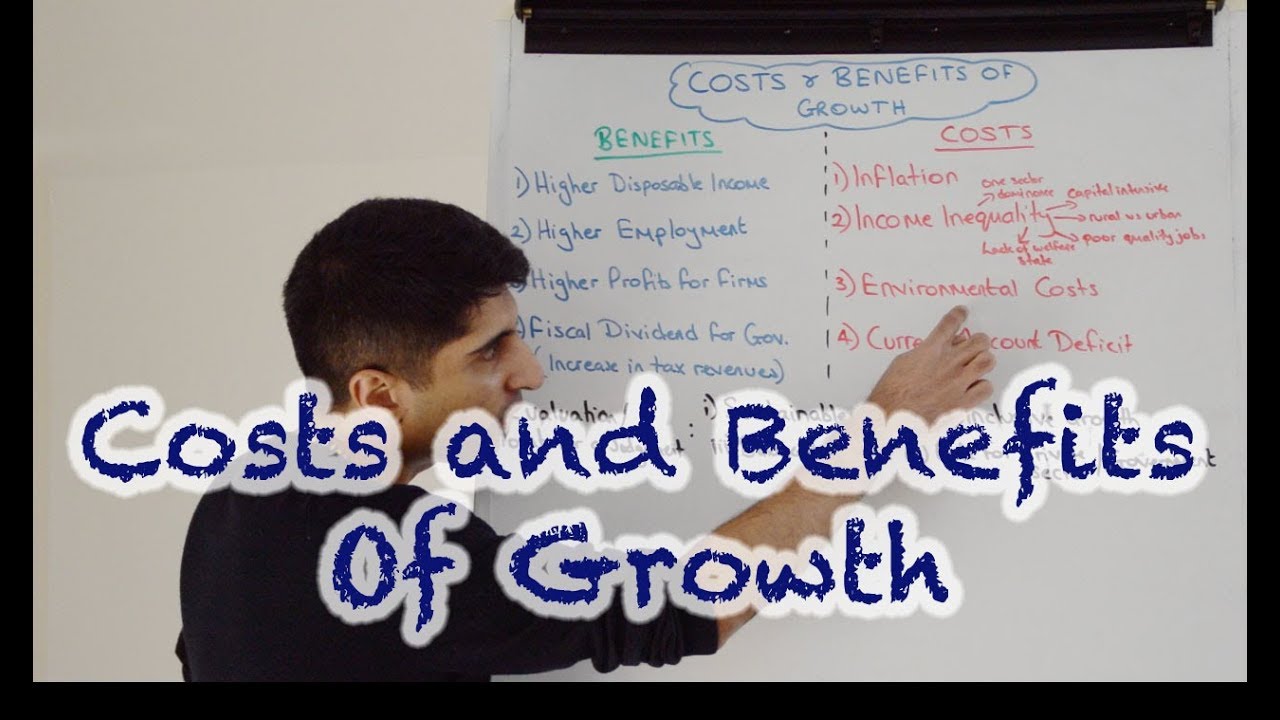
Y1 19) Costs and Benefits of Economic Growth for Living Standards (With Evaluation)
EconplusDal
Overview
This video explores the multifaceted nature of economic growth, detailing its significant benefits and considerable costs concerning living standards. It begins by outlining the advantages, such as increased household disposable income, higher employment rates, and greater profits for firms, which can fuel further investment. The government also benefits from a 'fiscal dividend' through increased tax revenues, enabling more public spending. However, the video pivots to discuss the drawbacks, including demand-pull inflation that erodes purchasing power, and rising income inequality if growth is concentrated in specific sectors or capital-intensive industries. Environmental degradation, including pollution and resource depletion, is highlighted as a major cost. Finally, the video emphasizes the importance of sustainable, inclusive, and balanced growth, advocating for a collaborative role between the private sector and government to achieve these objectives.
Want AI Chat, Flashcards & Quizzes from this video?
Sign Up FreeChapters
- •Increased household disposable income due to higher wages and employment.
- •Improvements in both material (goods) and non-material (education, health) living standards.
- •Alleviation of absolute poverty in developing countries.
- •Higher employment as firms increase production to meet demand.
- •Firms experience higher profits, enabling reinvestment in capital and triggering the accelerator effect.
- •Governments receive a 'fiscal dividend' from increased tax revenues (income, VAT, corporation tax).
- •Increased tax revenues allow governments to fund public spending on services and infrastructure.
- •Demand-pull inflation can erode purchasing power, negating living standard improvements.
- •Growth can lead to income inequality if benefits are concentrated in specific sectors (e.g., oil, finance).
- •Capital-intensive production can benefit owners of capital more than labor.
- •Urban-rural divides and poor-quality job creation can exacerbate income inequality.
- •Uncontrolled growth causes significant environmental damage (air pollution, deforestation, resource depletion).
- •Environmental costs result in negative externalities and potential welfare loss.
- •Rising incomes can lead to increased imports, potentially widening the current account deficit.
- •The goal is sustainable growth: strong, stable, and without inflation or environmental harm.
- •Inclusive growth ensures benefits are shared across society, not just a few.
- •Balanced growth, driven by multiple sectors, provides resilience.
- •Both the private sector (investment, environmental responsibility) and government (redistribution, regulation) play crucial roles.
Key Takeaways
- 1Economic growth generally leads to higher incomes, employment, and improved living standards.
- 2Governments benefit from increased tax revenues, allowing for greater public spending.
- 3Unchecked economic growth can cause significant problems like inflation and environmental damage.
- 4Income inequality can worsen if growth is not distributed broadly across the population.
- 5Sustainable growth aims for economic expansion without compromising the environment or future generations.
- 6Inclusive growth ensures that the benefits of economic progress are shared by all segments of society.
- 7A combination of private sector initiative and government policy is essential for achieving desirable economic growth.
- 8The quality and distribution of growth are as important as the growth rate itself.