15:31
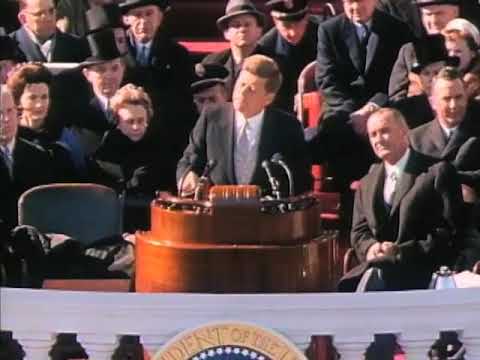
Inaugural Address of John F. Kennedy (USG 17 MI)
John F. Kennedy Library Foundation
Overview
John F. Kennedy's inaugural address, delivered in 1961, marked a pivotal moment, ushering in a new generation of American leadership. He acknowledged the profound changes in the world, particularly humanity's capacity for both creation and destruction. Kennedy articulated a vision for America's role on the global stage, emphasizing the defense of liberty, support for allies and developing nations, and a commitment to peace through strength and negotiation. The speech called for a collective effort to combat global challenges like poverty and disease, urging citizens to actively contribute to the nation's and the world's well-being.
How was this?
Save this permanently with flashcards, quizzes, and AI chat
Chapters
- Kennedy's oath of office signifies a formal transfer of power to a new generation.
- The world has fundamentally changed, possessing unprecedented power to both create and destroy.
- Core revolutionary beliefs, like rights originating from God, remain central despite global shifts.
- A new generation of Americans, shaped by war and peace, is ready to lead.
This sets the stage by framing the speech within a historical context of change and responsibility, highlighting the unique challenges and opportunities of the Cold War era.
Kennedy states, 'the torch has been passed to a new generation of Americans born in this century, tempered by war, disciplined by a hard and bitter peace.'
- The U.S. pledges to defend liberty globally, willing to pay any price and bear any burden.
- Loyalty and cooperation are pledged to old allies, emphasizing unity's strength.
- Support is offered to new nations, ensuring freedom from new forms of tyranny.
- Assistance is promised to struggling populations to help them achieve self-sufficiency, driven by moral imperative, not political gain.
This section outlines the principles guiding American foreign policy, demonstrating a commitment to democratic ideals and global stability.
Kennedy declares, 'To those old allies whose cultural and spiritual origins we share, we pledge the loyalty of faithful friends.'
- A special alliance ('Alliance for Progress') is offered to Latin American neighbors to combat poverty.
- The U.S. will oppose aggression and subversion in the Americas, asserting regional sovereignty.
- Support for the United Nations is renewed, aiming to strengthen its role as a force for peace.
- A plea is made to adversaries to begin a new quest for peace, acknowledging the dangers of nuclear destruction.
This chapter addresses the complexities of international relations, advocating for both regional security and global disarmament through dialogue and mutual understanding.
Kennedy states, 'Let us never negotiate out of fear, but let us never fear to negotiate.'
- The speech proposes exploring scientific advancements for the benefit of all humankind.
- Shared goals include exploring space, conquering deserts, eradicating disease, and tapping ocean depths.
- The aim is to create a world governed by law, ensuring justice and security for all.
- This long-term vision requires sustained effort beyond immediate political terms.
This highlights a forward-looking vision that transcends political conflict, focusing on shared human aspirations and the potential of science to improve lives.
Kennedy suggests, 'Together, let us explore the stars, conquer the deserts, eradicate disease, tap the ocean depths, and encourage the arts and commerce.'
- The success of the nation's course rests heavily on the citizens' actions.
- Americans are called to a 'long twilight struggle' against common enemies: tyranny, poverty, disease, and war.
- This requires a global alliance, uniting nations across political divides.
- Citizens are urged to actively contribute to their country and the world, embodying a spirit of service and sacrifice.
This section shifts focus to the individual, emphasizing civic duty and personal responsibility in addressing monumental global challenges.
Kennedy famously implored, 'Ask not what your country can do for you. Ask what you can do for your country.'
Key takeaways
- Leadership transitions mark opportunities for renewed vision and commitment.
- The U.S. is committed to defending freedom and supporting democratic aspirations worldwide.
- Global challenges require international cooperation and a focus on shared human progress.
- Peace can be pursued through strength, diplomacy, and a willingness to negotiate.
- Scientific advancement holds immense potential for improving the human condition when directed towards common goals.
- Individual citizens play a crucial role in achieving national and global objectives through active participation and sacrifice.
- The 'long twilight struggle' against global ills demands sustained effort and unwavering hope.
Key terms
Inaugural AddressNew GenerationLibertyCold WarAlliance for ProgressUnited NationsDeterrenceDiplomacyGlobal AllianceCivic Duty
Test your understanding
- What fundamental shift in global power dynamics did Kennedy highlight in his address?
- How did Kennedy propose to balance American strength with the pursuit of peace?
- What specific commitments did Kennedy make to different groups of nations (allies, new states, developing nations)?
- What does Kennedy mean by the 'long twilight struggle,' and what are its 'common enemies'?
- What is the core message of Kennedy's famous call to action for American citizens?