4:14
Water Flowing on Mars Today on This Week @NASA – October 2, 2015
NASA
Overview
This video highlights recent NASA discoveries and activities. Key announcements include the strongest evidence yet of liquid water on Mars, found through hydrated minerals detected by the Mars Reconnaissance Orbiter. The video also touches on the possibility of finding extraterrestrial life within the next two decades, the use of real NASA data in the movie 'The Martian,' resupply missions to the International Space Station, a rare supermoon lunar eclipse event, and NASA's commitment to educational outreach through a Spanish-language web series.
How was this?
Save this permanently with flashcards, quizzes, and AI chat
Chapters
- NASA's Mars Reconnaissance Orbiter detected hydrated minerals on Mars.
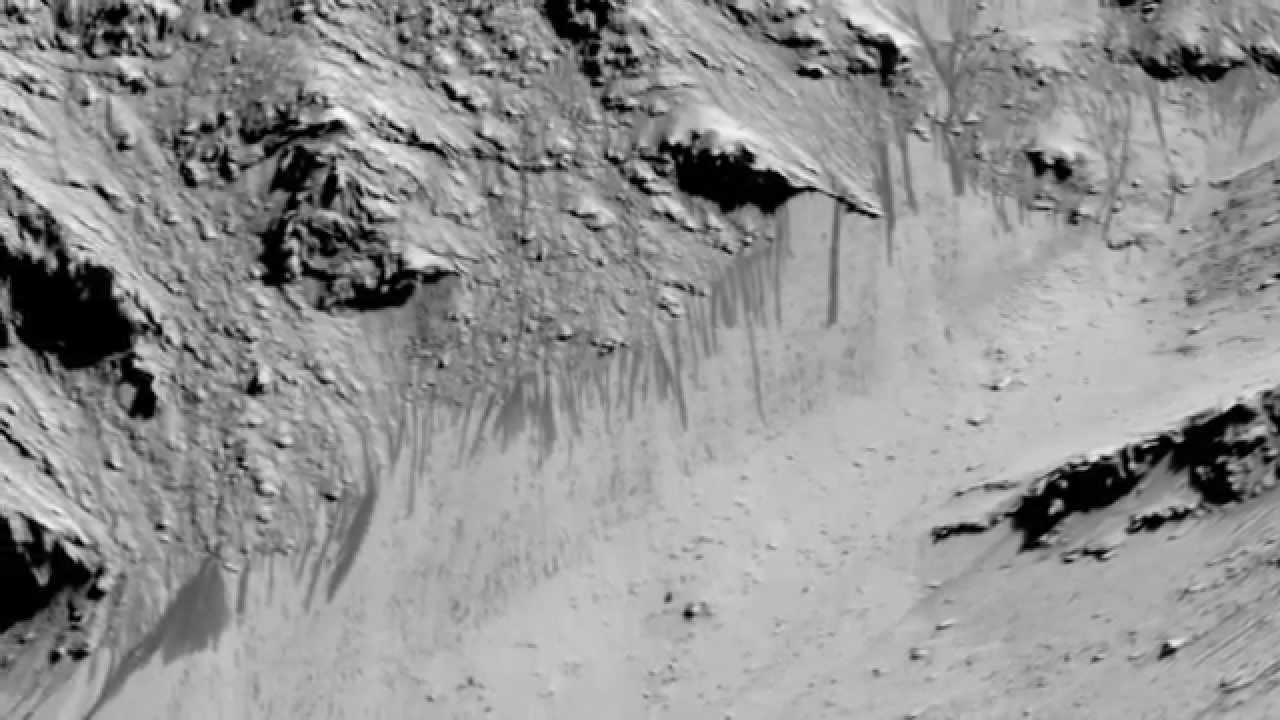
- These minerals were found on slopes showing dark streaks called recurring slope lineae (RSL).
- Hydrated salts can lower the freezing point of water, creating briny liquid water.
- This discovery significantly increases the possibility of microbial life surviving on Mars.
Finding liquid water, even briny water, is crucial because it's a fundamental requirement for life as we know it, making Mars a more compelling target in the search for extraterrestrial life.
The Mars Reconnaissance Orbiter used an imaging spectrometer to detect signatures of hydrated minerals on Martian slopes where dark, downhill streaks (RSL) appear during warmer months.
- NASA's Chief Scientist believes discovering life beyond Earth is possible within 10-20 years.
- This possibility is supported by NASA's current fleet of robotic spacecraft and observatories.
- Ongoing technological development further enhances the prospects for finding life elsewhere in our solar system.
This outlook provides a timeframe and justification for continued investment in space exploration and astrobiology research, fueling public interest and scientific endeavor.
NASA Chief Scientist Ellen Stofan testified before a House committee about the strong possibility of discovering some form of life in our solar system within the next decade, thanks to NASA's advanced robotic missions.
- The movie 'The Martian' was created using actual NASA data.
- The film depicts a fictional astronaut's survival on Mars in the 2030s.
- NASA officials and cast members discussed the movie's accuracy and real-world challenges of Mars exploration.
- The movie serves as a bridge between science fiction and the future reality of human missions to Mars.
Using real scientific data in a popular film like 'The Martian' helps engage the public with the challenges and possibilities of human space exploration, making complex concepts more accessible.
A VIP screening event featured a panel discussion with NASA officials and actors, exploring how accurately the movie reflects the difficulties NASA faces in preparing for human exploration of the Red Planet.
- Japan's HTV-5 cargo craft departed the International Space Station (ISS) after delivering supplies.
- The delivery included materials for the 'Twins Study,' comparing an astronaut and his identical twin.
- A Russian Progress resupply ship successfully docked with the ISS, bringing essential provisions.
These resupply and departure missions are vital for maintaining the ISS as a functional laboratory and ensuring astronauts have the resources needed for ongoing scientific research and survival.
The Japan Aerospace Exploration Agency's HTV-5 cargo craft left the ISS after delivering five tons of supplies, including crucial components for the groundbreaking 'Twins Study' involving astronaut Mark Kelly and his Earth-bound twin.
- A rare supermoon coinciding with a lunar eclipse occurred, the first in over 30 years.
- NASA provided live coverage of this significant astronomical event.
- NASA's 'Space to Ground' web series is available in Spanish during Hispanic Heritage Month.
- This Spanish version supports NASA's commitment to educational outreach for diverse communities.
Observing and broadcasting celestial events like the supermoon lunar eclipse captures public imagination, while multilingual outreach efforts ensure NASA's science and missions are accessible to a broader audience.
NASA Television aired live coverage of the Sept. 27 supermoon lunar eclipse, allowing viewers worldwide to witness the rare celestial alignment where Earth's shadow dimmed the moon for over an hour.
Key takeaways
- The discovery of hydrated minerals on Mars strongly suggests the presence of liquid water, a key ingredient for life.
- NASA is optimistic about finding evidence of extraterrestrial life within the next two decades.
- Popular culture, like the movie 'The Martian,' can be a powerful tool for communicating real science and the challenges of space exploration.
- Continuous resupply and operational missions are essential for the sustained success of the International Space Station.
- Rare astronomical events offer opportunities for public engagement and scientific observation.
- NASA is committed to making its scientific information and activities accessible to diverse global audiences through initiatives like Spanish-language programming.
Key terms
Mars Reconnaissance Orbiter (MRO)Recurring Slope Lineae (RSL)Hydrated MineralsBrineAstrobiologyInternational Space Station (ISS)Twins StudySupermoonLunar Eclipse
Test your understanding
- What evidence has NASA found that suggests liquid water may exist on Mars today?
- Why is the potential presence of liquid water on Mars significant for the search for life?
- How does NASA leverage popular media, such as the movie 'The Martian,' for scientific outreach?
- What role do resupply missions play in the ongoing operations of the International Space Station?
- How is NASA working to make its content accessible to a wider audience?