Flame Test Lab
dchummer CHEMISTRY
Overview
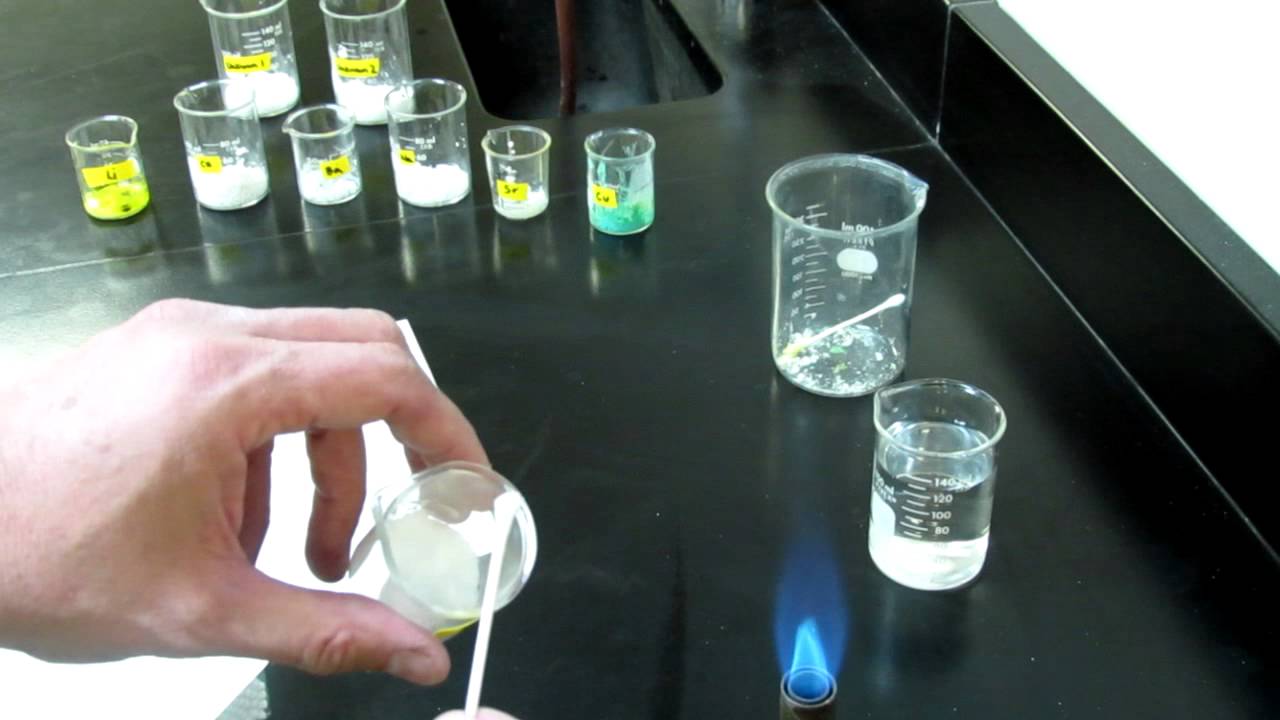
This video demonstrates the flame test experiment, a common chemistry lab activity used to identify unknown metal ions based on the characteristic color they produce when heated in a flame. The video explains how to safely light and operate a Bunsen burner, emphasizing the importance of proper air intake for a clean blue flame. It then details the procedure for testing known salts (potassium, copper, strontium, sodium, barium, calcium, and lithium) by dipping a moistened cotton swab into the salt and introducing it to the flame. Finally, it shows how to perform the same test on two unknown samples, tasking the viewer with identifying them based on the observed colors, and concludes with instructions on shutting down the equipment and cleaning up.
Save this permanently with flashcards, quizzes, and AI chat
Chapters
- The flame test is an experiment to identify unknown metal ions by the color they produce in a flame.
- Learners will create a data table and answer problem-solving questions, including researching the cause of flame colors.
- Safety glasses must be worn throughout the experiment.
- To light the burner, turn the gas jet a quarter turn.
- Bring a lit lighter to the side of the barrel to ignite the gas.
- Ensure the air intakes at the bottom are wide open for a light blue flame, which is crucial for observing the salt's color without interference from the burner's own flame.
- To turn off the burner, turn the gas valve completely off.
- The experiment uses various chloride salts: potassium, copper, strontium, sodium, barium, calcium, and lithium.
- Two unknown salt samples are also provided for identification.
- Distilled water, cotton swabs, and a waste container are necessary supplies.
- Use a clean cotton swab for each test.
- Moisten the tip of the swab with distilled water.
- Dip the moist swab into a small amount of the salt to collect it on the tip.
- Introduce the salt-covered swab into the Bunsen burner flame and observe the color produced.
- Record the observed color in the data table and dispose of the used swab in the waste container.
- The same procedure is used for the two unknown samples.
- Observe the flame color produced by each unknown.
- Compare the colors of the unknowns to the colors produced by the known salts.
- Identify the unknown samples based on the matching flame colors.
- Properly shut down the Bunsen burner by turning off the gas valve.
- Clean up the lab area, including returning safety glasses to their designated cabinet for sanitization.
- Complete the lab report, including data analysis and conclusions about the unknown samples.
Key takeaways
- Metal ions emit specific colors when heated in a flame due to electron excitation and relaxation.
- The Bunsen burner must produce a clean, blue flame for accurate observation of sample colors.
- Each flame test requires a new, clean cotton swab to prevent cross-contamination.
- The color observed in a flame test is a characteristic property of the metal cation present in the salt.
- By comparing the flame colors of unknown samples to those of known salts, the identity of the unknown metal ions can be determined.
- Safety procedures, including wearing safety glasses and proper equipment handling, are essential in any chemistry lab.
Key terms
Test your understanding
- What fundamental principle of atomic physics explains why different metal ions produce different colors in a flame test?
- How does adjusting the air intake on a Bunsen burner affect the flame, and why is a specific flame type important for this experiment?
- Why is it crucial to use a clean cotton swab for each different salt tested during a flame test?
- Describe the process of identifying an unknown salt using the flame test, including the role of known salt samples.
- What are the essential safety precautions that must be followed when performing a flame test with a Bunsen burner?