24:45
How to Be a 1-Person Marketing Machine in 2026
orenmeetsworld
Overview
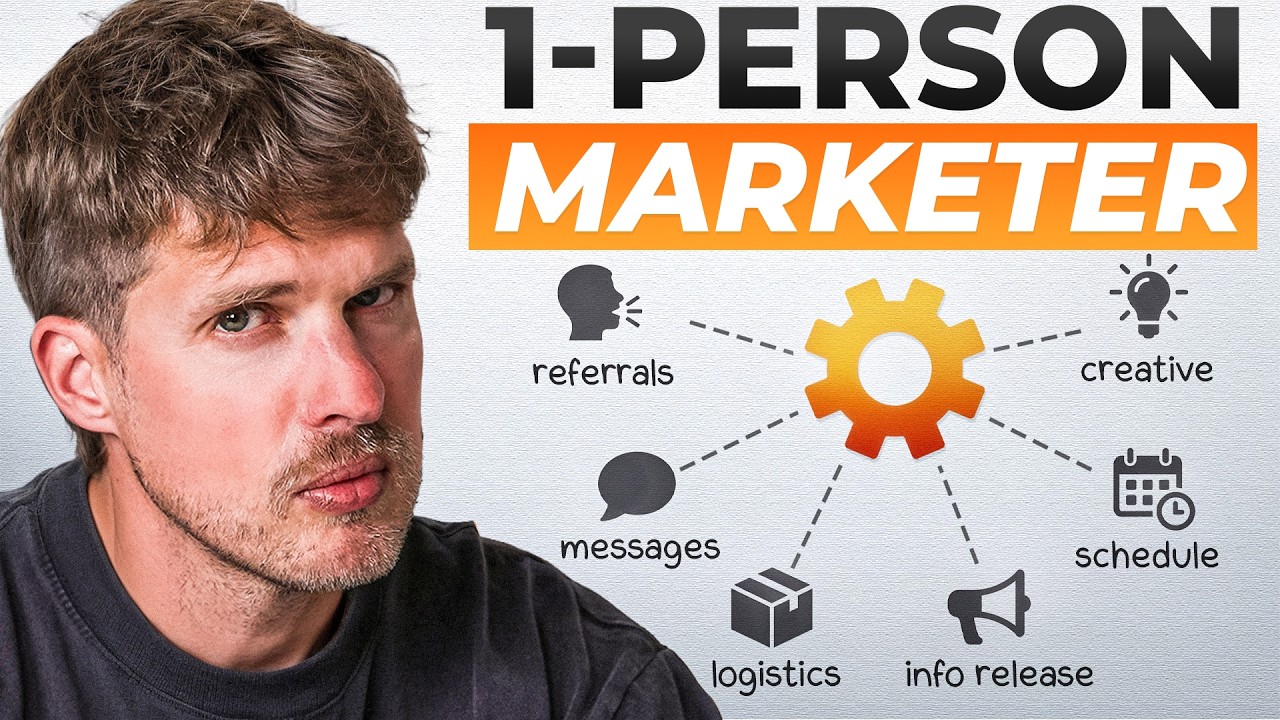
This video explains how to become a highly effective one-person marketing operation, especially in the current landscape of increasing AI adoption and market shifts. It emphasizes the importance of strategic efficiency, focusing on core marketing functions like word-of-mouth, messaging, content creation, performance marketing, and funnel optimization. The speaker outlines a weekly framework for a single marketer to manage these tasks, highlighting that this summer is a critical time to build these skills before saturation and increased competition make it significantly harder to succeed.
How was this?
Save this permanently with flashcards, quizzes, and AI chat
Chapters
- There's a recurring summer trend where content engagement dips due to people focusing on vacations and leisure.
- Influencers often capitalize on this by promoting 'anti-optimization' and work-life balance, which is algorithmically beneficial but not always strategically sound.
- This year, the trend is amplified by AI-driven job losses, creating a more competitive job market and a need for radical efficiency.
- Companies are using AI as an excuse to 'rightsize' by cutting inefficient processes and excess staff, not necessarily due to AI replacing jobs directly.
Understanding these external pressures helps marketers recognize the urgency to adapt and build robust, efficient marketing skills to remain competitive.
The trend of 'anti-optimization' content gaining traction on social media, often sparked by influencers discussing taking breaks or enjoying leisure, which the speaker argues is often a strategic move for engagement rather than genuine belief.
- Newer, lean companies are displacing older, larger ones by focusing relentlessly on efficiency and key metrics.
- This shift is driven by a reaction against the 'overspend era' where companies accumulated technical and process debt.
- The widening gap between 'chill-ers' (those not adapting) and 'hitters' (those embracing new skills and efficiency) is creating a competitive divide.
- AI is increasingly used by HR to filter resumes, making it crucial to stand out through specialized skills and a strong personal brand.
Learners need to understand that the market is rewarding efficiency and adaptability, and those who don't embrace these principles risk being left behind.
The emergence of brands that could source products affordably overseas via platforms like Alibaba and reach customers directly through social media, creating products on par with major brands with much smaller, leaner teams.
- The most effective marketing starts with optimizing for word-of-mouth and referrals from existing customers.
- Products can be inherently viral (e.g., Zoom requiring others to join) or act as 'billboards' (e.g., branded clothing).
- Incentivizing sharing and ensuring users are passionate about the product are key to driving referrals.
- Integrating referral programs (affiliate commissions, discounts for referrals) and actively asking for them at opportune moments is crucial for low-CAC growth.
This foundational strategy leverages existing customer satisfaction to drive organic growth, significantly reducing customer acquisition costs.
Offering customers a discount or reward at checkout for referring a friend, or providing a free month of service for bringing in a new client, as seen with tools like Social Snowball.
- Continuously refine your core value proposition (better, faster, cheaper, or niche appeal) and test new messaging angles monthly.
- Identify trending messages by monitoring customer support, social media, sales objections, and industry events.
- Develop a plan to release information and answers derived from these messages across various channels: website content, emails, sales templates, Reddit, and YouTube.
- These messages should inform creative development and be integrated into landing pages for conversion.
A structured monthly approach ensures marketing messages remain relevant and effectively communicated, adapting to current trends and customer needs.
A gym incorporating messaging about how they can help clients navigate fitness routines while experimenting with peptides or GLP-1s, addressing a trending customer concern.
- AI can significantly scale the creation of marketing assets like landing pages, ad copy, and sales collateral, but requires a strategic framework.
- Training AI on your brand voice and using established copywriting frameworks (like direct response) is essential for effective, conversion-focused copy.
- A 'brand voice project template' can act as a system prompt for LLMs, enabling them to generate content consistently in your brand's style.
- The goal is to build a 'second brain' for marketing that understands your brand and personas, enhancing output quality and efficiency.
Strategic AI integration allows a single marketer to produce a high volume of quality content, mimicking the output of larger teams.
Using a prompt template in an LLM like Claude or ChatGPT that includes brand context, customer personas, and desired voice references to generate homepage copy, ads, and email campaigns.
- Dedicate specific time blocks each week to core marketing functions: new creative, performance marketing, funnel optimization, collateral/email, and influencer outreach.
- New creative (8 hours/week) involves ideation, recruiting creators, briefing, and follow-up for ads and other content.
- Performance marketing (4 hours/week) focuses on loading new creative, analyzing results, and optimizing ad campaigns.
- Funnel optimization (4 hours/week) includes improving landing pages, lead forms, and email sequences (e.g., abandoned cart flows).
- Collateral/email (4 hours/week) supports sales enablement and customer communication, while influencer outreach (4 hours/week) involves managing external creators.
This structured weekly plan provides a clear framework for a single marketer to manage diverse responsibilities efficiently and effectively.
Allocating 8 hours per week to new creative, which includes finding designers or UGC creators on platforms like Dribbble or Meta Creator Manager, briefing them, and tracking progress in a shared document.
- This summer represents one of the last opportunities to build essential marketing skills before market saturation makes it significantly harder.
- The increasing reliance on AI in HR and marketing means that standing out requires deep understanding and practical application of these skills.
- Focusing on efficiency, strategic messaging, and leveraging AI effectively are critical for surviving and thriving.
- Procrastination or relying on 'excuse content' will lead to falling behind as the market demands higher performance and efficiency.
This is a call to action, emphasizing that the current window of opportunity to establish oneself as a highly effective marketer is closing rapidly.
The speaker's assertion that this summer is the last chance to lock in the skills needed to be a one-person marketing army before the market becomes saturated with AI-generated content and increased competition.
Key takeaways
- The current market favors hyper-efficient, lean operations, making it crucial for marketers to master a broad range of skills.
- Word-of-mouth and referral strategies are the most cost-effective ways to acquire customers and should be prioritized.
- AI should be viewed as a tool to scale strategic marketing efforts, not a replacement for human creativity and oversight.
- A structured weekly plan is essential for a one-person marketing team to cover all critical functions without burnout.
- Understanding and adapting to trending messages and customer needs is vital for effective communication.
- This summer is a critical period to build and solidify marketing skills before increased competition and AI saturation make it significantly more challenging.
- Proactive planning for Q4 sales and holiday campaigns should begin in the summer months to ensure success.
Key terms
One-person marketing armyAnti-optimizationAI job lossRight-sizing organizationsTechnical and process debtWord-of-mouth marketingReferral marketingCustomer Acquisition Cost (CAC)Value propositionTrending messagesInformation release mechanismAI copywritingBrand voicePerformance marketingFunnel optimizationInfluencer marketingUGC (User-Generated Content)
Test your understanding
- Why is the current summer considered a critical time to develop marketing skills, according to the video?
- How can a one-person marketing team effectively leverage AI to scale content creation while maintaining brand authenticity?
- What are the key components of a structured weekly plan for a solo marketer, and how should time be allocated?
- Explain the difference between 'inherent virality' and 'billboard products' and provide an example of each.
- What strategies can a marketer implement to optimize for word-of-mouth and referral growth, and why are they important?