26:13
How Trading Like an Idiot Makes Me $10,000/Month (15 Minutes a Day)
The Rumers
Overview
This video introduces the "Sneaky Pivot" trading strategy, designed for simplicity and consistency, aiming to generate regular income with minimal time commitment. The presenter, a seasoned trader, emphasizes that success in trading often comes from simplification rather than over-complication. The strategy relies on a specific chart setup, identifying key price levels (range high/low, swing high/low), and a three-candlestick entry pattern executed on a 15-minute timeframe. The video demonstrates the strategy through live trades, highlighting both successful outcomes and the inherent risks and unpredictability of the market.
How was this?
Save this permanently with flashcards, quizzes, and AI chat
Chapters
- Many traders struggle because they overcomplicate their strategies, leading to worse results.
- The "Sneaky Pivot" strategy prioritizes simplicity, requiring only one time frame, one chart type, and 15 minutes of daily focus.
- The presenter shares personal experience of how trying to be too clever in trading led to losses, reinforcing the value of a simple approach.
Understanding the underlying philosophy helps learners appreciate why a simple strategy can be effective, shifting their focus from complex analysis to disciplined execution.
The presenter contrasts his simple strategy with others who 'trade like they're performing brain surgery in a blender'.
- Use a single 15-minute time frame for all analysis and trading.
- Avoid using additional indicators or complex chart setups to maintain clarity.
- Identify and draw four key horizontal lines: the previous day's high (range high) and low (range low), and the next highest (swing high) and lowest (swing low) price levels.
A clean, standardized chart setup is crucial for consistently identifying the specific price levels required by the Sneaky Pivot strategy.
Drawing horizontal lines on the chart to mark the previous day's high and low, and then extending back to find the next highest and lowest price points.
- The upper two lines (range high and swing high) represent resistance and are potential sell zones.
- The lower two lines (range low and swing low) represent support and are potential buy zones.
- The strategy dictates trading only when the price reaches one of these four defined levels.
These levels act as boundaries where buying or selling pressure is historically strong, providing defined entry and exit points for trades.
The presenter explains that the upper lines act as 'bands of resistance' where sellers have historically stepped in.
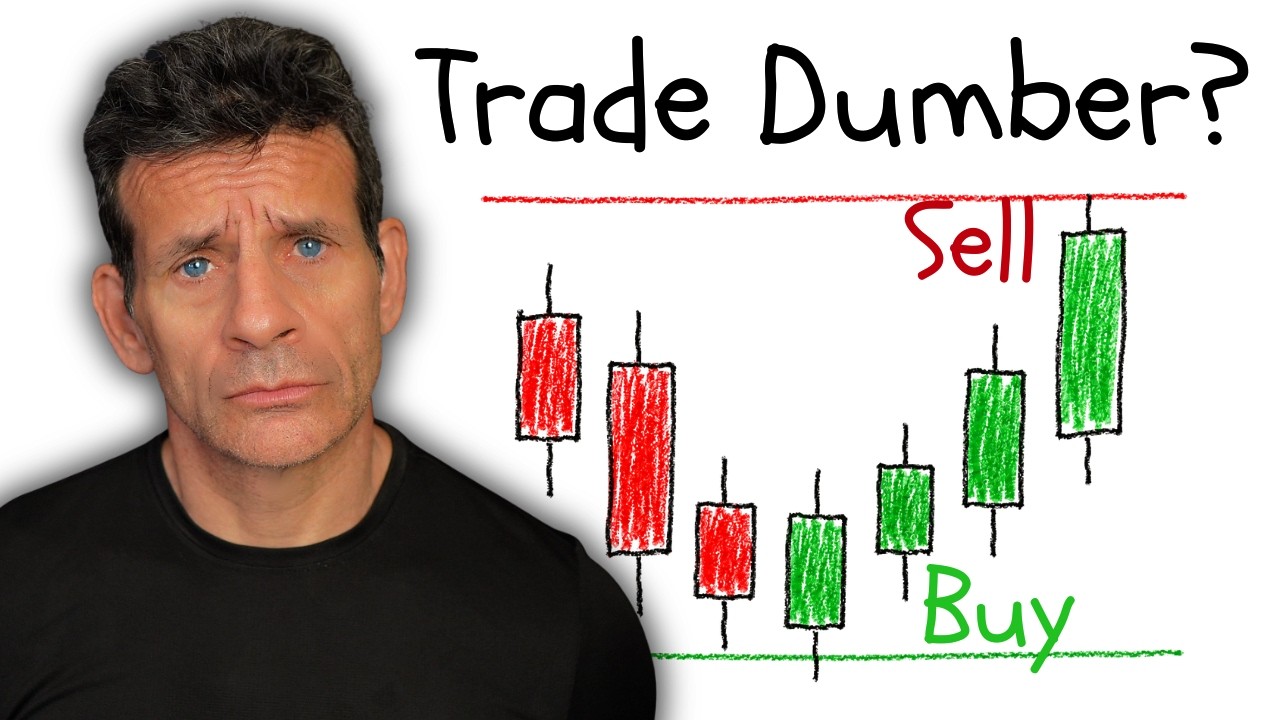
- The strategy uses a three-candlestick sequence on the 15-minute chart.
- Candle 1: A strong, decisive 'opening range candle' that moves towards a key level.
- Candle 2: The 'sneaky candle' which confirms the legitimacy of the first candle and signals potential direction.
- Candle 3: The entry candle, which occurs around the 45-minute mark, confirming the trade setup after the sneaky candle.
This specific candlestick pattern provides a clear signal for entry, reducing ambiguity and increasing the probability of a successful trade setup.
Waiting for a strong move to the swing low, followed by a green 'sneaky candle' that suggests a reversal, before entering a buy trade on the next candle that moves higher.
- Entry is triggered when the price moves above the high of the sneaky candle (for buys) or below the low (for sells).
- A stop loss is placed just below the significant buying candle (for buys) or above the selling candle (for sells) to act as a protective buffer.
- The target price is typically the opposite range boundary (e.g., targeting the range high if buying from the low range).
Properly defining entry, stop loss, and target levels is essential for risk management and maximizing potential profit within the strategy's framework.
Placing a buy order when the price breaks above the sneaky candle's high, with a stop loss placed below the low of the preceding strong buying candle.
- The video demonstrates live trades on AAOI and GLL (Google ETF) to show the strategy in action.
- Not all trades are perfect; one trade (GLL) resulted in a loss, illustrating the unpredictable nature of markets.
- Patience is vital, as trades may take time to reach their target, and price action can be messy despite textbook patterns.
Real-world trading involves both wins and losses, and seeing these outcomes helps learners develop realistic expectations and resilience.
The GLL trade initially looked promising but was eventually stopped out for a loss, while the AAOI trade eventually reached its target for a profit.
Key takeaways
- Trading success is often achieved through simplification, not by adding complexity.
- The 15-minute timeframe and defined price levels (range/swing highs and lows) form the foundation of the Sneaky Pivot strategy.
- Trading decisions should only be made when price reaches one of the four key support or resistance levels.
- The three-candlestick pattern provides a specific entry signal, confirming market intent after an initial move.
- A well-placed stop loss, anchored to a significant price level, is crucial for managing risk.
- Realistic profit targets are often the opposite range boundary, leveraging the strategy's range-bound nature.
- Even with a simple strategy, market volatility means losses are possible and require disciplined management.
Key terms
Sneaky Pivot Strategy15-minute Time FrameRange HighRange LowSwing HighSwing LowCandlestick PatternOpening Range CandleSneaky CandleEntry TriggerStop LossProfit TargetSupport and Resistance
Test your understanding
- What are the four key price levels that must be identified before executing the Sneaky Pivot strategy?
- Why is using only a 15-minute time frame considered essential for this strategy?
- How does the 'sneaky candle' contribute to the trade entry decision?
- What is the rationale behind placing a stop loss just below a significant buying candle?
- How does the strategy define the profit target for a trade?