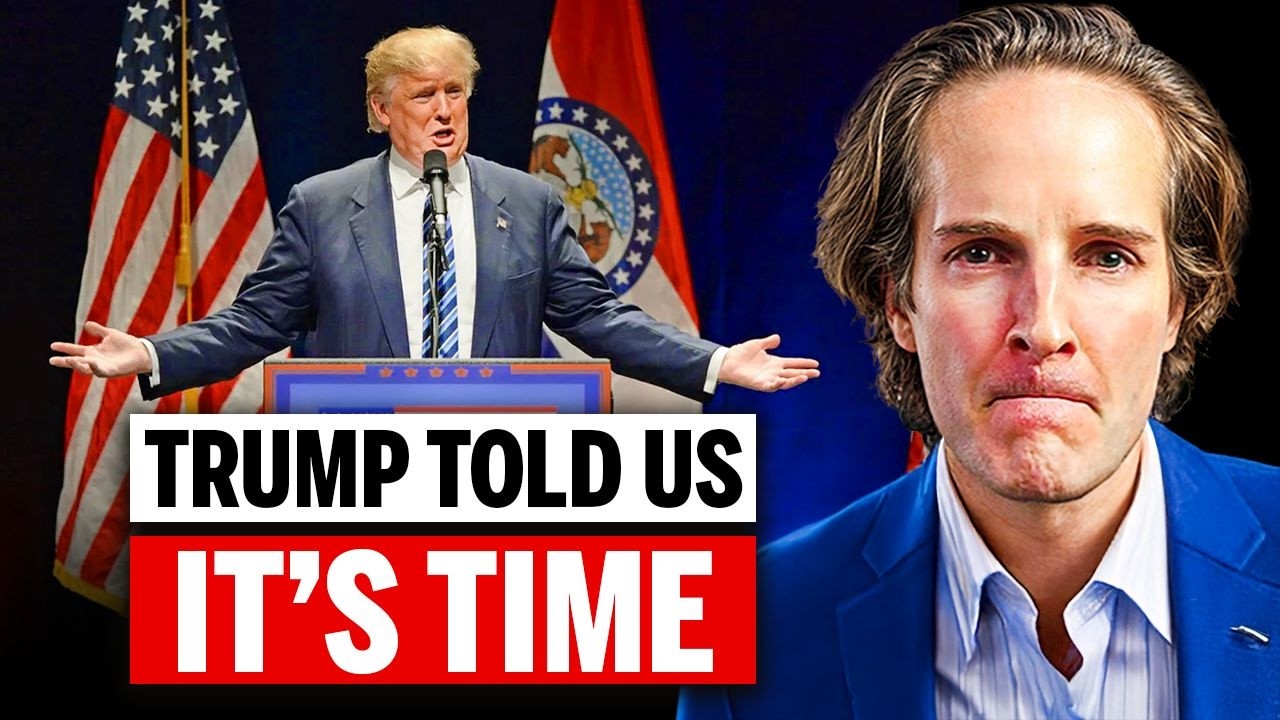
Trump to FLOOD the Market on THIS Date (Most Aren’t Ready)
Felix & Friends (Goat Academy)
Overview
This video explains a potential major market event driven by the collision of geopolitical tensions, oil price fluctuations, and divergent central bank policies. It presents two opposing scenarios: one where war continues, leading to high oil prices, inflation, and potential recession, and another where peace prevails, resulting in cheap oil, lower inflation, economic growth, and a market boom. The speaker emphasizes that most investors are positioned for the 'war' scenario and highlights the significant opportunity for those who understand and position themselves for the less-expected 'peace' scenario, detailing a framework called the 'Peace to Prosperity Pipeline' to navigate these shifts across six key economic sectors.
Save this permanently with flashcards, quizzes, and AI chat
Chapters
- A significant market event, described as a 'collision,' is imminent, involving trillions in capital.
- This event is driven by the intersection of AI debt, geopolitical oil shocks, and diverging central bank strategies.
- Investors are largely unaware, creating a risk of portfolio destruction for the unprepared and wealth creation for those positioned correctly.
- The outcome hinges on the price of oil and the opposing bets made by America (cheap oil, low rates) and Europe (expensive money, high rates).
- Scenario 1 (Wall Street/War): Assumes continued conflict, high oil prices ($150/barrel), spiraling inflation, forced interest rate hikes by the Fed, recession, and a stock/housing market crash.
- Scenario 2 (Trump/Peace): Assumes an end to conflict, a flood of cheap oil, controlled inflation, stable or lower interest rates, and a booming stock and housing market.
- These two scenarios are mutually exclusive, meaning one side will thrive while the other suffers significant losses.
- The speaker offers a framework to understand these dynamics, emphasizing that it's about understanding asset class reactions to oil prices, not politics.
- The framework consists of three forces: oil prices, interest rate divergence, and a 'confidence collision' (market positioning).
- These forces interact sequentially, like dominoes, creating predictable market movements.
- Understanding this sequence allows investors to anticipate market shifts and position themselves advantageously.
- The speaker contrasts 'watchers' (who wait for confirmation and act late) with 'builders' (who understand the framework and position early for greater returns).
- Peace in oil-producing regions leads to increased supply and collapsing oil prices.
- Lower oil prices reduce costs across nearly all sectors (shipping, food, manufacturing, plastics), leading to lower inflation.
- Historically, peace deals in the Middle East have triggered oil price drops and subsequent economic booms.
- This price drop cascades through the economy, benefiting energy infrastructure, transportation, consumer spending, manufacturing, and eventually housing and interest-rate-sensitive sectors.
- The US is maintaining low interest rates to support its economy, while Europe is raising rates into a shrinking economy.
- This divergence is unprecedented and driven by differing economic conditions and policy tools (US can influence oil supply, Europe cannot).
- Capital flows towards higher returns and stability; low US rates and growth attract investment, while high European rates and recession cause capital flight from Europe.
- The Fed is subtly increasing its balance sheet (printing money), despite not calling it QE, which could further stimulate the US economy.
- Institutional investors rely on models assuming continued war and high oil prices; a shift to peace would force massive, rapid rebalancing.
- AI debt ($1.8 trillion) poses a risk: it becomes toxic if rates rise but remains manageable if rates stay low.
- The market is largely priced for the 'war' scenario; if peace occurs, the resulting rebalancing will cause explosive price swings.
- The 'builders' who position for the unexpected peace scenario can capture significant returns, similar to the 2020 market recovery.
- The 'Peace to Prosperity Pipeline' involves five waves of capital flow, starting with energy, then transportation, consumer spending, manufacturing, and finally housing/interest-sensitive assets.
- Traditional oil producers may suffer if peace breaks out, while energy infrastructure could benefit.
- Transportation (airlines, shipping) becomes highly profitable as fuel costs drop.
- Tech/AI stocks are vulnerable to high rates but could be a major buying opportunity if rates fall.
- Consumer spending, retail, real estate (especially commercial REITs), and international/European stocks react differently based on the peace/war and rate scenarios.
Key takeaways
- The market is poised for a major event driven by geopolitical conflict, oil prices, and central bank policies, presenting both significant risks and opportunities.
- Two primary scenarios exist: continued war leading to high inflation and recession, or peace leading to lower inflation and economic growth.
- The 'Peace to Prosperity Pipeline' framework helps analyze market movements based on oil prices, interest rate divergence, and investor positioning.
- Lower oil prices, driven by peace, have a cascading positive effect on inflation, corporate profits, and consumer spending across multiple economic sectors.
- Divergent monetary policies between the US (low rates) and Europe (high rates) are creating significant capital flows and influencing asset performance.
- Institutional investors are largely positioned for a 'war' scenario, creating a potential 'confidence collision' if peace breaks out, leading to rapid market rebalancing.
- Understanding the specific impact on sectors like energy, transportation, tech, consumer goods, and real estate is key to navigating these potential market shifts.
- Proactive investors ('builders') who anticipate these changes can achieve significantly higher returns than those who wait for confirmation ('watchers').
Key terms
Test your understanding
- What are the two main geopolitical and economic scenarios the video presents, and what are the key indicators for each?
- How does the 'Peace to Prosperity Pipeline' framework suggest that changes in oil prices impact different economic sectors?
- Why is the interest rate divergence between the US and Europe considered a significant force in global capital markets?
- What is the 'confidence collision,' and how does it create potential opportunities for investors?
- How does the presence of significant AI debt influence the potential outcomes for the tech sector under different interest rate scenarios?