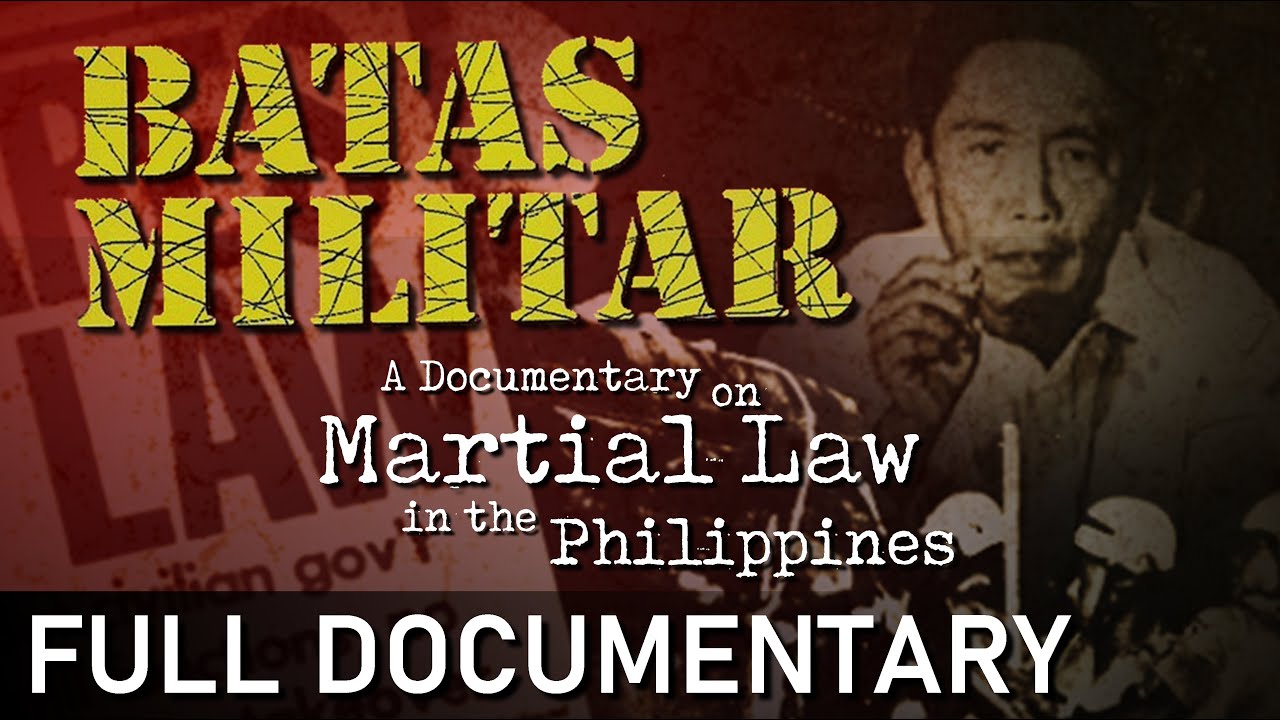
BATAS MILITAR (1997) A Documentary on Martial Law in the Philippines #MartialLaw #EDSA39
EDSA People Power Revolution
Overview
This documentary chronicles the imposition and impact of Martial Law in the Philippines under President Ferdinand Marcos. It details the political climate leading up to the declaration, including growing dissent, economic instability, and significant events like the Plaza Miranda bombing. The film explores Marcos's consolidation of power, the systematic suppression of civil liberties, the role of the military, and the widespread human rights abuses. It also highlights the rise of opposition figures like Benigno Aquino Jr., the economic policies and cronyism that characterized the regime, and the eventual popular uprising that led to the downfall of Marcos and the restoration of democracy.
Save this permanently with flashcards, quizzes, and AI chat
Chapters
- Ferdinand Marcos, nearing the end of his second term, faced constitutional limits on his presidency and reportedly planned to extend his rule through parliamentary or martial law scenarios.
- Growing public discontent in the early 1970s stemmed from economic issues like rising prices, US military base presence, and perceived government corruption.
- Senator Benigno Aquino Jr. warned of the country becoming a 'garrison state' under Marcos's increasing militarization.
- The 'First Quarter Storm' protests highlighted widespread dissatisfaction with the government's handling of economic and political crises.
- The 1971 Plaza Miranda bombing during a Liberal Party rally, which injured many, remains a mysterious event, with strong suspicions pointing to Marcos's involvement to destabilize the opposition.
- Following the bombing, Marcos suspended the privilege of the writ of habeas corpus, allowing for arbitrary arrests without judicial review.
- The suspension was later reinstated due to public outcry, but it served as a perceived 'dry run' for the eventual declaration of martial law.
- The incident fueled accusations against communist groups, but also intensified suspicions of a plot orchestrated by Marcos.
- Senator Aquino revealed 'Oplan Sagittarius,' a supposed military blueprint for martial law, which the military leadership described as a contingency plan.
- The Constitutional Convention, tasked with revising the 1935 Constitution, became a battleground for political maneuvering, with delegates allegedly bribed.
- Marcos's allies pushed for transitory provisions that would grant him sweeping executive and legislative powers during a government transition.
- The convention's focus shifted from societal reform to consolidating Marcos's power, particularly his desire to circumvent term limits.
- The alleged ambush of Defense Minister Juan Ponce Enrile's convoy on September 22, 1972, was used as a primary justification for declaring martial law.
- Marcos officially proclaimed Martial Law on September 23, 1972, citing the need to 'save the Republic and reform our society.'
- The declaration led to the closure of Congress, media outlets, and the arrest of thousands, including political opponents like Senator Aquino.
- Marcos implemented a 'New Society' (Bagong Lipunan) agenda, initiating reforms like land reform and a crackdown on corruption, exemplified by the execution of drug trafficker Lim Seng.
- Marcos implemented 'Constitutional Authoritarianism,' using legalistic frameworks to mask his dictatorial rule, supported by decrees and presidential instructions.
- The regime fostered 'crony capitalism,' enriching a select group of Marcos's relatives and allies through preferential business deals and monopolies.
- The military and intelligence agencies were significantly empowered and used to suppress dissent, leading to widespread human rights violations, including torture, disappearances, and extrajudicial killings.
- Despite claims of a 'compassionate society,' documented abuses by figures like General Fabian Ver and the Philippine Constabulary were rampant.
- Despite repression, resistance grew through various movements, including the Communist Party's expansion and the Moro National Liberation Front.
- Benigno Aquino Jr., exiled in the US, became a symbol of the opposition, advocating for democratic elections.
- Aquino's return to the Philippines in 1983, despite warnings and risks, ended tragically with his assassination at the Manila International Airport.
- The assassination sparked massive public outrage and intensified the movement against Marcos, leading to the formation of groups like the Reform the Armed Forces Movement (RAM).
- Facing economic collapse and international pressure, Marcos called for a 'snap election' in 1986, which was widely marred by fraud and violence.
- The Reform the Armed Forces Movement (RAM) attempted a coup, but popular support for the opposition, led by Corazon Aquino, turned it into a broader uprising.
- The 'People Power Revolution' at EDSA, fueled by widespread discontent and the courage of ordinary citizens, peacefully ousted Marcos.
- The revolution demonstrated the power of non-violent resistance and led to the restoration of democratic institutions.
Key takeaways
- Authoritarian regimes often consolidate power by manipulating legal and constitutional frameworks, suppressing dissent, and controlling information.
- Economic hardship and perceived corruption can fuel widespread public discontent, creating fertile ground for political upheaval.
- The suspension of civil liberties, such as the writ of habeas corpus, is a critical step in dismantling democratic processes.
- Human rights abuses are often systematic under dictatorships, employed as tools to maintain control and instill fear.
- The assassination of opposition leaders can paradoxically galvanize public resistance and accelerate the downfall of a regime.
- Popular uprisings, even when facing a heavily militarized state, can be effective in restoring democracy.
- The role of the military, whether as enforcers of the regime or as defectors, is often pivotal in the outcome of political crises.
Key terms
Test your understanding
- What were the primary justifications Ferdinand Marcos used to declare Martial Law, and how did events like the Plaza Miranda bombing contribute to this decision?
- How did Marcos consolidate power and suppress opposition during Martial Law, and what were the key mechanisms of control he employed?
- What was 'crony capitalism,' and how did it contribute to the economic and political landscape of the Marcos regime?
- Describe the role of Benigno Aquino Jr. as a symbol of opposition and the impact of his assassination on the anti-Marcos movement.
- How did the People Power Revolution successfully end Ferdinand Marcos's rule, and what lessons can be learned from this event?