58:19
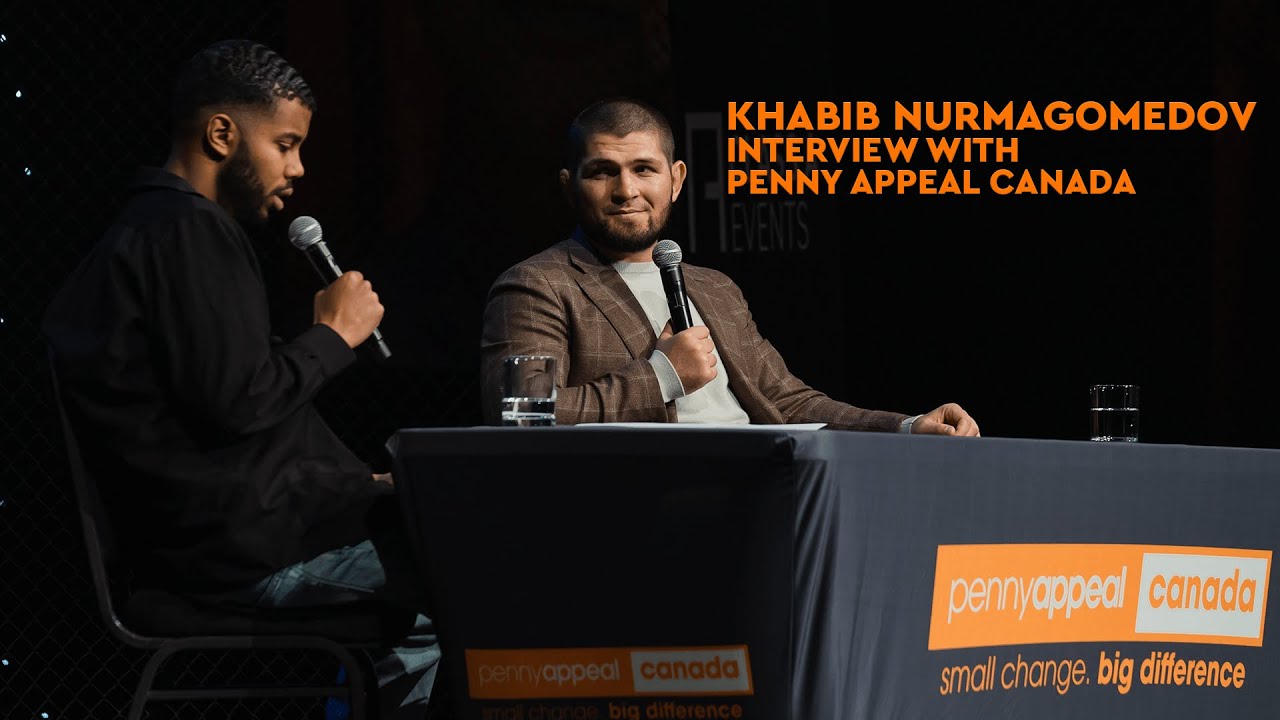
Khabib Nurmagomedov | Live in Toronto with Penny Appeal Canada | Meridian Hall
Penny Appeal Canada
Overview
This video features an interview with Khabib Nurmagomedov, discussing his upbringing in Dagestan, the influence of his father, his transition from fighter to coach, and his views on failure, integrity, and family. He shares insights into his training philosophy, fight day routines, and the importance of humility and faith. The conversation also touches on his business ventures, his predictions for upcoming fights, and his reflections on his career and personal values, emphasizing the profound impact of his mother and his commitment to his faith and community.
How was this?
Save this permanently with flashcards, quizzes, and AI chat
Chapters
- Khabib reflects on his second visit to Toronto, noting the significant difference from his first trip a decade prior when he was focused solely on fighting and less known.
- He describes his childhood in Dagestan as challenging but formative, involving rigorous training and early exposure to diverse languages and cultures.
- The language barrier in Dagestan, with over 30 languages, necessitated learning Russian, which he considers his third language after his native tongue and English.
- His early experiences, including training with bears and swimming in rivers, instilled discipline and resilience from a young age.
Understanding Khabib's background highlights the immense discipline and hardship that shaped his character and career, providing context for his later achievements and philosophies.
Training with bears as a child.
- Khabib acknowledges the profound influence of his father, who was a respected community leader and coach, shaping Khabib's own path as a father and coach.
- He views life experiences as the best teacher, emphasizing the importance of learning from mistakes and continuously improving.
- Transitioning into coaching, Khabib now finds himself in a similar role to his father, guiding and training fighters.
- He expresses pride in his coaching success, noting that his team has achieved a remarkable combined win record, a testament to his father's teachings and legacy.
This section reveals how familial influence and mentorship are passed down through generations, impacting not only personal growth but also the development of future athletes and leaders.
Khabib now being in the same position as his father was – both a father and a coach.
- Khabib coaches a select group of fighters, many of whom he trained with during his active career, highlighting a strong bond and shared history.
- He emphasizes that his coaching style is demanding, not 'nice,' focusing on rigorous training and discipline.
- His core training philosophy for MMA fighters centers on daily grappling and wrestling for at least an hour, considering it essential for true MMA development.
- He criticizes excessive focus on fitness activities like long runs or heavy lifting at the expense of fundamental grappling and wrestling skills.
Khabib's coaching philosophy underscores a specific, disciplined approach to MMA training, prioritizing foundational skills over generalized fitness, which has led to significant success for his team.
The emphasis on daily grappling and wrestling for at least one hour as the core of MMA training.
- Khabib believes in not stressing over failures, adopting a pragmatic approach to setbacks.
- He founded Eagle Fighting Championship with a strict policy against partnerships with alcohol or gambling companies, prioritizing ethical values over financial gain.
- This decision stems from a desire to protect the younger generation from the negative influences of such industries.
- He aims for his platform to promote sport and healthy competition, not harmful vices.
This chapter illustrates Khabib's commitment to his principles, demonstrating how personal integrity can guide business decisions and shape a positive influence on society, even at a financial cost.
Refusing lucrative partnerships with alcohol and gambling companies for his Eagle Fighting Championship.
- Khabib acknowledges the difficulty of balancing his public persona with his personal faith and identity as a Muslim.
- He advocates for authenticity, advising against wearing 'masks' and encouraging people to be true to themselves.
- While aware of his influence, he doesn't seek to be a role model but focuses on setting an example for his immediate circle.
- He discusses the pressures and expectations that come with fame, especially concerning his religious identity.
This section explores the challenges of maintaining personal values and religious identity under public scrutiny, highlighting the importance of authenticity and self-awareness.
The advice to 'not wear masks' and to simply 'be yourself' in public life.
- Khabib expresses a deep love for football, recalling watching Euro 1996 with his father and following various leagues since then.
- He predicts England, Brazil, and the Netherlands to perform well in the World Cup, while acknowledging other strong teams.
- He identifies his primary goal as spending quality time with his family, which has sometimes required prioritizing them over business projects.
- He reflects on his undefeated career and coaching success, attributing much of it to his father's hard work and teachings.
This chapter provides a glimpse into Khabib's personal interests beyond fighting and his current life priorities, showing a balance between his public achievements and private life.
His prediction of England, Brazil, and the Netherlands performing well in the World Cup.
- Khabib attributes his humility to his humble upbringing and his ability to compare his past life with his current success.
- He emphasizes that true humility comes from recognizing one's origins and not letting fame or success corrupt one's character.
- He believes that alcohol and drug abuse are major reasons why people lose their way and their success.
- His core support system consists of people he grew up with, including his father's former students, who remain like family.
- He deeply honors his promise to his mother to retire from fighting, viewing his mother as paramount in his life and a key to spiritual reward.
This section delves into the foundations of Khabib's character, emphasizing the enduring importance of family, faith, humility, and honoring parental wishes as guiding principles.
Keeping his promise to his mother to retire from fighting after UFC 254.
Key takeaways
- Discipline and resilience are forged through challenging early life experiences and rigorous training.
- The influence of a father figure can shape a legacy that extends across generations, impacting coaching and leadership.
- True success in MMA requires a dedicated focus on fundamental skills like grappling and wrestling, rather than solely on general fitness.
- Maintaining personal integrity is crucial, even when it means foregoing lucrative opportunities that conflict with one's values.
- Authenticity and staying true to oneself are vital for navigating public life and personal identity, especially concerning faith.
- Family, particularly a mother's influence, holds profound importance and should be honored above all else.
- Humility is cultivated by remembering one's origins and not allowing success to overshadow core values.
- Avoiding negative influences like alcohol and drugs is essential for maintaining focus, relationships, and overall well-being.
Key terms
DagestanLanguage BarrierLegacyEagle Fighting ChampionshipIntegrityHumilityFaithGrapplingWrestlingSadaqah Jariyah
Test your understanding
- How did Khabib's upbringing in Dagestan shape his approach to training and life?
- What core principles guide Khabib's coaching philosophy and his approach to developing fighters?
- Why did Khabib choose to forgo partnerships with alcohol and gambling companies for his promotion, and what does this decision reveal about his values?
- How does Khabib define humility, and what experiences contribute to his grounded perspective despite his success?
- What is the significance of Khabib's relationship with his mother, and how has it influenced his life and career decisions?