1:06:25
13A - Genetics I
Max Porter
Overview
This video introduces fundamental concepts in genetics, starting with the basic building blocks like DNA, genes, and chromosomes. It explains how genes exist as alleles, which are different versions of the same gene, and how these alleles contribute to an organism's genotype and observable traits (phenotype). The video then delves into Gregor Mendel's pioneering work with pea plants, detailing his experiments that revealed the principles of dominant and recessive inheritance and the predictable ratios of traits in offspring. Finally, it introduces Punnett squares as a tool for predicting the probability of genetic outcomes in crosses.
How was this?
Save this permanently with flashcards, quizzes, and AI chat
Chapters
- DNA is the molecule that carries genetic information, organized into genes, which are segments of DNA that code for specific proteins.
- A genome comprises all the genes within an organism.
- Chromosomes are structures that package DNA, especially during cell division, with each chromosome containing a specific set of genes.
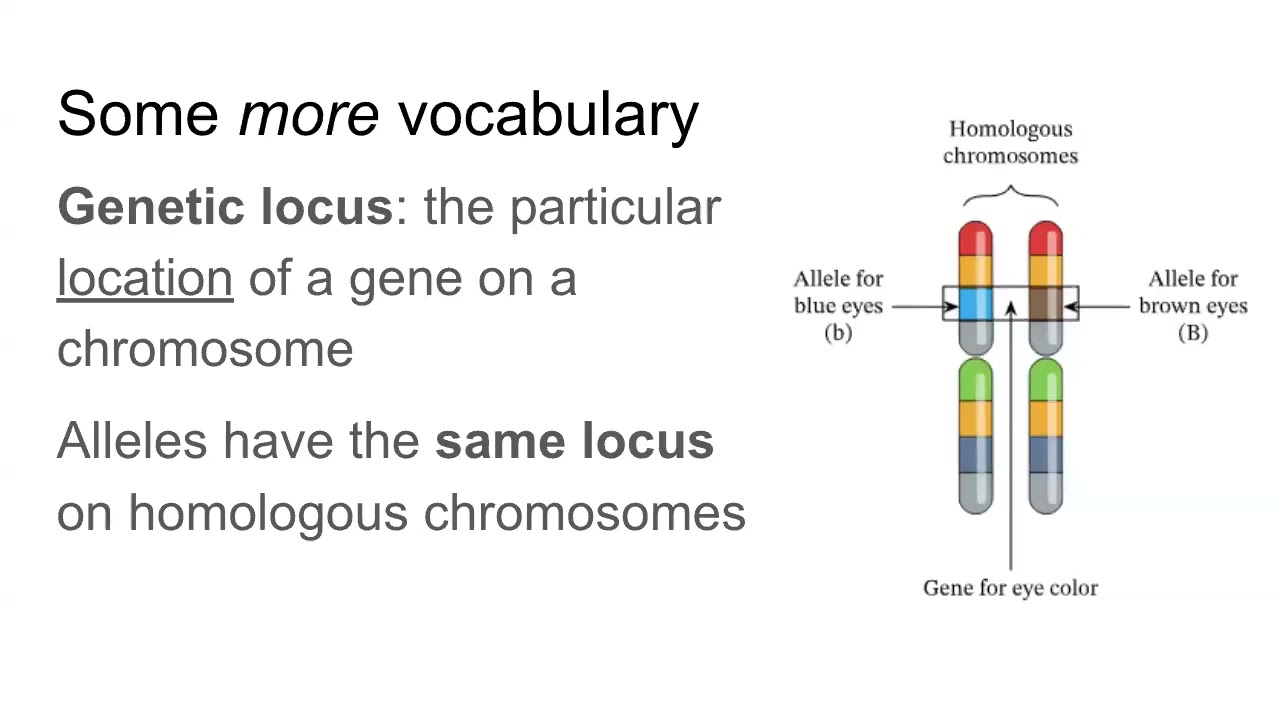
- Homologous chromosomes are pairs of chromosomes, one inherited from each parent, that are similar in size and shape and carry the same genes.
Understanding these basic units is crucial for comprehending how genetic information is stored, organized, and passed down through generations.
A chromosome is like a book, and a gene is a specific sentence within that book that provides instructions for building something.
- Alleles are different versions of the same gene, found at the same location (locus) on homologous chromosomes, and are inherited from each parent.
- Genotype refers to the specific combination of alleles an individual possesses for a particular gene (e.g., BB, Bb, or bb).
- Phenotype is the observable physical or biochemical characteristic of an organism, resulting from its genotype and environmental influences.
- The genetic locus is the specific physical location of a gene on a chromosome.
These terms define how genetic variations arise and how they manifest as observable traits, forming the basis for understanding inheritance patterns.
For the eye color gene (character), the alleles might be 'B' for brown and 'b' for blue. An individual's genotype could be BB, Bb, or bb, leading to the phenotype of brown or blue eyes.
- A character is a broad, heritable feature that varies within a population (e.g., flower color).
- A trait is a specific variant of a character (e.g., purple flowers or white flowers).
- Historically, humans observed that traits are passed down through generations but lacked understanding of the mechanism.
- Early questions focused on the source of variation and how traits are inherited without blending.
Distinguishing between characters and traits helps in systematically studying inheritance, and understanding historical questions sets the stage for Mendel's breakthroughs.
Eye color is a character, while blue eyes or brown eyes are specific traits.
- Gregor Mendel, a monk with a background in math and plant science, studied heredity using pea plants due to their distinct characters with only two possible traits.
- Mendel used true-breeding plants (plants that consistently produce offspring with the same trait) for his experiments.
- He crossed plants with contrasting traits (e.g., purple vs. white flowers) and observed the offspring generations (F1 and F2).
- Mendel's experiments showed that traits do not blend but are passed down as discrete units, with one trait often masking another.
Mendel's systematic approach and choice of organism laid the foundation for modern genetics by revealing fundamental laws of inheritance.
Crossing a true-breeding purple-flowered pea plant with a true-breeding white-flowered pea plant resulted in all purple-flowered offspring (F1 generation), but the white trait reappeared in the next generation (F2) at a predictable ratio.
- Dominant alleles express their trait even when only one copy is present, masking the effect of a recessive allele.
- Recessive alleles only express their trait when two copies are present (homozygous recessive).
- Dominant alleles often correspond to functional proteins, while recessive alleles may result from mutations that prevent protein production.
- Uppercase letters denote dominant alleles, and lowercase letters denote recessive alleles for the same gene.
This concept explains why certain traits appear more frequently and how hidden genetic information can still be passed on.
In pea plants, the allele for purple flowers (P) is dominant over the allele for white flowers (p). A plant with genotype PP or Pp will have purple flowers, while only pp will have white flowers.
- Homozygous individuals have two identical alleles for a gene (e.g., PP or pp).
- Heterozygous individuals have two different alleles for a gene (e.g., Pp).
- Homozygous dominant means having two dominant alleles (PP).
- Homozygous recessive means having two recessive alleles (pp).
These classifications help predict the genetic makeup of individuals and their potential to pass on specific alleles.
A pea plant with genotype PP is homozygous dominant for flower color, while a plant with genotype Pp is heterozygous.
- A Punnett square is a diagram used to predict the probability of offspring inheriting specific genotypes and phenotypes from a cross.
- It involves placing the alleles of one parent along the top and the alleles of the other parent along the side.
- Each box within the square represents a possible genotype of an offspring, formed by combining the alleles from the corresponding row and column.
- Punnett squares help determine genotypic ratios (e.g., 1:2:1) and phenotypic ratios (e.g., 3:1) for offspring.
Punnett squares provide a visual and systematic method for understanding the probabilistic nature of genetic inheritance.
Crossing two heterozygous pea plants (Pp x Pp) results in a Punnett square showing one PP, two Pp, and one pp genotype, leading to a 3:1 phenotypic ratio of purple to white flowers.
Key takeaways
- Genes are segments of DNA that determine specific traits, and alleles are different versions of these genes.
- An individual's genotype (allele combination) determines their phenotype (observable traits), with dominant alleles often masking recessive ones.
- Gregor Mendel's experiments with pea plants established that traits are inherited as discrete units, not blended, and follow predictable patterns.
- The concepts of dominant and recessive alleles explain why certain traits appear more often and how genetic variation is maintained.
- Homozygous individuals have identical alleles for a gene, while heterozygous individuals have different alleles.
- Punnett squares are essential tools for calculating the probability of specific genetic outcomes in offspring.
- Understanding basic genetic terminology like gene, allele, genotype, and phenotype is fundamental to comprehending inheritance.
Key terms
DNAGeneGenomeChromosomeHomologous chromosomesAlleleGenotypePhenotypeGenetic locusCharacterTraitTrue breedingP generationF1 generationF2 generationDominant alleleRecessive alleleHomozygousHeterozygousPunnett square
Test your understanding
- How does the structure of DNA relate to genes and chromosomes?
- What is the difference between a genotype and a phenotype, and how are they related?
- Explain Mendel's principle of segregation using the concepts of alleles and homologous chromosomes.
- How do dominant and recessive alleles influence the expression of traits in an individual?
- What information can be derived from a Punnett square, and what are its limitations in predicting exact outcomes?