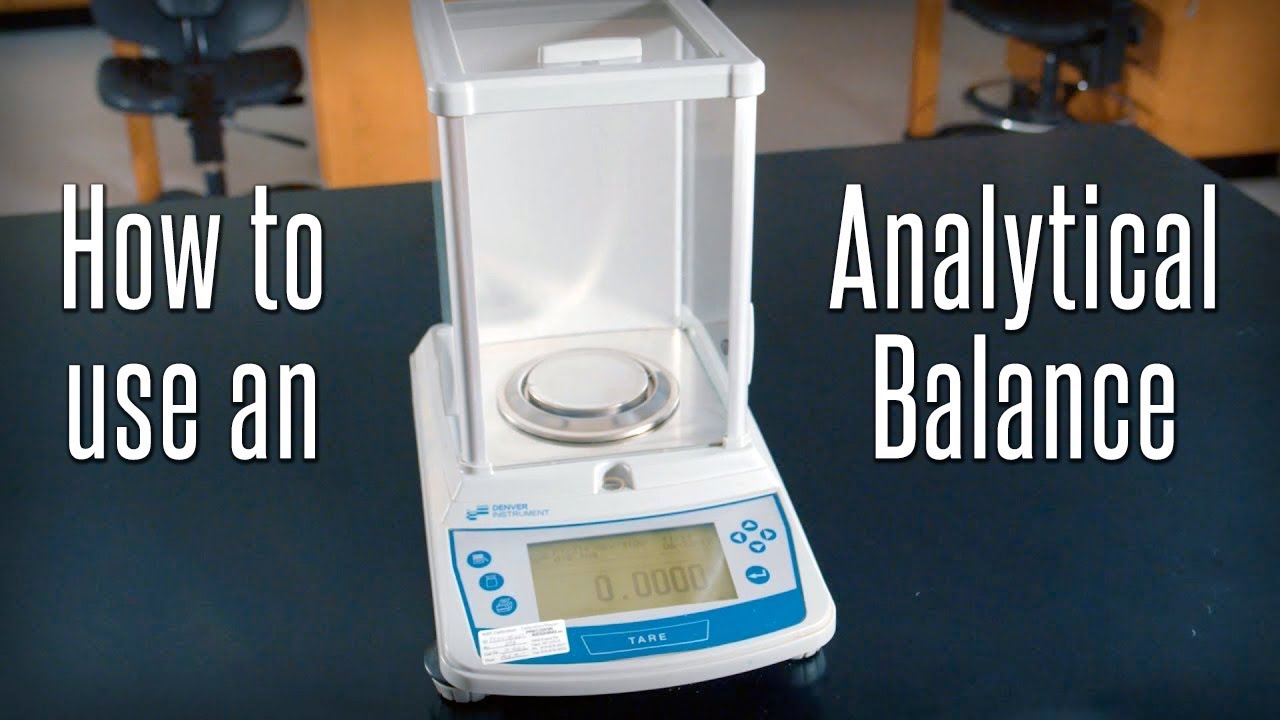
3:51
How to Use an Analytical Balance
BioNetwork
Overview
This video explains how to properly use an analytical balance, a precise instrument found in biotech labs. It covers selecting a stable, draft-free workspace, ensuring the balance is level and warmed up, and the correct procedures for weighing small amounts using weighing paper and slightly larger amounts using a weigh boat. The process includes taring the container and carefully adding the substance until the target weight is reached. Finally, it details the importance of cleaning the balance after use to maintain its accuracy and longevity.
How was this?
Save this permanently with flashcards, quizzes, and AI chat
Chapters
- Analytical balances are essential for highly precise measurements, typically to four decimal places.
- They are designed for small weights (e.g., a can of soup) and have a limited maximum capacity to prevent damage.
- Accuracy depends on minimizing external factors like vibrations and air currents.
Understanding the limitations and purpose of an analytical balance is crucial to avoid damaging the equipment and to ensure accurate experimental results.
A paperclip weighs about 1 gram, illustrating the scale of items suitable for an analytical balance.
- Place the balance on a stable, vibration-free surface like a marble counter or lab bench.
- Avoid areas near doorways or air vents that can cause air currents.
- Ensure the balance is level by adjusting its feet until the bubble is centered in the indicator ring.
- Allow the balance to warm up to its operating temperature if it has been turned off or unplugged.
Proper setup minimizes environmental interference, which is critical for obtaining reliable and reproducible measurements from a sensitive instrument.
Adjusting the feet of the balance until the air bubble is inside the black ring.
- Use weighing paper for substances less than 5 grams.
- Fold the weighing paper to create a crease for easier handling.
- Place the paper on the balance pan, close the doors, and press 'tare' to zero the balance.
- Slowly add the substance using a scoop until the desired weight is reached.
- Close the doors to get a stable reading and document the exact measurement.
Following these steps ensures that you are only measuring the weight of the substance, not the container, leading to accurate results for small quantities.
Measuring 1.5 grams of sodium bicarbonate using folded weighing paper.
- Use a weigh boat for substances heavier than what weighing paper is suitable for.
- Place the weigh boat on the balance pan, close doors, and tare the balance.
- Add the substance gradually until the target weight is achieved, aiming for a specific tolerance (e.g., +/- 0.02 grams).
- Always document the final, precise weight in your lab notebook.
Using an appropriate container like a weigh boat and understanding acceptable tolerances are key for accurately measuring larger quantities of materials.
Weighing 12.19 grams of powdered Tris buffer using a weigh boat.
- Clean the balance after each use, especially at the end of the day.
- Put the balance in standby mode or unplug it before cleaning.
- Remove the weigh pan and components carefully.
- Use a soft brush to sweep away any residual powder from the chamber and door grooves.
- Replace the drip ring and weigh pan once clean.
Regular and proper cleaning prevents contamination and buildup, which can affect the balance's accuracy and lifespan.
Using a soft bristle paintbrush to sweep powder from the weigh chamber and door grooves.
Key takeaways
- Analytical balances measure very small quantities with high precision and should not be used for heavy items.
- A stable, draft-free environment and a level balance are critical for accurate readings.
- Always tare your weighing container (paper or boat) before adding the substance to be measured.
- Gradually add the substance to reach the target weight, allowing the balance reading to stabilize.
- Document all measurements accurately in your lab notebook immediately after weighing.
- Proper cleaning after use is essential for maintaining the balance's performance and longevity.
Key terms
Analytical balancePrecisionTareWeighing paperWeigh boatVibrationsAir currentsOperating temperatureLab notebook
Test your understanding
- What is the primary function of an analytical balance and what are its limitations?
- Why is it important to place an analytical balance on a stable surface away from drafts?
- How do you prepare the balance to measure the weight of a substance using weighing paper?
- What steps should be taken to ensure the accuracy of a measurement when using a weigh boat?
- Why is cleaning the analytical balance after use a critical step?