2:46
Niños en EEUU, son bilingües y mejores | Noticiero | Noticias Telemundo
Noticias Telemundo
Overview
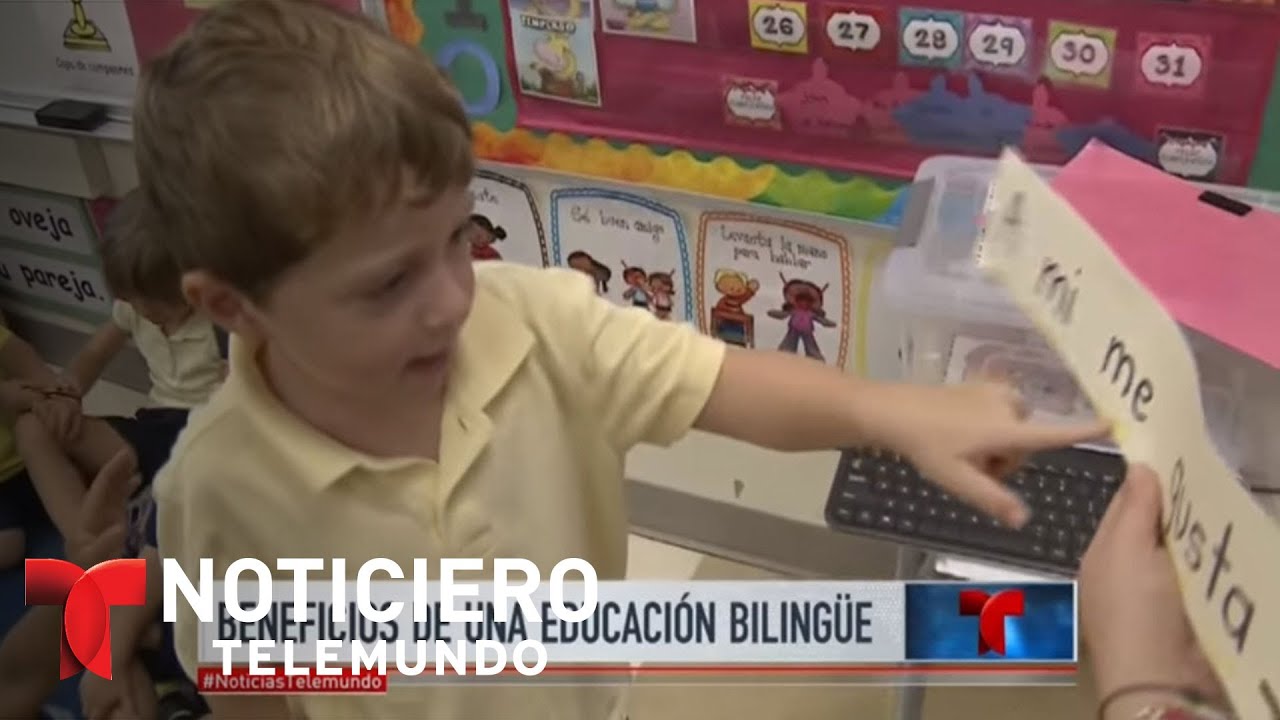
This video segment discusses the growing trend and benefits of bilingual education in the United States, particularly focusing on Spanish-English programs. It highlights how these programs enhance cognitive development and future job prospects. Despite some parental concerns about English acquisition, educators emphasize that bilingual education actually supports learning English while preserving the native language and fostering cultural appreciation. The segment also touches upon how these programs can revitalize struggling schools, turning them into desirable educational institutions with waiting lists.
How was this?
Save this permanently with flashcards, quizzes, and AI chat
Chapters
- Bilingual schools are increasing and improving in the US.
- These programs teach subjects like math and science in multiple languages, including English and Spanish.
- Educators state that learning a second language is beneficial for brain development.
Understanding the growth of bilingual education is crucial as it represents a significant shift in educational approaches that can impact cognitive development and future opportunities for students.
Schools are teaching math and science in English and also in French, indicating a broader trend beyond just Spanish-English programs.
- Many Latino parents worry that English will negatively affect their children's primary language.
- Contrary to fears, bilingual education programs help students learn English effectively.
- These programs also support students in maintaining their native language.
This addresses a common barrier to bilingual education, reassuring parents that dual-language learning supports, rather than hinders, their children's primary language and English acquisition.
A mother wants her children to appreciate another culture, highlighting a non-academic benefit of bilingualism.
- Learning a second language aids in overall brain development.
- Bilingualism can improve future job opportunities, as employers value multilingual candidates.
- Students in bilingual programs are not only learning a new language but also developing cognitive flexibility.
This emphasizes the tangible benefits of bilingualism, linking language learning to enhanced cognitive function and improved employability in a globalized world.
A student explains that being able to speak two languages is a valuable skill that potential employers will recognize.
- Bilingual programs can offer a second chance for schools facing decline.
- Schools that were previously struggling can become highly sought after due to these programs.
- This leads to increased enrollment and even waiting lists for admission.
This demonstrates the broader societal impact of bilingual education, showing how it can transform struggling educational institutions and benefit entire communities.
A school in the poorest neighborhood of the capital, which was previously difficult, now has a waiting list due to its bilingual program.
Key takeaways
- Bilingual education programs are expanding and proving effective in the US.
- Learning a second language enhances cognitive development and brain function.
- Contrary to some fears, bilingual education supports, rather than hinders, the learning of both the native language and English.
- Multilingualism is a valuable asset that can significantly improve future career prospects.
- Bilingual programs can revitalize struggling schools, making them desirable educational choices.
- These programs foster cultural appreciation alongside linguistic skills.
Key terms
Bilingual educationCognitive developmentLanguage acquisitionNative languageSecond languageMultilingualismCultural appreciationSchool revitalization
Test your understanding
- What are the primary cognitive benefits associated with learning a second language?
- How does bilingual education support a student's ability to learn English, according to educators?
- Why might parents be hesitant about enrolling their children in bilingual programs, and how is this concern addressed?
- What impact can bilingual education programs have on the overall standing and enrollment of schools?
- How can speaking multiple languages contribute to a student's future career opportunities?