TICE ART 1010 Renaissance ART
Nancy Ross
Overview
This video explores the Renaissance, a period of rebirth in Europe following the Middle Ages. It highlights the shift from a God-centered to a human-centered worldview, known as humanism, and introduces key figures like Petrarch, Brunelleschi, Donatello, Leonardo da Vinci, Michelangelo, and Raphael. The summary details their artistic innovations, such as linear perspective and new sculptural techniques, and discusses major works like Brunelleschi's dome, Michelangelo's David and the Sistine Chapel ceiling, and Leonardo's Mona Lisa and The Last Supper. The video also touches upon the Northern Renaissance and the Mannerist style that followed, emphasizing the lasting impact of Renaissance ideas on Western art and culture.
Save this permanently with flashcards, quizzes, and AI chat
Chapters
- The Renaissance, meaning 'rebirth,' began in the mid-14th century, shifting focus from the spiritual to human interests.
- Italian scholar Petrarch revived interest in classical Greek and Roman thought, reconciling it with Christianity.
- This new focus on human potential and achievement is called humanism.
- Filippo Brunelleschi, a true 'Renaissance man,' applied principles of linear perspective to art and engineering.
- He famously designed and built the massive dome for the Florence Cathedral without traditional scaffolding or flying buttresses.
- Donatello, influenced by Roman styles, created the first freestanding bronze sculpture of the Renaissance, his David, showcasing classical techniques like contrapposto.
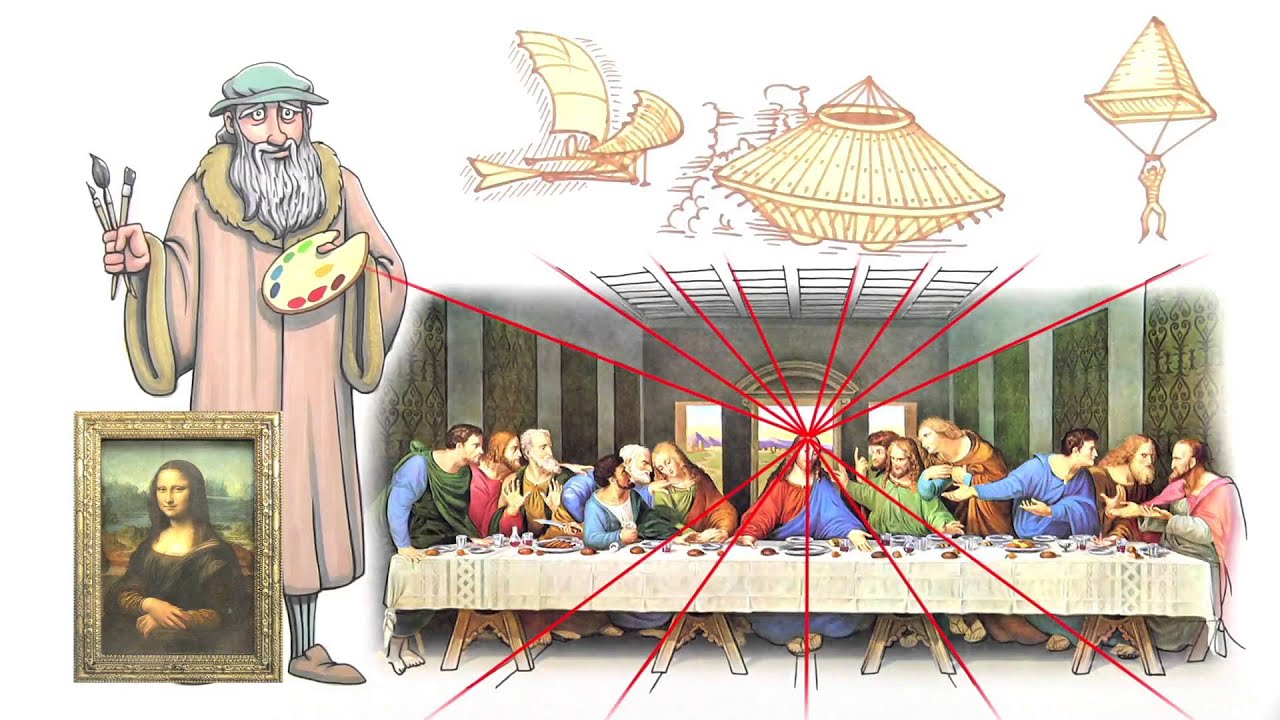
- Leonardo da Vinci exemplified the 'Renaissance man' with talents spanning painting, science, and engineering.
- His iconic works include the Mona Lisa and The Last Supper, the latter noted for its emotional depth and use of perspective to guide the viewer's eye.
- Michelangelo, a master sculptor and painter, created the Pietà and famously painted the Sistine Chapel ceiling under challenging conditions.
- Raphael, influenced by Michelangelo, became a favorite of the Pope and a leading artist of the High Renaissance.
- His masterpiece, 'The School of Athens,' is an intellectual gathering of classical philosophers and scientists, symbolizing the integration of humanism within the Church.
- Raphael's work demonstrates a harmonious and balanced style, incorporating classical ideals and realistic portrayal.
- The Renaissance ideas spread north, leading to the Northern Renaissance, characterized by meticulous detail and realism.
- Artists like Jan van Eyck pioneered oil painting techniques, and Albrecht Dürer blended Northern and Italian styles.
- Following the High Renaissance, Mannerism emerged, featuring unbalanced compositions, distorted figures, and heightened drama, as seen in works by Tintoretto and Parmigianino.
Key takeaways
- The Renaissance marked a significant cultural shift towards humanism, valuing human intellect and achievement alongside spiritual concerns.
- Innovations in perspective and construction, pioneered by artists like Brunelleschi and Leonardo, revolutionized visual representation and architecture.
- The 'Renaissance man' ideal celebrated individuals with diverse talents and expertise across multiple fields.
- Masterpieces like Michelangelo's Sistine Chapel ceiling and Raphael's 'The School of Athens' demonstrate the profound impact of Renaissance art and thought.
- The spread of Renaissance ideas to Northern Europe and the subsequent development of Mannerism show the dynamic and evolving nature of artistic movements.
- The Renaissance was a period of broad intellectual and creative ferment, coinciding with major discoveries and advancements in science, exploration, and religion.
Key terms
Test your understanding
- What fundamental shift in worldview characterized the Renaissance and how did humanism embody this change?
- How did artists like Brunelleschi and Leonardo da Vinci utilize principles like linear perspective to create more realistic art?
- What made Michelangelo's works, such as the Pietà and the Sistine Chapel ceiling, significant contributions to Renaissance art?
- Why is Raphael's 'The School of Athens' considered a representation of the integration of humanism within the Church?
- How did the Northern Renaissance and Mannerism differ from the ideals of the Italian High Renaissance?