10:14
The Chemical Mind: Crash Course Psychology #3
CrashCourse
Overview
This video explores the biological basis of our thoughts, feelings, and behaviors by focusing on the electrochemical processes within the nervous system and the chemical signaling of the endocrine system. It explains how neurons communicate through neurotransmitters and how hormones, secreted by glands, influence various bodily functions and psychological states. The video emphasizes that all psychological phenomena have a biological foundation, illustrating this with examples of how brain chemistry affects our reactions to stimuli, our moods, and our actions.
How was this?
Save this permanently with flashcards, quizzes, and AI chat
Chapters
- Psychological experiences, like fear or mood, are a direct result of chemical processes in the body.
- The fundamental principle is that 'everything psychological is biological,' meaning our mental states are inseparable from our physical condition.
- Understanding the mind requires examining how the body's chemistry influences our thoughts, feelings, and perceptions.
This foundational concept helps learners understand that their mental and emotional states are not abstract but are rooted in tangible biological mechanisms, providing a scientific framework for studying psychology.
The sudden release of chemicals in response to a loud banging noise, causing a fight-or-flight reaction, illustrates how biology directly drives psychological responses.
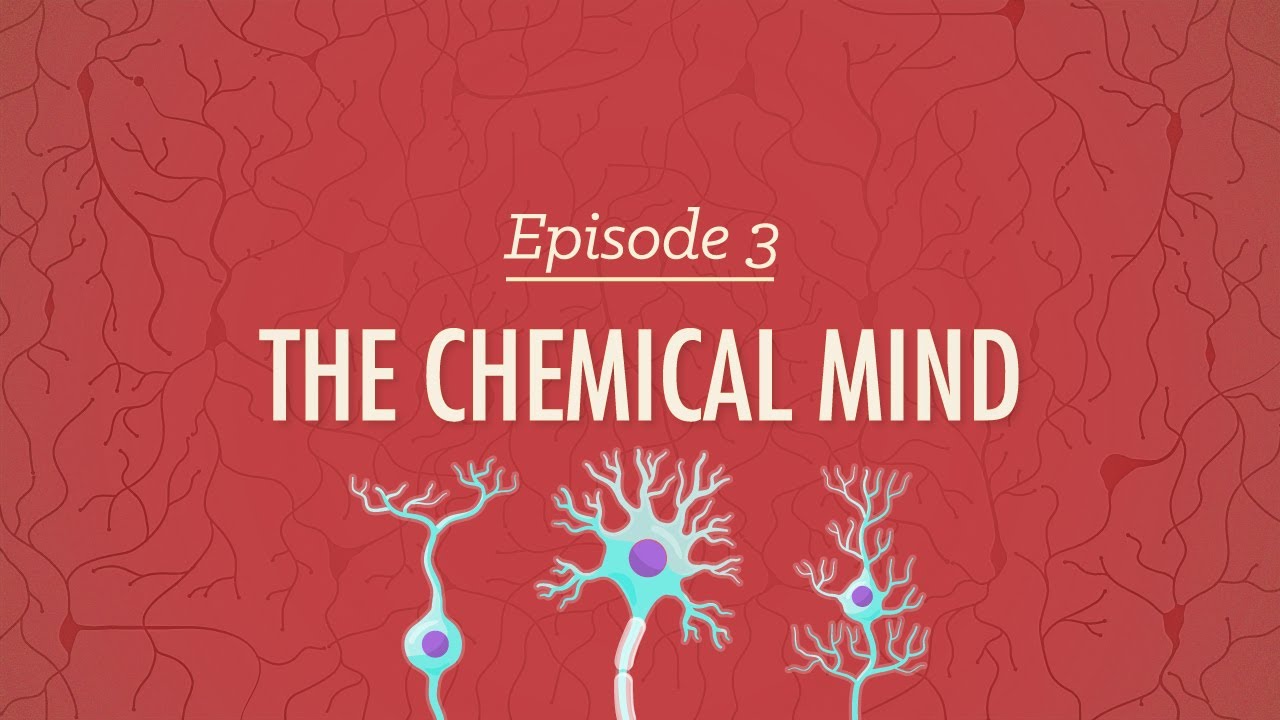
- Neurons, or nerve cells, are the basic units of the nervous system, responsible for transmitting messages.
- Each neuron has three main parts: the soma (cell body) for life support, dendrites to receive signals, and an axon to transmit signals.
- The myelin sheath insulates axons, speeding up signal transmission, and its degradation can lead to loss of function, as seen in multiple sclerosis.
Understanding the structure and function of neurons is crucial because they are the primary communicators in the brain and body, forming the basis for all neural activity and information processing.
The long nerve cells that can run the entire length of a leg demonstrate the physical structure of neurons and their role in transmitting signals over distances.
- Neurons communicate across tiny gaps called synapses using chemical messengers called neurotransmitters.
- When an electrical impulse reaches the axon terminal, it triggers the release of neurotransmitters that cross the synaptic gap to bind with receptors on the next neuron.
- Neurotransmitters can be excitatory (increasing the likelihood of firing) or inhibitory (decreasing it), influencing a neuron's activity.
- Reuptake is the process where the releasing neuron reabsorbs excess neurotransmitters.
This process explains how information is passed from one nerve cell to another, forming the basis for complex brain functions like learning, memory, and emotion.
The analogy of neurotransmitters fitting into receptor sites like a key into a lock explains the specificity of chemical signaling between neurons.
- Different neurotransmitters have specific functions: norepinephrine (alertness), glutamate (memory, but can cause seizures in excess), GABA (inhibitory), and serotonin (mood, hunger, sleep).
- Some neurotransmitters, like acetylcholine (muscle action, learning, memory) and dopamine (movement, pleasure, linked to addiction and schizophrenia), can have both excitatory and inhibitory effects.
- Imbalances in neurotransmitter levels are linked to various psychological conditions, such as depression (low serotonin) and Alzheimer's (deterioration of acetylcholine neurons).
Understanding specific neurotransmitters highlights how precise chemical balances are essential for normal psychological functioning and how disruptions can lead to specific disorders.
Low levels of serotonin are linked to depression, and certain antidepressants work by increasing serotonin levels in the brain.
- The endocrine system uses hormones, secreted by glands into the bloodstream, to communicate messages throughout the body.
- Hormones operate more slowly than neurotransmitters but have longer-lasting effects, influencing mood, arousal, metabolism, growth, and reproduction.
- Key glands include the adrenals (adrenaline for fight-or-flight), pancreas (insulin/glucagon for sugar regulation), thyroid (metabolism), gonads (sex hormones), and the pituitary gland (master gland controlling other glands).
This system explains the body's slower, more widespread chemical regulation, which significantly impacts long-term states like stress response, growth, and social bonding.
Adrenaline, secreted by the adrenal glands, provides a surge of energy during frightening situations, illustrating the endocrine system's role in immediate survival responses.
- The nervous and endocrine systems work together in a feedback loop, influencing each other.
- The hypothalamus in the brain controls the pituitary gland, which in turn regulates many other endocrine glands.
- This intricate communication network underlies complex responses, such as reacting to a perceived threat and then calming down.
Recognizing the interconnectedness of these systems reveals how a single event triggers a cascade of biological and psychological responses, demonstrating the holistic nature of our internal functioning.
The sequence of sensory input leading to brain activation, then pituitary and adrenal gland response (adrenaline), and finally the brain realizing the 'threat' is false and signaling calm, shows the feedback loop in action.
Key takeaways
- All psychological processes are fundamentally rooted in biological and chemical mechanisms.
- Neurons communicate via electrochemical signals, using neurotransmitters to bridge the synaptic gap.
- Different neurotransmitters have specialized roles in regulating mood, alertness, memory, and movement.
- The endocrine system uses hormones for slower, longer-lasting regulation of bodily functions and psychological states.
- The nervous and endocrine systems are interconnected, forming a complex feedback loop that governs our responses to the environment.
- Understanding these biological systems provides a scientific basis for explaining human behavior and mental health.
Key terms
NeuronSomaDendritesAxonMyelin sheathSynapseSynaptic gapNeurotransmitterReuptakeExcitatory neurotransmitterInhibitory neurotransmitterHormoneEndocrine systemAdrenalinePituitary glandHypothalamus
Test your understanding
- How do neurons transmit signals to each other, and what role do neurotransmitters play in this process?
- What are the primary functions of key neurotransmitters like serotonin and dopamine?
- How does the endocrine system differ from the nervous system in terms of speed and duration of communication?
- Explain the concept of a feedback loop between the nervous and endocrine systems using an example from the video.
- Why is it important in psychology to understand the biological and chemical underpinnings of mental processes?