Module 9 - Other Theories of Personality Recording
Chris Gade
Overview
This video explores the evolution of personality psychology, moving beyond Sigmund Freud's early psychodynamic theories. It introduces key figures like Carl Jung, Alfred Adler, Carl Rogers, and Abraham Maslow, highlighting their contributions to understanding the unconscious, individual psychology, humanistic approaches, and the hierarchy of needs. The lecture then transitions to more empirically-driven theories, focusing on social cognitive theorists like Albert Bandura and Walter Mischel, who emphasized learning, observation, and cognitive processes. The summary emphasizes how these shifts moved the field towards more scientific and research-based explanations of personality and individual differences.
Save this permanently with flashcards, quizzes, and AI chat
Chapters
- Early personality and clinical psychology were heavily influenced by Sigmund Freud's controversial theories, particularly his concept of the unconscious.
- While Freud's ideas were foundational, modern psychology has largely moved away from his original concepts.
- The lecture aims to trace the historical development of personality psychology from Freud to contemporary approaches.
- Carl Jung, initially Freud's protégé, diverged by emphasizing a spiritual framework for the unconscious.
- He proposed the concept of archetypes, universal theoretical images influencing perception and behavior.
- Jung introduced the idea of the collective unconscious, a shared reservoir of ancestral experiences.
- His work opened the door for alternative perspectives beyond Freud's focus on psychosexual development.
- Alfred Adler broke from Freud and Jung, focusing on conscious, surface-level aspects of personality.
- He introduced 'individual psychology,' emphasizing a person's self-perception and subjective experience.
- Adler identified 'striving for superiority' and the 'inferiority complex' as key motivators.
- His approach shifted focus from hidden drives to conscious goals and social context.
- Carl Rogers championed the humanistic approach, viewing individuals as inherently positive and striving for growth.
- He emphasized the concept of the 'self,' distinguishing between the 'actual self' and the 'ideal self'.
- Rogers believed that incongruence between these selves could lead to distress.
- His work contributed to concepts like self-efficacy and self-actualization, influencing positive psychology.
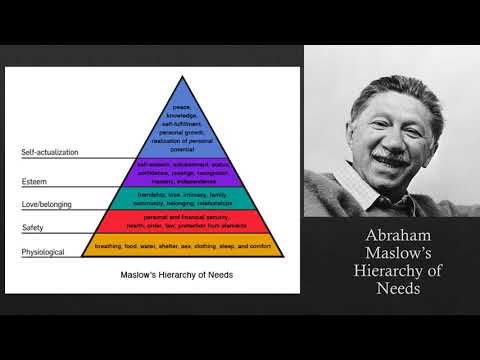
- Abraham Maslow, associated with Rogers, developed the hierarchy of needs as a framework for motivation.
- He proposed that basic physiological and safety needs must be met before individuals can pursue higher-level needs like belonging, esteem, and self-actualization.
- Maslow viewed self-actualization as a multifaceted state of personal fulfillment and contribution.
- His work integrated personality, social psychology, and motivation.
- Social cognitive theorists sought to make personality psychology more scientific, integrating cognitive processes and environmental influences.
- They proposed that personality develops through learning, observation, and cognitive interpretation of social experiences.
- Key figures like Albert Bandura and Walter Mischel emphasized the interplay between individuals, their behavior, and their environment (reciprocal determinism).
- This approach moved away from purely internal or external determinants of behavior.
- Albert Bandura's work focused on observational learning, demonstrating how behavior is acquired by watching others.
- His famous Bobo doll experiment showed that children exposed to aggressive models exhibited more aggressive behavior.
- This research suggested that modeling, not just direct reinforcement, plays a crucial role in personality development.
- It raised questions about the influence of media and parental behavior on children's actions.
- Walter Mischel focused on the cognitive processes underlying behavior, suggesting that personality is a result of how we interpret situations.
- He proposed that our thoughts, beliefs, and goals (competencies, encoding strategies, expectancies, subjective values, self-regulatory systems) are key to understanding individual differences.
- Mischel's marshmallow experiment demonstrated the importance of self-control and delayed gratification in early development.
- He argued that situational factors interact with these cognitive units to produce behavior.
Key takeaways
- Personality psychology has evolved significantly from early psychodynamic theories to more empirical, cognitive, and social learning approaches.
- Key figures like Jung, Adler, Rogers, and Maslow introduced crucial concepts that expanded our understanding of the unconscious, self, and motivation.
- Social cognitive theory highlights the powerful role of observation, imitation, and cognitive interpretation in shaping personality.
- Our internal thought processes and ability to regulate our behavior are as important as external actions in defining who we are.
- The scientific rigor of personality theories has increased over time, with a greater emphasis on empirical research and testable hypotheses.
- Understanding historical theories provides context for the development and current state of personality psychology.
- Individual differences arise from a complex interplay of internal cognitive processes, social learning, and environmental factors.
Key terms
Test your understanding
- How did Carl Jung's concept of the unconscious differ from Sigmund Freud's?
- What are the core tenets of Alfred Adler's 'individual psychology' and how do they contrast with psychodynamic theories?
- Explain the relationship between the 'actual self' and the 'ideal self' in Carl Rogers's humanistic approach.
- How does Abraham Maslow's hierarchy of needs explain the progression of human motivation and its impact on personality development?
- What is observational learning, and how did Albert Bandura's Bobo doll experiment demonstrate its significance in personality development?
- How did Walter Mischel's work shift the focus in personality psychology towards cognitive processes and situational interactions?