31:59
15 Fermented Foods Every Doctor Should Be Prescribing
Clara’s Roots & Remedies
Overview
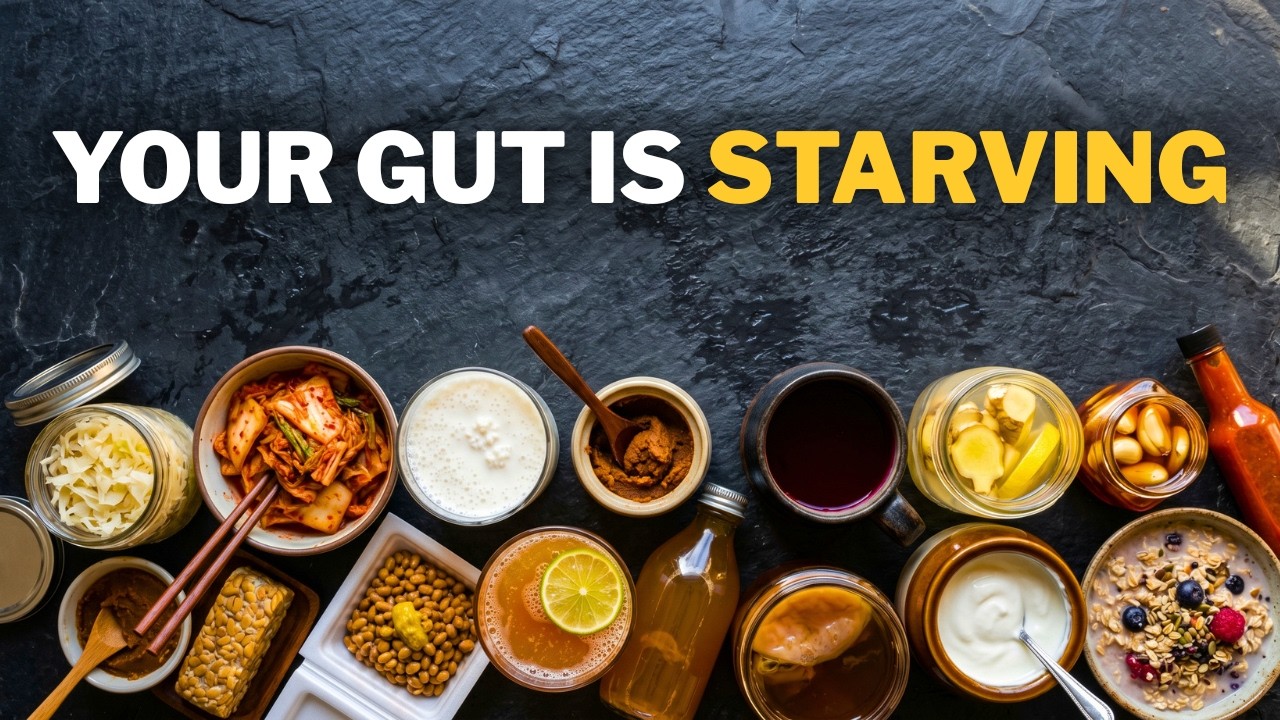
This video explores the science and benefits of fermented foods, highlighting 15 different options that can positively impact gut health, immunity, and overall well-being. It contrasts traditional fermentation methods with modern diets, explaining how fermentation upgrades food's nutritional and biological value. The presenter details the specific benefits and preparation of each food, emphasizing their role in restoring a healthy gut microbiome and supporting bodily functions, often with more potent effects than supplements.
How was this?
Save this permanently with flashcards, quizzes, and AI chat
Chapters
- Children raised on farms with exposure to diverse microbes have lower rates of allergies and autoimmune diseases.
- This 'hygiene hypothesis' suggests the immune system needs training from a diverse microbiome, which is often underdeveloped in modern, overly clean environments.
- For most of human history, fermentation was a natural part of food preservation, providing essential microbes.
- The advent of refrigeration led to a decline in fermented food consumption, coinciding with a rise in chronic diseases like IBS, anxiety, and metabolic dysfunction.
Understanding the historical context of fermented foods helps explain why their decline is linked to modern health issues and why reintroducing them is crucial for restoring gut health.
Researcher David Strachan's 1989 observation of lower allergy rates in farm children compared to city children.
- Lacto-fermented sauerkraut, made with cabbage and salt, contains live bacteria like Lactobacillus plantarum and Lactobacillus brevis.
- These bacteria act as a 'cleanup crew,' competing with harmful bacteria that cause bloating and inflammation.
- Fermentation transforms cabbage's glucosinolates into isothiocyanates, similar to those in broccoli sprouts, enhancing anti-inflammatory properties and bioavailability.
- Making sauerkraut at home is simple, requiring shredded cabbage, salt, and a jar, with about 15 minutes of active preparation.
Sauerkraut is an accessible entry point into fermented foods, demonstrating how simple fermentation can 'upgrade' a common vegetable into a potent source of beneficial compounds.
The conversion of glucosinolates in cabbage to isothiocyanates, which are potent anti-inflammatory compounds also found in broccoli sprouts.
- Kimchi, a more complex fermented cousin of sauerkraut, supports greater gut microbiome diversity.
- It contains beneficial bacteria like Lactiplantibacillus kimchi and Leuconostoc mesenteroides.
- The capsaicin in chili peppers can block pain signaling molecules, and allicin from garlic acts as a selective disruptor of harmful gut bacteria.
- A simplified 'mak kimchi' can be made at home in about 30 minutes.
Kimchi offers a broader spectrum of benefits than sauerkraut due to its diverse ingredients and microbial profile, including potential pain relief and targeted antibacterial action.
Allicin from garlic in kimchi selectively targets harmful gut bacteria without harming beneficial strains.
- Traditionally prepared kefir contains 30-50 probiotic strains, far exceeding most supplements.
- Key strains include Lactobacillus acidophilus and Bifidobacterium bifidum, plus the beneficial yeast Saccharomyces cerevisiae.
- Kefiran, a polysaccharide in kefir, may reinforce the gut lining and reduce permeability ('leaky gut').
- Home kefir production is simple, requiring only kefir grains and milk, and can be consumed daily.
Kefir provides an exceptionally dense and diverse source of probiotics, offering significant benefits for gut lining integrity and potentially improving blood sugar control.
Kefiran, a unique polysaccharide produced by Lactobacillus kefiranofaciens, acts as a coating agent for the gut lining.
- Kombucha, fermented tea, produces glucuronic acid, which aids the liver in detoxifying the body.
- It also provides B vitamins and catechins that help modulate inflammation.
- Miso, fermented soybean paste, uses Aspergillus oryzae (koji) to break down proteins into highly bioavailable peptides and amino acids.
- One peptide in miso, GABA, is a neurotransmitter that can have calming effects, and epidemiological data suggests a link to lower gastric cancer rates.
Kombucha and miso highlight how fermentation enhances the body's natural detoxification processes and significantly improves the absorption of nutrients from their base ingredients.
Glucuronic acid in kombucha acts as a conjugation agent, binding to toxins in the liver to facilitate their excretion.
- Tempeh, fermented whole soybeans, neutralizes phytic acid, dramatically improving mineral absorption (zinc, iron, magnesium).
- Fermentation also enhances the bioavailability of soy isoflavones, which may have anti-inflammatory properties.
- Natto, fermented soybeans, is rich in nattokinase, an enzyme that breaks down blood clots and may support healthy blood pressure.
- Natto is also the richest food source of Vitamin K2 (MK7), crucial for bone and cardiovascular health.
Tempeh and natto showcase how fermentation unlocks the full nutritional potential of soybeans, offering benefits for mineral absorption, cardiovascular health, and blood pressure regulation.
Nattokinase enzyme in natto directly breaks down fibrin, the protein mesh that forms blood clots.
- Water kefir offers a dairy-free probiotic alternative, fermenting various liquids like sugar water or fruit juice.
- Beet kvass, fermented beets, concentrates betalains (antioxidants, anti-inflammatory) and acts as a nitric oxide precursor for blood vessel dilation.
- Traditionally made yogurt, with extended fermentation, significantly reduces lactose content, making it tolerable for sensitive individuals.
- Fermented hot sauce uses capsaicin to potentially desensitize the gut and activate metabolic pathways.
- Fermented garlic honey creates potent antiviral and antibacterial compounds from garlic and honey.
- Lacto-fermented oats increase mineral bioavailability by breaking down phytic acid and avenin.
- Tepache, a pineapple rind ferment, provides bromelain for anti-inflammatory effects.
- Apple cider vinegar (with the mother) can help blunt post-meal blood sugar spikes by slowing gastric emptying.
This diverse group of fermented foods demonstrates the wide applicability of fermentation across different food types, offering targeted benefits from blood sugar control and inflammation reduction to improved nutrient absorption and immune support.
Betalains in beet kvass act as nitric oxide precursors, helping to dilate blood vessels and potentially lower blood pressure.
- Fermented foods are not alternative medicine but a historical method of food preservation that yields nutrient-dense, microbiome-supportive foods.
- Reintroducing fermented foods can reverse negative trends in gut health, metabolic function, and immune regulation.
- Starting with one manageable fermented food, like sauerkraut, is a practical approach.
- The benefits of fermentation are scientifically validated and offer a way to improve health without supplements or prescriptions.
This section reframes fermentation as a fundamental aspect of human nutrition, emphasizing its accessibility and scientifically supported role in modern health.
The video highlights that fermentation is not a fringe idea but how food was stored for millennia, producing biochemically dense foods.
Key takeaways
- The decline of fermented foods in Western diets correlates with an increase in chronic health issues, suggesting a direct link to gut microbiome health.
- Fermentation actively enhances the nutritional value and bioavailability of foods, often creating beneficial compounds not present in the original ingredients.
- Live microbial cultures in fermented foods play a critical role in training the immune system and maintaining a balanced gut environment.
- Many fermented foods, like sauerkraut and kefir, can be easily made at home, offering a cost-effective way to improve health.
- Specific fermented foods offer targeted benefits, such as nattokinase in natto for blood clot reduction or glucuronic acid in kombucha for detoxification.
- Consuming fermented foods regularly can support digestive health, reduce inflammation, improve nutrient absorption, and bolster immune function.
- The 'mother' in raw apple cider vinegar is the source of its probiotic benefits and its ability to help manage blood sugar spikes.
- Fermentation transforms otherwise indigestible or less beneficial compounds (like phytic acid in oats or soy) into more absorbable and beneficial forms.
Key terms
Gut MicrobiomeHygiene HypothesisLactobacillusProbioticsFermentationBioavailabilityGlucosinolatesIsothiocyanatesGABANattokinaseVitamin K2 (MK7)Phytic AcidSCOBYBetalainsNitric Oxide PrecursorsAcetic AcidThe Mother (Vinegar)
Test your understanding
- How does the hygiene hypothesis explain the link between modern lifestyles and increased rates of allergies and autoimmune diseases?
- What are the primary mechanisms by which lacto-fermented sauerkraut benefits gut health?
- Explain how fermentation enhances the nutritional profile of foods like cabbage (sauerkraut) or soybeans (tempeh).
- Why is traditionally prepared kefir considered a more potent source of probiotics than many commercial supplements?
- What specific compounds in kombucha and miso contribute to detoxification and improved nutrient absorption, respectively?
- How do the enzymes and compounds in natto and apple cider vinegar potentially impact cardiovascular health and blood sugar regulation?