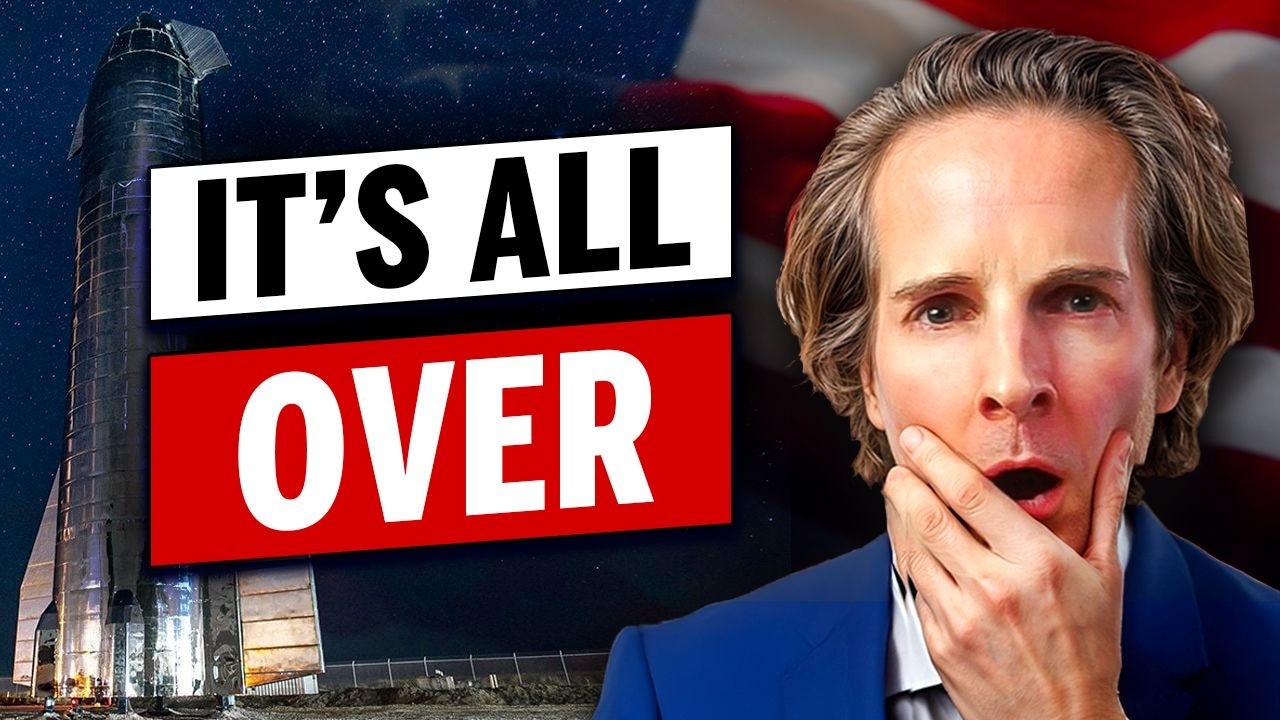
SpaceX Just Triggered the Biggest Unwind in Financial History - GET READY NOW!
Felix & Friends (Goat Academy)
Overview
This video explains a potential financial market event driven by several converging factors, including massive upcoming IPOs from companies like SpaceX and OpenAI, and large share issuances by established tech giants like Google and Meta. The speaker argues that these events will collectively drain approximately $350 billion from the market, disproportionately affecting the top stocks in the S&P 500, which have driven most of the year's gains. The video outlines three key forces at play: the IPO wave, share dilution, and index rebalancing, and offers a three-step framework for investors to navigate this period, focusing on assessing portfolio concentration, understanding market rotation, and building a watchlist for potential buying opportunities during a market downturn.
Save this permanently with flashcards, quizzes, and AI chat
Chapters
- Wall Street needs to raise approximately $350 billion in new cash to accommodate several large IPOs and new share offerings from major tech companies.
- Key companies like SpaceX, OpenAI, and Anthropic are planning massive IPOs, seeking tens of billions each.
- Big tech companies, including Google and Meta, are also issuing significant amounts of new shares, diluting existing ownership.
- This influx of new shares and IPOs will draw substantial capital away from the broader market.
- The first major force is the 'triple IPO collision,' with SpaceX, OpenAI, and Anthropic aiming to go public simultaneously, demanding a combined ~$200 billion.
- The second force is 'share printing' by established tech giants, exemplified by Google's $85 billion share offering, which increases the total number of shares without increasing the company's value, thus shrinking each shareholder's proportional ownership (dilution).
- Companies are increasingly resorting to issuing new stock rather than borrowing due to strained debt markets and rising borrowing costs, especially for AI-related ventures.
- These combined forces are expected to withdraw around $350 billion from the market in the coming months.
- The top 10 stocks in the S&P 500 have been responsible for a disproportionately large percentage (72%) of the index's gains this year.
- These same highly concentrated stocks are the most likely to be sold by fund managers to raise cash for IPOs and are also subject to dilution.
- Many investors rely on S&P 500 index funds for diversification, but the extreme concentration means owning the index is effectively a concentrated bet on a few mega-cap tech stocks.
- Prominent investors like Monish Pabrai and even Berkshire Hathaway have shown caution or divested from S&P 500 index funds, citing overvaluation and concentration risks.
- A third, often overlooked, force is automatic index rebalancing, particularly with rules like the NASDAQ's fast entry rule.
- When a large company like SpaceX goes public, it can be added to indices like the NASDAQ 100 very quickly.
- Index funds are then mechanically forced to buy shares of the new company, selling existing holdings to free up cash, even if those existing holdings are strong performers.
- This process leads to forced selling of current top stocks within index funds to make room for new entrants, adding another layer of selling pressure on the same tech-heavy stocks.
- The first step is to assess your portfolio's concentration by calculating the percentage of your assets held in index funds and understanding the concentration within those funds.
- The second step involves understanding market rotation: identifying where smart money is moving as capital leaves tech stocks (e.g., energy, transportation, basic materials).
- The third step is to build a watchlist of high-quality companies you'd want to buy at an attractive price *before* a potential market dip, rather than panicking and selling.
- The speaker emphasizes preparing for a market 'shakeout' or 'hangover' rather than panicking, viewing potential downturns as buying opportunities for well-researched stocks.
Key takeaways
- Massive IPOs and share issuances by tech giants are creating significant demand for capital, potentially leading to market volatility.
- The S&P 500's heavy concentration in a few mega-cap tech stocks poses a significant risk, as these stocks are simultaneously facing selling pressure and dilution.
- Index funds, often perceived as safe and diversified, can be subject to forced selling due to rebalancing rules, impacting even winning stocks.
- Understanding the flow of money and identifying sectors that smart money is rotating into is key to navigating market shifts.
- Proactive preparation, including assessing portfolio concentration and building a watchlist of quality companies, is more effective than reactive panic selling.
- Market downturns, often preceded by a 'shakeout,' can present significant buying opportunities for well-prepared investors.
- The current market situation is characterized by a large-scale capital rotation, not necessarily an economic collapse.
Key terms
Test your understanding
- What are the three primary forces the video identifies as pressuring the stock market, particularly large-cap tech stocks?
- How does the issuance of new shares by a company lead to dilution for existing shareholders?
- Why is the concentration of gains in the top 10 S&P 500 stocks a significant risk for investors holding index funds?
- Explain the mechanism by which index rebalancing can cause an index fund to sell its winning stocks.
- What are the three key steps recommended in the video for investors to prepare for potential market volatility?