4:37
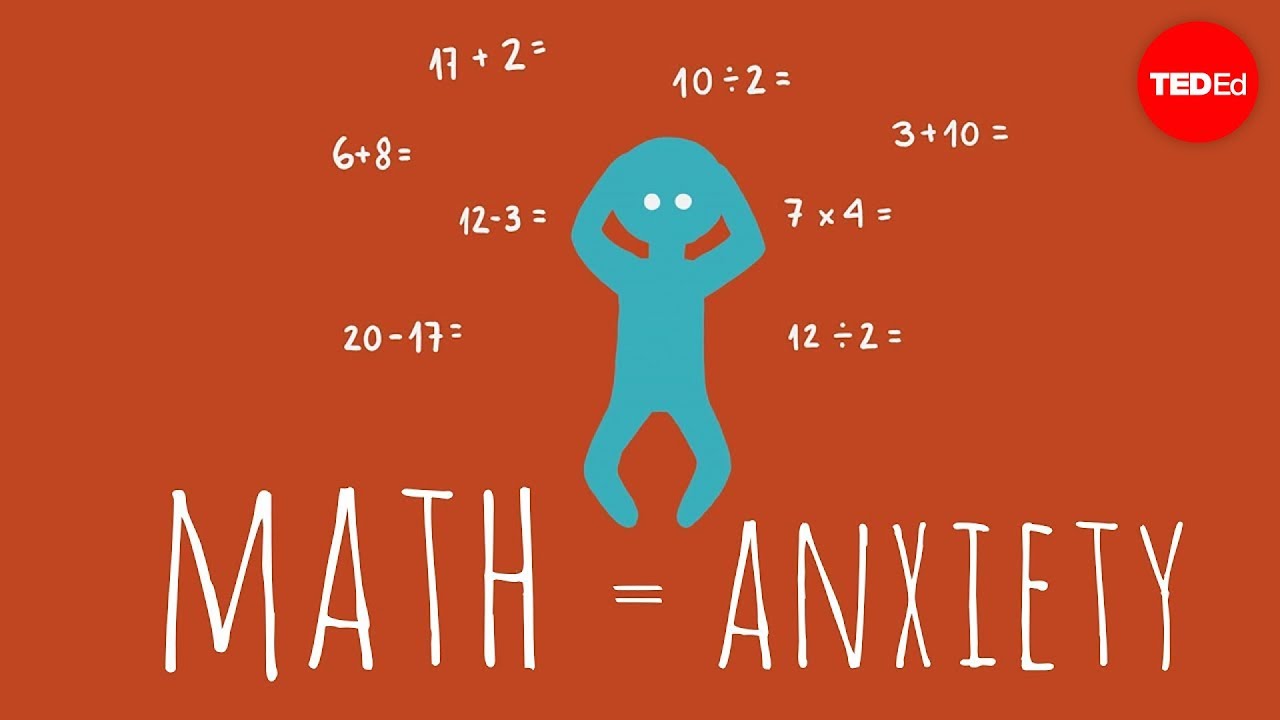
Why do people get so anxious about math? - Orly Rubinsten
TED-Ed
Overview
This video explores the phenomenon of math anxiety, a common experience where individuals feel intense worry and stress when faced with mathematical tasks. It explains that math anxiety is not necessarily linked to a lack of ability but can actually hinder performance by consuming cognitive resources like working memory. The video discusses potential causes, including societal and educational influences, and offers practical strategies for managing math anxiety, such as relaxation techniques, mindset shifts, and fostering a positive learning environment for children.
How was this?
Save this permanently with flashcards, quizzes, and AI chat
Chapters
- Math anxiety is a common feeling of worry and physical stress when dealing with math.
- It affects a significant portion of the population, potentially up to 20%.
- Experiencing math anxiety does not mean one is bad at math; in fact, anxiety can cause poor performance.
- Math anxiety can reduce working memory, making it harder to concentrate and solve even basic problems.
Recognizing math anxiety as a distinct issue, separate from ability, is crucial for addressing it effectively and preventing it from negatively impacting learning.
Laurent Schwartz, a Fields Medal winner, initially worried he wasn't smart enough for math, illustrating that high achievement is possible despite early anxiety.
- Parental and teacher attitudes can contribute to math anxiety in children.
- If adults discuss math as difficult or unfamiliar, children may internalize this view.
- Teachers with their own math anxiety can inadvertently pass it on to students.
- Societal pressure and the high stakes associated with math performance can increase stress.
Understanding the origins of math anxiety helps identify and mitigate the environmental and social factors that perpetuate it.
A middle school math teacher's low opinion of Maryam Mirzakhani's talent led her to feel unconfident and lose interest, demonstrating how negative feedback can fuel anxiety.
- Relaxation techniques, such as deep breathing exercises, can improve performance.
- Writing down worries before a task can help reframe the experience and free up cognitive resources.
- Physical activity can reduce muscle tension and deepen breathing, aiding anxiety relief.
- Adopting a 'growth mindset'—believing abilities can be developed—is key to overcoming challenges.
These practical strategies empower individuals to actively manage their anxiety and improve their relationship with mathematics.
Writing down worries before a math test can help a student reevaluate the stressful situation, similar to how journaling can provide perspective on personal challenges.
- Parents and educators should make math engaging and focus on its creative aspects.
- Providing sufficient time and space for children to work through problems is essential.
- Teachers need positive attitudes and confidence to inspire students.
- It's important to debunk the myth that boys are inherently better at math than girls.
Creating a supportive and encouraging environment is vital for building children's confidence and preventing math anxiety from developing.
A teacher making math playful and focusing on creative problem-solving can help build a child's numerical skills and confidence for future learning.
Key takeaways
- Math anxiety is a common issue that hinders performance by consuming working memory, not a reflection of inherent ability.
- Negative attitudes and high-stakes environments contribute significantly to the development of math anxiety.
- Techniques like relaxation, journaling, and physical activity can help alleviate math anxiety.
- A growth mindset, emphasizing the potential for improvement, is crucial for overcoming math-related fears.
- Creating a positive, playful, and supportive learning environment is essential for fostering confidence in mathematics.
- Challenging gender stereotypes in math is important for ensuring equal opportunity and reducing anxiety.
Key terms
Math anxietyWorking memoryCognitive resourceGrowth mindsetFields MedalRelaxation techniquesNumerical skills
Test your understanding
- What is math anxiety and how does it differ from a lack of mathematical ability?
- How does math anxiety impact cognitive functions like working memory?
- What are some environmental factors that can contribute to the development of math anxiety in children?
- Describe at least three strategies an individual can use to manage their math anxiety.
- How can parents and educators foster a more positive and confidence-building environment for learning math?