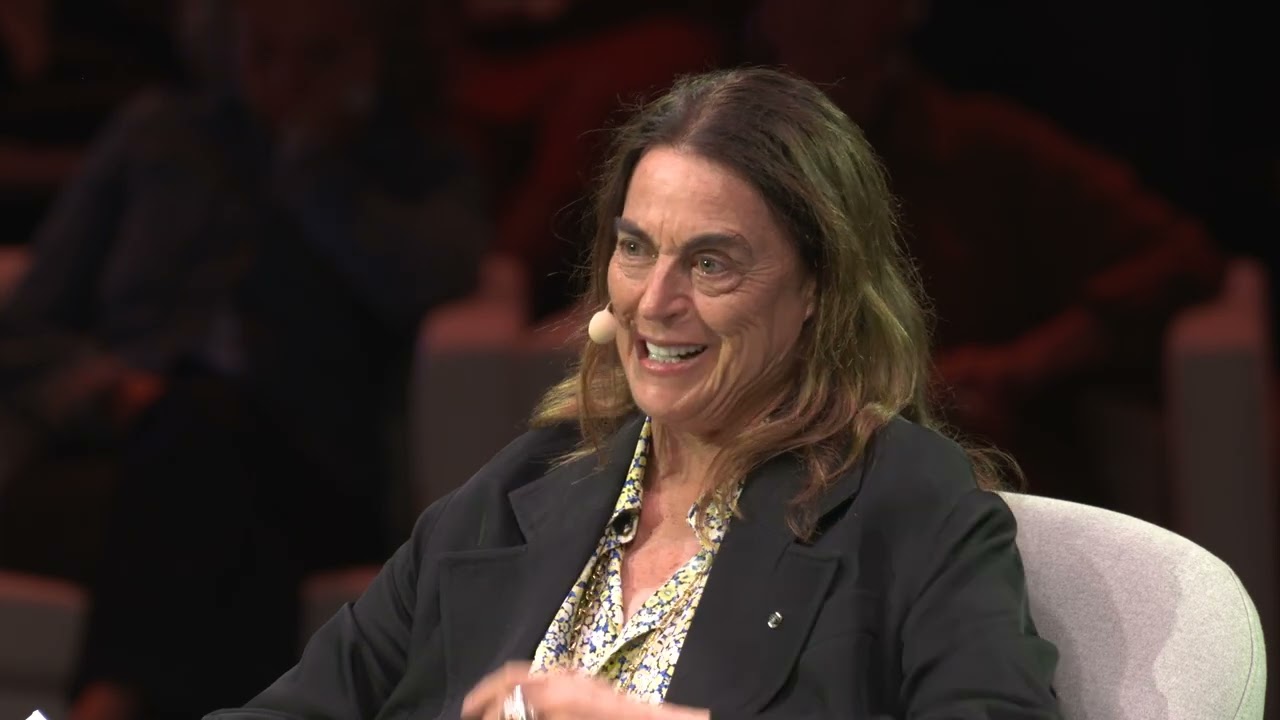
Creative Conversation with Maja Hoffmann & Hashim Sarkis-Creative Alliances for a Sustainable World
Culture Summit Abu Dhabi
Overview
This conversation between Maja Hoffmann and Hashim Sarkis explores the innovative approach of the Luma Foundation, particularly its Arles location, in fostering creative alliances for a sustainable future. They discuss moving beyond traditional, static notions of culture to an 'ecosystem for culture' that integrates art, science, nature, and local resources. The discussion highlights the Luma Lab at MIT as a key node in this network, focusing on interdisciplinary projects like sustainable textiles and climate change solutions. The core idea is that by blurring boundaries between disciplines and embracing long-term, collaborative thinking, institutions like Luma can become models for future cultural organizations, driving innovation and impacting real-world decisions.
Save this permanently with flashcards, quizzes, and AI chat
Chapters
- The collaboration between Luma Foundation and Hashim Sarkis began with his directorship of the Venice Architecture Biennale during the pandemic.
- Sarkis's approach emphasized ongoing projects and year-long discussions rather than a single exhibition event.
- This led to a shared vision of working together on topics relevant to both organizations, transcending geographical limitations.
- Both recognized an intellectual complicity and a shared interest in art and cultures that look towards a possible near future achievable through action.
- The traditional concept of 'culture' can be elitist and static, tied to specific places and preservation.
- Luma's approach redefines culture as a dynamic 'ecosystem' that is constantly evolving and inclusive.
- This ecosystem model is deeply connected to the natural environment, exemplified by the Camargue marshlands.
- The inclusion of human elements and continuous evolution are key to understanding this cultural ecosystem.
- Luma Arles actively utilizes and researches local resources from its region, the Camargue.
- These resources, like salt and sunflower stalks, are transformed into innovative construction materials through research and reuse.
- The foundation fosters a long-term residency program for artists and designers to develop projects collaboratively.
- This approach aims to be a model for others, focusing on research and process rather than mass production or patenting.
- The MIT Luma Lab is conceived as a 'distant island' within Luma's 'archipelago' of initiatives, connecting different units.
- It focuses on interdisciplinary projects, such as rethinking the textile industry's environmental impact through smart and naturally inspired materials.
- The lab also explores how artistic expression can communicate the outcomes of scientific and technological research.
- There is no barrier between art and science; both are driven by imagination and innovation, aiming for real-world impact beyond discovery.
- The presence of artists is vital for scientists and engineers to imagine the broader implications and future possibilities of their technologies.
- Artists offer a different perspective, asking 'what if' rather than solely focusing on problem-solving.
- New media introduced by science and technology expand the possibilities for artistic expression (e.g., nano-art, climate-focused art).
- This continuum is essential for navigating uncharted futures, especially in areas like AI and climate change.
- The Luma Lab at MIT is encouraged to connect Mediterranean-focused projects to larger 'global commons' initiatives.
- These commons include vast areas like the oceans, Amazon, and deserts, which have significant climate impact.
- A key angle for collaboration is biodiversity, central to the ecosystem concept and Maja Hoffmann's father's legacy.
- The goal is to share Luma's work, like on textiles, in diverse global contexts such as COP 30 in the Amazon.
- Many non-profits suffer from short-term, transactional thinking, unlike Luma's long-term vision.
- Luma's sustainability is rooted in its alignment with nature's processes and a 'generosity with time'.
- This long-term approach is essential for fostering deep relationships and impactful undertakings.
- The intersection of natural heritage, cultural heritage, and innovation is powerful in changing mentalities.
- Visitors to Luma are active connectors and catalysts, energized by the ecosystem and becoming agents of change.
- The foundation aims to empower artists to act as 'citizens of the world', contributing their knowledge to real-world decisions.
- Future exhibitions at Luma are designed as living organisms, allowing dives into the process, not just the final result.
- The ultimate goal is for creative minds to have a tangible impact on global challenges, proving that change is possible.
Key takeaways
- Redefining 'culture' as a dynamic, inclusive ecosystem is essential for future-oriented institutions.
- Integrating art, science, and local natural resources can drive sustainable innovation.
- Long-term vision and collaborative partnerships are crucial for tackling complex global challenges.
- Blurring disciplinary boundaries allows for more imaginative problem-solving and impactful outcomes.
- Institutions should foster an environment where participants are active agents of change.
- The process of creation and research is as important as the final product.
- Artists play a critical role in envisioning the future implications of technology and scientific advancements.
Key terms
Test your understanding
- How does the concept of a 'cultural ecosystem' differ from traditional notions of a 'cultural place'?
- What are some examples of how Luma Arles integrates local resources into its projects?
- Why is the collaboration between artists and scientists considered crucial for innovation?
- How does the Luma Lab at MIT aim to connect regional projects with global challenges?
- What does 'generosity with time' mean in the context of building sustainable cultural institutions?