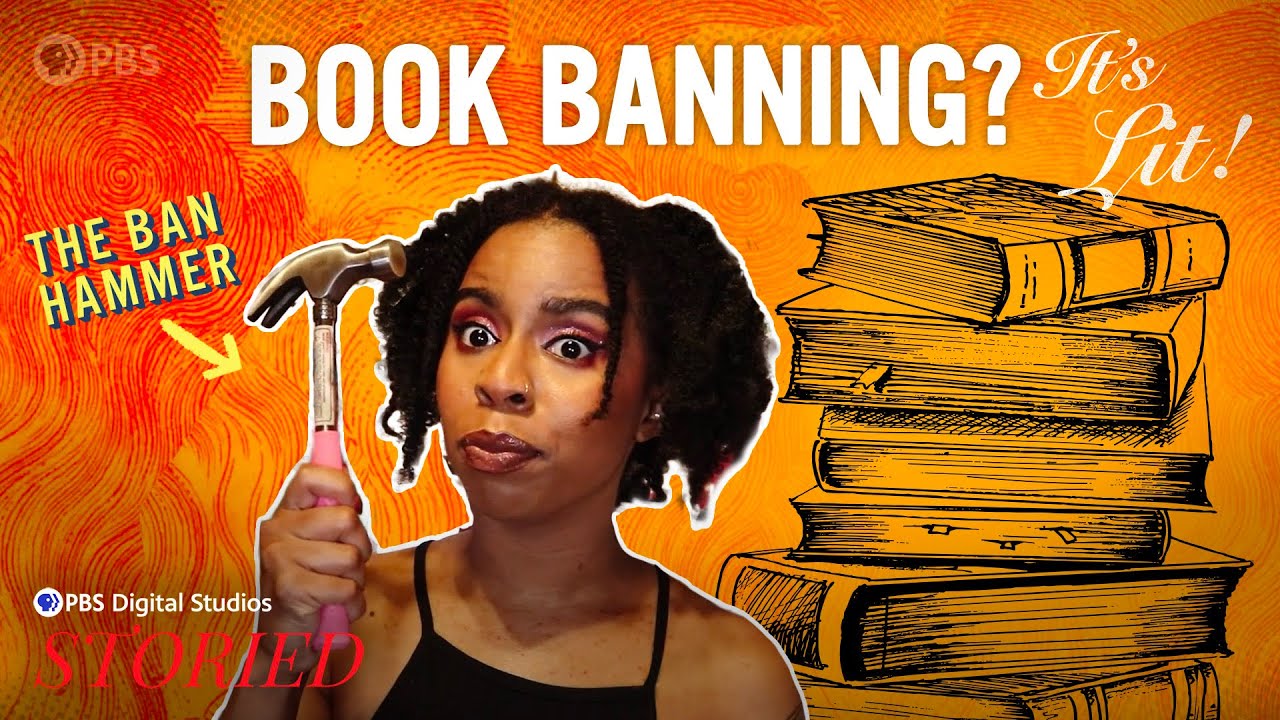
The Fiery History of Banned Books (Feat. Princess Weekes) | It's Lit
Storied
Overview
This video explores the historical and ongoing practice of banning books, tracing its roots from ancient times to modern challenges. It examines the primary motivations behind book bans—religion, morality, and politics—and highlights significant historical instances, such as the burning of Aztec manuscripts, the suppression of religious texts during the Tudor period, and the Nazi book burnings. The summary also delves into censorship driven by moralistic outrage, exemplified by the reactions to "Uncle Tom's Cabin" and "The Picture of Dorian Gray," and discusses landmark legal cases like "United States v. One Book Called Ulysses" and "R v Penguin Books Ltd" that shaped definitions of obscenity and protected literary works. Finally, it addresses contemporary issues, emphasizing that book banning is often about control rather than genuine concern for morality, and underscores the importance of intellectual freedom and access to information in a democratic society.
Save this permanently with flashcards, quizzes, and AI chat
Chapters
- Book burnings and bans have historically been a reaction to the perceived power of written ideas.
- Early motivations for banning books were primarily driven by religion, morality, and politics.
- Governments and religious authorities have destroyed books and suppressed ideas to maintain control and reshape historical narratives.
- Examples include the burning of Aztec manuscripts and the suppression of texts during religious schisms.
- Religious institutions, like the Vatican's Index Librorum Prohibitorum, have historically prohibited texts deemed heretical or contrary to faith.
- Political ideologies have led to widespread book destruction, as seen in Nazi Germany's targeting of Jewish authors and political dissidents.
- Books that challenge the status quo or promote social change, like "Uncle Tom's Cabin," have faced national bans.
- The underlying principle is that an educated populace is harder to govern, making the suppression of knowledge a tool of power.
- Books are often banned for content deemed morally objectionable or sexually explicit, even if they explore complex themes.
- Oscar Wilde's "The Picture of Dorian Gray" was used as evidence against him in a trial for homosexuality, highlighting how literature can be weaponized.
- Anti-vice activists like Anthony Comstock used vague definitions of obscenity to ban a wide range of materials, including educational and artistic works.
- This type of censorship can lead to self-censorship, where creators avoid potentially controversial topics, thereby shaping societal norms and amplifying dominant voices.
- Legal challenges have been crucial in redefining obscenity and protecting freedom of expression.
- The case of James Joyce's "Ulysses" established that a "serious" literary work, even with controversial content, could be protected by the First Amendment.
- The trial for D.H. Lawrence's "Lady Chatterley's Lover" centered on its literary merit versus its perceived obscenity, ultimately finding it not obscene.
- The Supreme Court's definition of obscenity evolved, moving from "utterly without socially redeeming value" to a standard that considers "serious literary, artistic, political, or scientific value."
- Book banning persists today, with a significant number of challenges targeting books by and about LGBTQ+ individuals and people of color.
- Banned Books Week and the American Library Association's lists highlight the ongoing surge in book challenges.
- Book banning is fundamentally about control—limiting imagination and silencing marginalized voices, rather than upholding morality.
- Intellectual freedom, defined as the right to seek and receive information, is essential for a democratic society and requires complete freedom of access to all ideas.
Key takeaways
- Book banning is a historical tactic used by those in power to control populations by limiting access to information and diverse ideas.
- The primary historical drivers for banning books have been religion, politics, and perceived moral transgressions.
- Legal battles have played a critical role in defining obscenity and expanding protections for literary works.
- Contemporary book challenges often focus on LGBTQ+ content and works by authors of color, reflecting ongoing struggles for representation.
- Book banning is ultimately an act of control over thought and imagination, not a defense of morality.
- Intellectual freedom, encompassing the right to seek and access information, is a cornerstone of a democratic society.
- Self-censorship, driven by fear of repercussions, can be as damaging as direct censorship in shaping societal discourse.
Key terms
Test your understanding
- What were the three primary historical motivations for banning books, and how did they manifest?
- How did landmark legal cases like "United States v. One Book Called Ulysses" influence the definition of obscenity and protect literary works?
- Why is book banning considered an act of control rather than a matter of morality?
- What is the relationship between censorship, self-censorship, and the shaping of societal norms?
- How does the concept of intellectual freedom relate to the challenges faced by books featuring LGBTQ+ content or authors of color today?