1:03:42
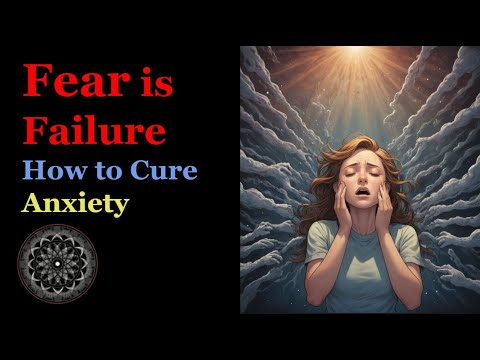
Fear is Failure: How to Cure Anxiety
Lyam Christopher
Overview
This video explores the nature of anxiety and fear, framing them not as inherent flaws but as responses rooted in the stress response system. It delves into how our language, thought patterns, and habits can chronically trigger this system, leading to a state of 'unenlightened' living. The speaker proposes various long-term and short-term remedies, ranging from biohacks like nutrition and exercise to mindful practices like breathing techniques and even deliberate stress exposure, all aimed at cultivating a more spacious and less reactive state of being.
How was this?
Save this permanently with flashcards, quizzes, and AI chat
Chapters
- Everyday annoyances, like loud eating or plastic wrappers, can act as anxiety triggers by activating our stress response.
- The 'fear is failure' quote from the Golden Dawn initiation highlights that fear hinders self-transformation and enlightenment.
- The stress response simplifies the world into a fight-or-flight mode, shutting down higher brain functions.
- Chronic activation of the stress response leads to habituation, making us perceive most situations as problems and contributing to an 'unenlightened' state.
Recognizing how common triggers activate a primitive stress response is the first step to understanding why anxiety feels overwhelming and how it impacts our cognitive abilities.
Being so overwhelmed by a monster in a movie that you can't remember which key opens the car door, illustrating how the stress response impairs complex thinking.
- An enlightened mind is spacious enough to accommodate the stress response without letting it take over higher functions.
- All thoughts are inherently stressful because they create subject-object dualities and perceived threats or lacks.
- Basic sentence structure (subject-verb-object) inherently creates a framework for perceived problems and the need for action.
- Even playful activities like sports involve a 'playful stress response' that can dampen the immune system.
Understanding that our very language and thought processes are wired to create stress helps us see that anxiety is not solely external but also internally generated.
The sentence 'The man hit the ball' illustrates the subject-object relationship, implying an action and a consequence that can be a source of stress if the goal is to win or perform well.
- Anxiety cannot be directly 'turned off'; the stress response must run its course.
- The relaxation response is our default state, not something that needs to be actively turned on.
- Chronic stress habituation makes us rely on the stress response for motivation, creating a cycle of perceived inadequacy.
- Cats exhibit a 'resplendant' state of being, a calm radiance that represents our natural, untroubled default state.
Knowing that anxiety doesn't have an 'off' switch but that relaxation is our natural state shifts the focus from fighting anxiety to allowing our natural state to re-emerge.
Observing a cat sitting calmly and radiating contentment, which serves as an example of our inherent, untroubled default state before habituation to stress.
- Adequate nutrition, including electrolytes and minerals like magnesium and potassium, is crucial for preventing subtle stress.
- Breathing less, allowing carbon dioxide to build up, promotes relaxation and can alleviate issues like asthma and panic attacks.
- Vitamin B1 (thiamine) and Vitamin D play roles in soothing the nervous system and regulating immune responses.
- Maintaining healthy testosterone levels, potentially through supplements like pine pollen, zinc, and boron, can improve confidence and calmness.
- Nutritional ketosis calms the brain, raises GABA levels, and is a significant stress-reducing state, though it requires a strict low-carb, high-fat diet.
These biohacks address the physical underpinnings of stress and anxiety, offering tangible ways to support the body's natural relaxation mechanisms.
Reducing breathing to allow carbon dioxide to build up, which helps relax the body and can alleviate symptoms of asthma or panic attacks.
- High-Intensity Interval Training (HIIT) conditions the heart to return to a normal speed faster after exertion, training the body to exit the stress response quickly.
- Abstaining from news, gossip, and excessive social media reduces constant exposure to triggers and the 'fear of missing out' or 'gossip' instincts.
- The Wim Hof Method deliberately triggers an acute stress response to remind the body what real stress feels like, making chronic stress less impactful.
- Demon summoning, a magical practice, is presented as a way to confront and resolve deep-seated triggers and traumas.
These practices train the body and mind to better manage stress, reduce reactivity to external stimuli, and confront internal 'demons' or traumas.
Free diving, combined with breathing exercises, helped the speaker overcome a significant fear of deep water, demonstrating the power of confronting and training the stress response.
- The breath is the fastest way to manage anxiety and panic attacks, not by turning off stress, but by facilitating the 'letting go' response.
- Longer exhales than inhales mathematically increase the time spent in the 'letting go' phase of the stress response.
- Focusing on belly breathing (diaphragmatic breathing) rather than chest breathing stimulates the vagus nerve and promotes relaxation.
- Specific breathing techniques, like the 'witchy breath' (3-second inhale, 7-second hold, 9-second exhale, 13-second hold out), help build CO2 levels for relaxation.
Mastering specific breathing techniques provides an immediate, accessible tool to calm the nervous system during moments of acute anxiety or panic.
A woman who struggled with breath-holding in free diving was able to significantly increase her capacity by focusing solely on belly breathing, demonstrating its power to induce relaxation and conserve oxygen.
Key takeaways
- Anxiety is often a result of the chronic over-activation of our primitive stress response system.
- Our language and thought patterns, particularly the subject-object duality, are fundamental to how stress is generated.
- The goal is not to eliminate stress but to cultivate a spacious mind that can accommodate it without being overwhelmed.
- Our natural state is one of relaxation and contentment; anxiety is a learned habituation.
- Physical interventions like proper nutrition, exercise (HIIT), and controlled breathing can significantly impact anxiety levels.
- Deliberately exposing the body to acute stress (like Wim Hof Method) can build resilience against chronic stress.
- Mindful breathing, especially focusing on long exhales and diaphragmatic breathing, is a powerful tool for immediate anxiety relief.
Key terms
Stress ResponseFight-or-FlightEnlightened MindSubject-Object DualityRelaxation ResponseHabituationBiohacksKetosisHIIT (High-Intensity Interval Training)Wim Hof MethodDiaphragmatic BreathingVagus Nerve
Test your understanding
- How does the speaker explain the connection between language and the generation of anxiety?
- What is the difference between the stress response and the relaxation response, and which is considered the body's default state?
- Describe at least three 'biohacks' or lifestyle changes suggested for managing chronic anxiety.
- How does High-Intensity Interval Training (HIIT) help in managing the stress response?
- What is the core principle behind using long exhales in breathing techniques to manage anxiety?