1:37:36
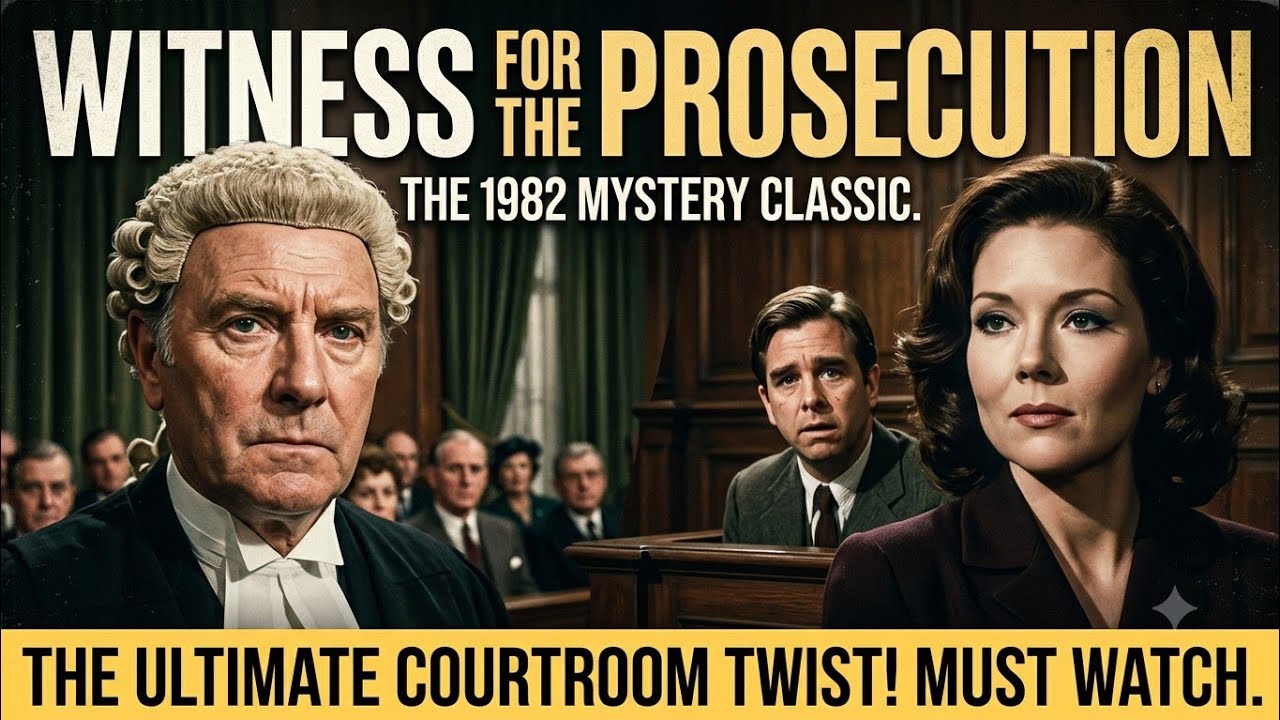
A Courtroom Mystery That Will Leave You Speechless (1982) Witness for the Prosecution | English Film
Aleda Music
Overview
This video presents a complex legal drama centered around the murder trial of Leonard V, accused of killing Emily French. Renowned but ailing barrister Sir Wilfred Robarts takes on the case, facing a formidable prosecution and a web of circumstantial evidence. The narrative unfolds through courtroom testimonies, strategic legal maneuvering, and surprising revelations about the relationships between the accused, his wife Christine, and the victim. The trial highlights themes of deception, loyalty, and the pursuit of justice, culminating in a dramatic twist that challenges initial assumptions about guilt and innocence.
How was this?
Save this permanently with flashcards, quizzes, and AI chat
Chapters
- Sir Wilfred Robarts, a celebrated barrister, returns to practice after a health crisis, despite doctor's orders.
- He is presented with a new case by his solicitor, Mr. Mayhew, involving Mr. Leonard V, who is suspected of murdering a wealthy widow, Emily French.
- Leonard V is a seemingly ordinary man caught in a difficult situation, facing circumstantial evidence.
- Sir Wilfred's health and his unconventional methods, like smoking cigars against medical advice, are highlighted.
This chapter establishes the central conflict and introduces the key players, setting the stage for the legal battle and Sir Wilfred's personal struggle with his health.
Sir Wilfred's defiance of his nurse and doctor by demanding cigars and resisting rest immediately after his return from the hospital.
- The prosecution, led by Mr. Myers, outlines the case, stating Emily French was murdered by a blow from a heavy instrument.
- The primary evidence against Leonard V includes bloodstains of type O found on his jacket, matching the victim's blood type.
- A broken window at the crime scene suggests a burglary, but the glass fragments indicate it was staged from the inside.
- The housekeeper, Janet McKenzie, testifies that she heard Leonard V with Mrs. French on the night of the murder and found the body, but her testimony is later questioned due to her potential bias and hearing issues.
This section details the core evidence presented by the prosecution, which forms the initial basis for Leonard V's arrest and the challenges Sir Wilfred must overcome.
The discovery of bloodstains on Leonard V's jacket, which were tested and found to be the same type as the victim's blood.
- Leonard V's wife, Christine Helm (initially presented as Christine V), is called as a witness.
- She initially provides an alibi for her husband, stating he returned home before 9:30 PM on the night of the murder.
- Under cross-examination by Sir Wilfred, it is revealed that Christine is not legally married to Leonard, having a prior husband still alive.
- Christine later changes her testimony, claiming Leonard returned after 10 PM with blood on his clothes and admitted to the murder, contradicting her initial statement.
Christine's testimony is pivotal, as her shifting story and marital status create significant doubt and complexity, directly impacting the credibility of the defense and prosecution's narratives.
Christine's initial statement to the police placing Leonard home before 9:30 PM, which she later recanted in court, stating he arrived after 10 PM.
- Sir Wilfred receives anonymous letters suggesting Christine Helm is lying and has a motive.
- He investigates further, leading him to a woman who claims to have letters written by Christine.
- These letters, addressed to a 'Max,' reveal Christine's plan to frame Leonard to secure her own freedom and be with Max.
- The letters expose that Christine knew Leonard was guilty and deliberately lied to provide him with an alibi, then changed her story to ensure his conviction.
This discovery is the turning point, revealing a deep layer of deception orchestrated by Christine and providing Sir Wilfred with the crucial evidence needed to exonerate Leonard.
The discovery of letters written by Christine to 'Max,' detailing her plan to manipulate the trial by first providing a false alibi and then confessing to save herself, not Leonard.
- Sir Wilfred recalls Christine to the stand and presents the incriminating letters.
- Under pressure, Christine confesses to writing the letters and admits that Leonard did, in fact, confess to her that he killed Emily French.
- However, Sir Wilfred's cross-examination reveals that Christine's confession about Leonard's guilt was also a lie, designed to ensure her own escape from perjury charges.
- The jury returns a verdict of 'Not Guilty' for Leonard V, based on the revelation of Christine's elaborate deception and manipulation.
This chapter resolves the immediate legal conflict, demonstrating how a complex scheme of lies and counter-lies was unraveled, leading to an unexpected outcome.
Christine's final confession, admitting she wrote the letters to 'Max' and that Leonard confessed to her, but then revealing this too was a lie to save herself, ultimately leading to Leonard's acquittal.
- Christine Helm is arrested for perjury, facing imprisonment for her actions.
- Leonard V is freed, but his relationship with Christine is irrevocably broken.
- Sir Wilfred, despite his precarious health, successfully defended his client, though he acknowledges the role of luck and Christine's own unraveling.
- The film ends with Sir Wilfred preparing for a trip to Bermuda, while Christine faces her legal consequences, and Leonard is left to confront his reality.
This concluding chapter explores the consequences of the trial, highlighting that justice, while served in court, leaves lingering moral complexities and personal repercussions.
Christine's arrest for perjury after her elaborate deception is exposed, contrasting with Leonard's freedom and the end of their relationship.
Key takeaways
- Circumstantial evidence can be misleading, and a strong defense can expose its weaknesses.
- Witness credibility is paramount in legal proceedings, and inconsistencies can lead to doubt.
- Deception and manipulation can create complex scenarios, but often unravel under scrutiny.
- The pursuit of justice involves not only uncovering the truth but also understanding the motives behind lies.
- Even in the face of severe health challenges, dedication to one's profession can lead to remarkable achievements.
- The legal system relies on the presentation of evidence and the ability of legal counsel to interpret and challenge it.
- Personal relationships can become entangled with legal outcomes, leading to unforeseen consequences.
Key terms
BarristerSolicitorProsecutionDefenseCircumstantial EvidenceAlibiPerjuryCross-examinationVerdictIndictment
Test your understanding
- How did Sir Wilfred Robarts's personal health challenges impact his ability to defend Leonard V?
- What were the key pieces of evidence the prosecution used against Leonard V, and how did the defense challenge them?
- Explain the significance of Christine Helm's testimony and how her changing story affected the trial.
- What role did the anonymous letters play in uncovering the truth of the case?
- How did the film ultimately reveal the true nature of the events surrounding Emily French's murder and Christine's involvement?