Macroevolution Part 1
Brandon MacDonald
Overview
This video introduces macroevolution, focusing on the creation of new species. It begins by defining what constitutes a species, exploring various concepts like the biological, morphological, and genetic species concepts, and their limitations. The discussion then delves into reproductive barriers, categorizing them into prezygotic and postzygotic barriers, which prevent or hinder successful interbreeding between different groups. Finally, the video explains the mechanisms of speciation, differentiating between allopatric (geographic separation) and sympatric (same location) speciation, and highlighting the role of factors like polyploidy and adaptive radiation in the diversification of life over long evolutionary timescales.
Save this permanently with flashcards, quizzes, and AI chat
Chapters
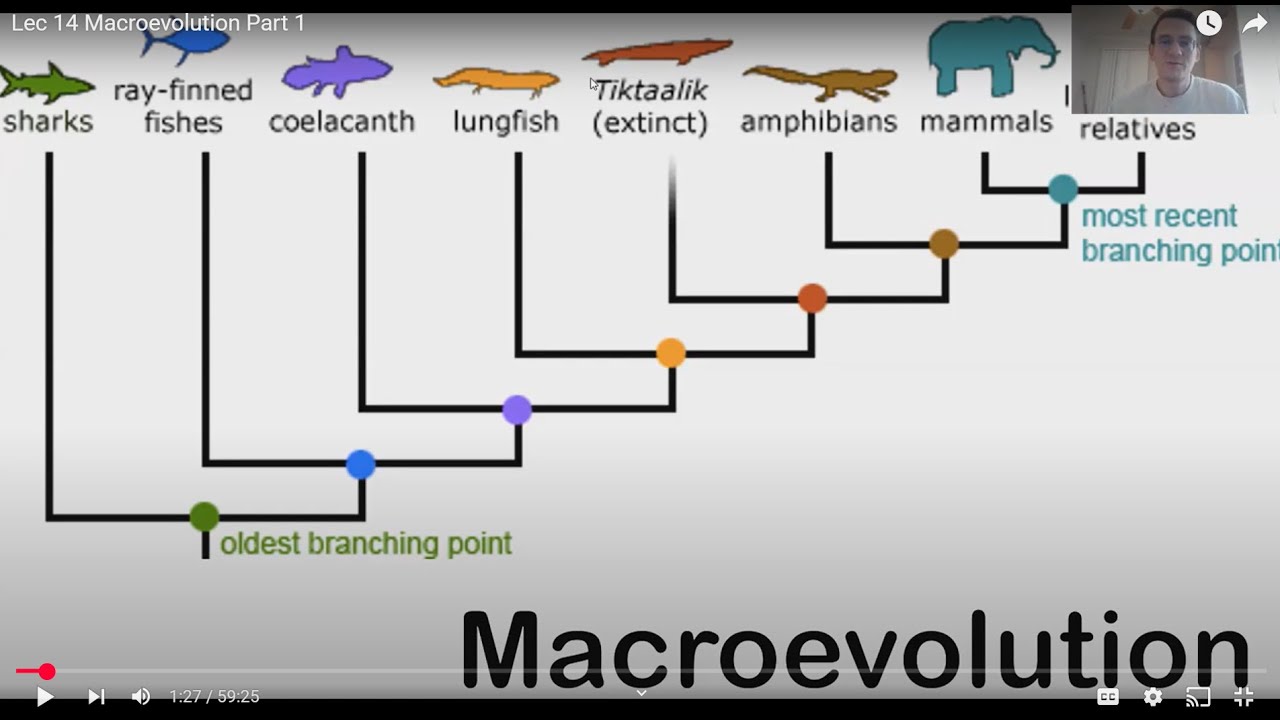
- Macroevolution examines large-scale evolutionary changes over long periods, focusing on evolutionary history, the origin of new species, extinction, and relationships between species.
- Unlike microevolution, which focuses on changes within a single population, macroevolution looks at the bigger picture of species diversification and relatedness.
- A species is generally defined as a group of individuals that can interbreed in nature and produce viable, fertile offspring.
- The biological species concept is a key definition, emphasizing reproductive compatibility, but it has limitations with asexual organisms, extinct species, and hybridization.
- The biological species concept is problematic for organisms that reproduce asexually, extinct species (known only from fossils), and when observing reproduction is difficult.
- Hybridization, where different species can reproduce but produce infertile or non-viable offspring (like a liger or mule), highlights the complexity of species definition.
- The morphological species concept defines species based on shared physical traits, which is useful for fossils and asexual organisms but can be misleading due to variations within species or convergent evolution.
- Other concepts like genetic, ecological, and phylogenetic species concepts offer additional perspectives, with the eclectic approach suggesting the use of multiple criteria.
- Reproductive barriers are mechanisms that prevent gene flow between populations, leading to the formation of new species.
- Prezygotic barriers prevent the formation of a zygote (fertilized egg) and include habitat isolation, temporal isolation (different breeding times), behavioral isolation (different courtship rituals), mechanical isolation (incompatible anatomy), and gametic isolation (incompatible gametes).
- Postzygotic barriers occur after a zygote is formed and include hybrid inviability (offspring don't survive), hybrid sterility (offspring are infertile, like mules), and hybrid breakdown (later generations are non-viable or sterile).
- The presence and type of reproductive barriers help determine if two groups are distinct species.
- Speciation is the evolutionary process by which new biological species arise.
- It requires the cessation of gene flow between populations, allowing them to diverge genetically.
- Allopatric speciation occurs when a population is divided by a geographic barrier (like a river or mountain range), leading to isolated evolution in different locations.
- Sympatric speciation occurs when new species evolve from a single ancestral species while inhabiting the same geographic region, often due to genetic or behavioral changes.
- Polyploidy, a rapid genetic change involving extra sets of chromosomes, is a significant mechanism for sympatric speciation, particularly in plants.
- Allopatric speciation is exemplified by chipmunks separated by the Grand Canyon or lobsters separated by the formation of the Isthmus of Panama.
- Sympatric speciation can occur through mechanisms like polyploidy (common in plants) or changes in host preference and mating timing, as seen in apple maggot flies.
- Adaptive radiation is a rapid diversification of a lineage into many new species, often occurring after a group colonizes a new environment with many available ecological niches, such as mammals after the extinction of dinosaurs.
- Archipelagos, like the Galapagos Islands, provide ideal conditions for allopatric speciation due to habitat isolation on different islands.
Key takeaways
- Macroevolution deals with large-scale evolutionary changes over vast time periods, contrasting with microevolution's focus on small changes within populations.
- Defining a species is complex; the biological species concept (reproductive compatibility) is useful but not universally applicable, necessitating other concepts like the morphological one.
- Reproductive barriers, both prezygotic (preventing zygote formation) and postzygotic (affecting hybrid offspring), are crucial for isolating populations and driving speciation.
- Speciation is the process by which new species form, primarily occurring through allopatric (geographic separation) or sympatric (same location) mechanisms.
- Factors like polyploidy, adaptive radiation, and colonization of new environments (like islands) can accelerate the rate of speciation.
- Understanding speciation is key to comprehending the immense biodiversity observed on Earth and the evolutionary history that shaped it.
- The distinction between species has significant implications for conservation efforts, as highlighted by the endangered Northern spotted owl.
Key terms
Test your understanding
- How does macroevolution differ from microevolution in its scope and timescale?
- What are the main limitations of the biological species concept, and when might the morphological species concept be more useful?
- Explain the difference between prezygotic and postzygotic reproductive barriers and provide an example of each.
- Describe the key differences between allopatric and sympatric speciation, and give an example of each.
- Why is understanding the distinction between species important for conservation efforts?