6:08
Garden Design Principles - Contrast & Counterpoint
Growing Gardeners
Overview
This video explores the fundamental garden design principle of contrast and counterpoint, explaining how it creates energy, emotion, and interest. The speaker argues that contrast is the underlying concept for many other design elements like color, scale, texture, pattern, rhythm, unity, shape, and form. Understanding and applying contrast allows designers to evoke specific feelings, guide the viewer's eye, and create a more dynamic and engaging garden space. It's presented as a core idea that, once grasped, significantly aids in successful garden design.
How was this?
Save this permanently with flashcards, quizzes, and AI chat
Chapters
- Contrast, like counterpoint in music, is essential for creating energy and emotion in garden design.
- It involves the interplay between opposing elements, such as sound and silence, or in gardens, between different visual or sensory experiences.
- Many other design principles, including color, scale, space, and mystery, are essentially applications of contrast.
Understanding contrast as the foundational principle helps you see how various design elements work together to create a dynamic and engaging garden, rather than treating each element in isolation.
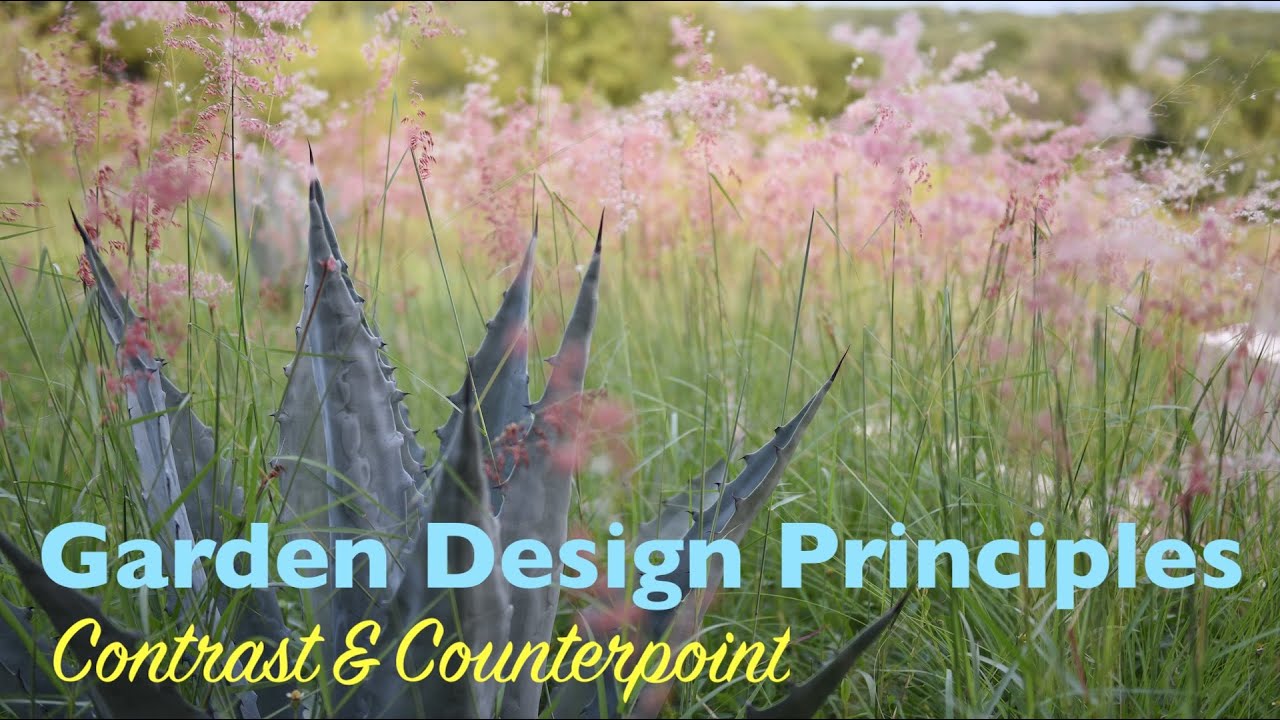
Just as two contrasting musical notes create emotion, the contrast between a sharp agave and soft, flowing grasses creates visual interest and energy in a garden.
- Contrast can be used to manage the feeling of space, creating tension and release.
- A garden can evoke a feeling of being enclosed to make a subsequent open space feel more profound.
- Conversely, views out from an enclosed space can play on the tension between confinement and openness.
This shows how contrast isn't just about aesthetics but also about manipulating the emotional and psychological experience of moving through a garden space.
Feeling hemmed in by tall walls and then stepping into an open area provides a profound sense of release due to the contrast in spatial experience.
- Texture, often subconscious, affects us on a primal level, with soft textures promoting relaxation and sharp textures creating alertness.
- The contrast between different textures, like rough and smooth, adds significant interest.
- A lack of textural variety can lead to a bland garden, while varied textures add depth and appeal.
Paying attention to texture allows you to add a subtle yet powerful sensory dimension to your garden that engages visitors on a deeper, more intuitive level.
Placing spiky agaves next to soft, feathery grasses creates a compelling textural contrast.
- Pattern and rhythm create expectations that can be fulfilled or broken, guiding the eye and leading movement through the garden.
- Unity and consistency, achieved through related elements, tie the entire design together, creating a cohesive whole.
- These elements, while distinct, are all variations of contrast, contributing to the overall harmony or deliberate tension within the design.
These principles, rooted in contrast, help create a sense of order and flow, making the garden feel intentional and guiding the visitor's experience.
Using a similar type of stone in pathways, walls, and decorative features creates unity and consistency throughout the garden.
- Shape and form, like broad strokes of texture, can be repeated to create a sense of peace and consistency.
- Specific shapes can direct the viewer's eye, such as columnar forms drawing attention upwards.
- Using contrasting forms or sizes of the same shape can create an illusion of greater depth.
Understanding how shape and form contribute to contrast allows you to intentionally direct attention, create visual interest, and even alter the perceived size of your garden.
Placing a large plant with a specific form close to the viewer and a smaller version of the same form further away can make the garden appear larger.
Key takeaways
- Contrast is the fundamental principle that drives energy and emotion in garden design, underpinning other elements.
- Effective garden design uses contrast to manage spatial experiences, creating tension and release for greater impact.
- Texture plays a crucial, often subconscious, role in how a garden feels, with contrasting textures adding significant appeal.
- Pattern, rhythm, unity, and consistency, all related to contrast, help guide the viewer's eye and create a cohesive design.
- Shape and form, used repetitively or in contrast, can establish mood, direct attention, and influence the perception of space.
- By understanding contrast and counterpoint, designers can create more dynamic, engaging, and emotionally resonant gardens.
- Subtle contrasts in texture, shape, or material can be as impactful as more obvious ones.
Key terms
ContrastCounterpointTexturePatternRhythmUnityConsistencyShapeFormScaleProportion
Test your understanding
- How does the principle of contrast create energy and emotion in a garden, similar to its role in music?
- Explain how a designer can use contrast in spatial arrangement to evoke feelings of tension and release in a garden visitor.
- What is the role of texture in garden design, and why is contrast between different textures important?
- How do pattern and rhythm, as applications of contrast, help guide a person's experience through a garden?
- Describe how shape and form can be used to create contrast and influence the perceived size or depth of a garden space.