AI-Generated Video Summary by NoteTube
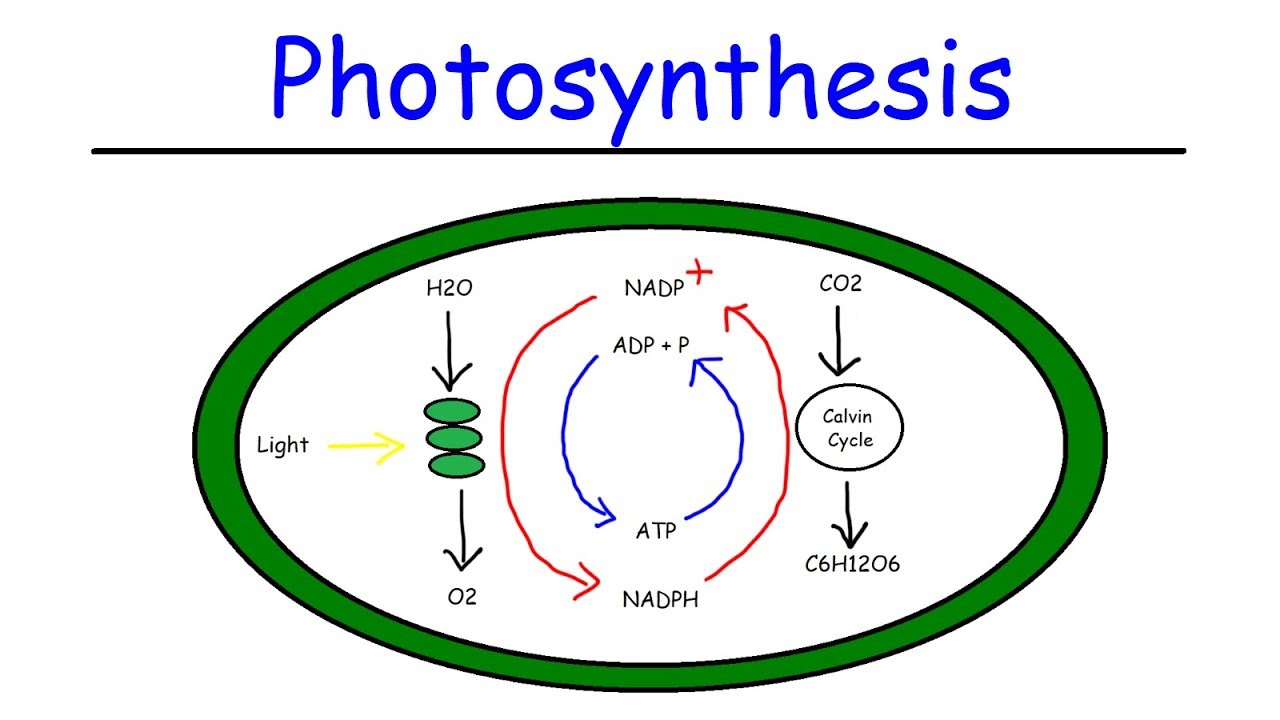
Photosynthesis - Light Dependent Reactions and the Calvin Cycle
The Organic Chemistry Tutor
Overview
This video explains the process of photosynthesis, focusing on its two main stages: the light-dependent reactions and the Calvin cycle. Photosynthesis uses light energy, water, and carbon dioxide to create glucose (a sugar) and oxygen. The process occurs in chloroplasts, with chlorophyll pigment absorbing light. The light-dependent reactions, taking place in the thylakoids, convert light energy into ATP and NADPH, releasing oxygen from water. The Calvin cycle, occurring in the stroma, uses the ATP and NADPH produced in the first stage, along with carbon dioxide, to synthesize glucose. The video details the electron transport chain, chemiosmosis, and the specific steps within the Calvin cycle, including carbon fixation, reduction, and regeneration of RuBP, highlighting the roles of key enzymes and molecules like Rubisco, ATP synthase, and NADP+ reductase.
This summary expires in 30 days. Save it permanently with flashcards, quizzes & AI chat.
Chapters
- •Photosynthesis uses light energy to build carbohydrates.
- •Net equation: 6H2O + 6CO2 + Light Energy -> C6H12O6 + 6O2.
- •Water enters through roots, CO2 through stomata, oxygen exits through stomata.
- •Chloroplasts are the organelles where photosynthesis occurs.
- •Chlorophyll absorbs blue and red light, reflects green light.
- •Photosynthesis occurs in thylakoids (stacks called grana) and stroma.
- •Lumen is the fluid inside the thylakoid.
- •Chloroplasts have inner and outer membranes.
- •Two stages: Light-dependent reactions and Light-independent reactions (Calvin cycle).
- •Light-dependent reactions occur in thylakoids.
- •Light-independent reactions occur in the stroma.
- •Light-dependent reactions produce O2, ATP, and NADPH.
- •Water is oxidized to oxygen, releasing electrons and protons.
- •Electrons move through an electron transport chain involving Photosystem II and I.
- •Protons are pumped into the thylakoid lumen, creating a gradient.
- •ATP is synthesized via chemiosmosis using ATP synthase.
- •NADP+ is reduced to NADPH.
- •Uses CO2, ATP, and NADPH to produce sugars.
- •Three phases: Carbon fixation, Reduction, and Regeneration of RuBP.
- •Rubisco enzyme fixes CO2 to RuBP, forming PGA.
- •ATP and NADPH are used to convert PGA to G3P.
- •Some G3P is used to make glucose, the rest regenerates RuBP.
- •Light-dependent reactions: Reactants - H2O, NADP+, ADP+P; Products - O2, NADPH, ATP.
- •Calvin cycle: Reactants - CO2, ATP, NADPH; Products - Sugars (G3P), NADP+, ADP+P.
- •To make one glucose molecule, 6 CO2 molecules are needed, requiring 18 ATP and 12 NADPH.
Key Takeaways
- 1Photosynthesis converts light energy into chemical energy stored in glucose.
- 2The light-dependent reactions capture light energy and produce ATP and NADPH, releasing oxygen.
- 3The Calvin cycle uses ATP and NADPH to convert carbon dioxide into sugars.
- 4Chlorophyll is the primary pigment responsible for absorbing light energy.
- 5The chloroplast is the cellular organelle where photosynthesis takes place.
- 6Water is the source of electrons and protons for the light-dependent reactions and the origin of oxygen gas.
- 7ATP synthase plays a crucial role in generating ATP through chemiosmosis during the light-dependent reactions.
- 8Rubisco is the enzyme that catalyzes the initial fixation of carbon dioxide in the Calvin cycle.