5:39
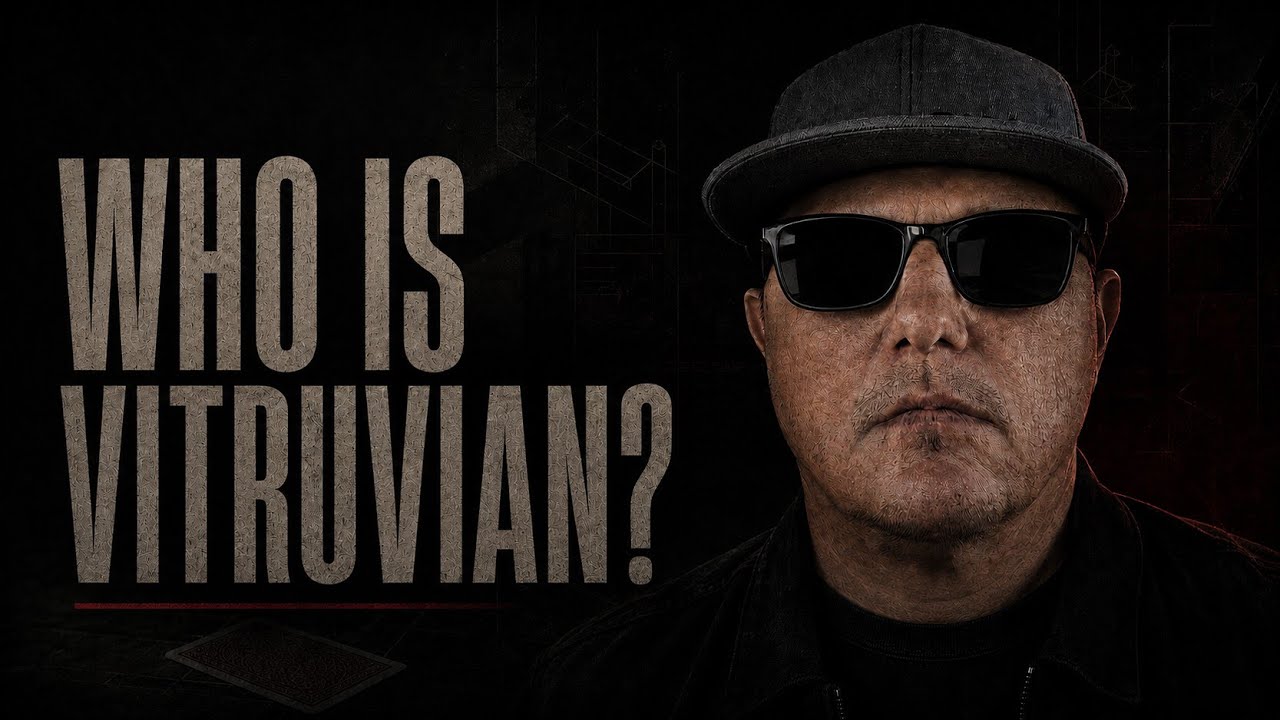
Insight into The Mind of Vitruvian. What is truth?
Vitruvian Official
Overview
This video explores the concept of truth and identity through the lens of a performer named Betruian, also known as Vuvian. The speaker details a life shaped by constant relocation and deception, leading to a fluid sense of self. This experience fostered an understanding of human predictability and the art of influencing perceptions. The speaker's passion for playing cards, stemming from childhood memories and a pivotal moment involving a parent's incarceration, is presented as a core element of their identity and a tool for deception. The "Slight Society" is introduced as a platform to share these insights and influence others in performance and perception.
How was this?
Save this permanently with flashcards, quizzes, and AI chat
Chapters
- The speaker's identity is fluid and self-described as a product of deception, making true self-knowledge impossible.
- Frequent childhood moves and school changes fostered a sense of impermanence and the freedom to reinvent oneself.
- Constant new social interactions revealed predictable human behaviors, enabling the speaker to master influencing assumptions and reactions.
- This mastery of deception led to the creation of the persona 'Vuvian', distinct from the original self.
Understanding how constant change and observation can lead to the development of deceptive strategies is crucial for recognizing manipulative tactics and the construction of artificial identities.
The speaker changed their backstory, clothing, and speech with each move to create a new persona.
- Playing cards represent a significant anchor in the speaker's life, tied to fragmented family memories.
- A childhood visit to a mother in prison, where the grandfather taught blackjack, sparked an obsession with card counting.
- The realization that memorizing cards allows for prediction of future outcomes is a foundational insight into deception.
- Card games like Spades, Hearts, and Uker were central to family gatherings.
This chapter illustrates how a seemingly simple pastime can become a powerful tool for deception and a metaphor for understanding predictable systems.
Learning to count cards in blackjack to predict outcomes after visiting a mother in prison.
- The speaker finds joy and purpose in impacting and influencing others through shared experiences.
- The 'Slight Society' is established to teach others how to perceive performance, design effects, and control audience reactions.
- The speaker's books are designed as practical workbooks for learning and application, not just theoretical texts.
- The ultimate goal is to create a lasting legacy through the dissemination of knowledge about deception and performance.
This section highlights the speaker's motivation to share their unique understanding of deception, framing it as a valuable skill for performance and influence.
The speaker's books are described as workbooks for practical use and testing.
Key takeaways
- Identity can be a performance, constructed through deliberate reinvention and adaptation.
- Observing and understanding predictable human behavior is key to influencing perceptions and reactions.
- Seemingly simple systems, like a deck of cards, can be exploited for predictive advantage through deep analysis.
- Childhood experiences, even traumatic ones, can profoundly shape an individual's skills and outlook.
- The pursuit of knowledge and mastery in a specific domain, like deception, can become a driving force for personal identity.
- Sharing expertise and influencing others can provide a sense of purpose and legacy.
- The line between genuine self and constructed persona can become blurred, leading to a complex understanding of 'truth'.
Key terms
DeceptionIdentityPerformanceReinventionAssumptionsReactionsCard CountingSlight SocietyLegacy
Test your understanding
- How did the speaker's childhood experiences contribute to their understanding of deception?
- What is the significance of playing cards in the speaker's life and their philosophy of deception?
- In what ways does the speaker define their own identity, and what challenges does this present?
- What is the primary mission of the 'Slight Society' as described by the speaker?
- How does the speaker suggest that understanding human predictability can be utilized?