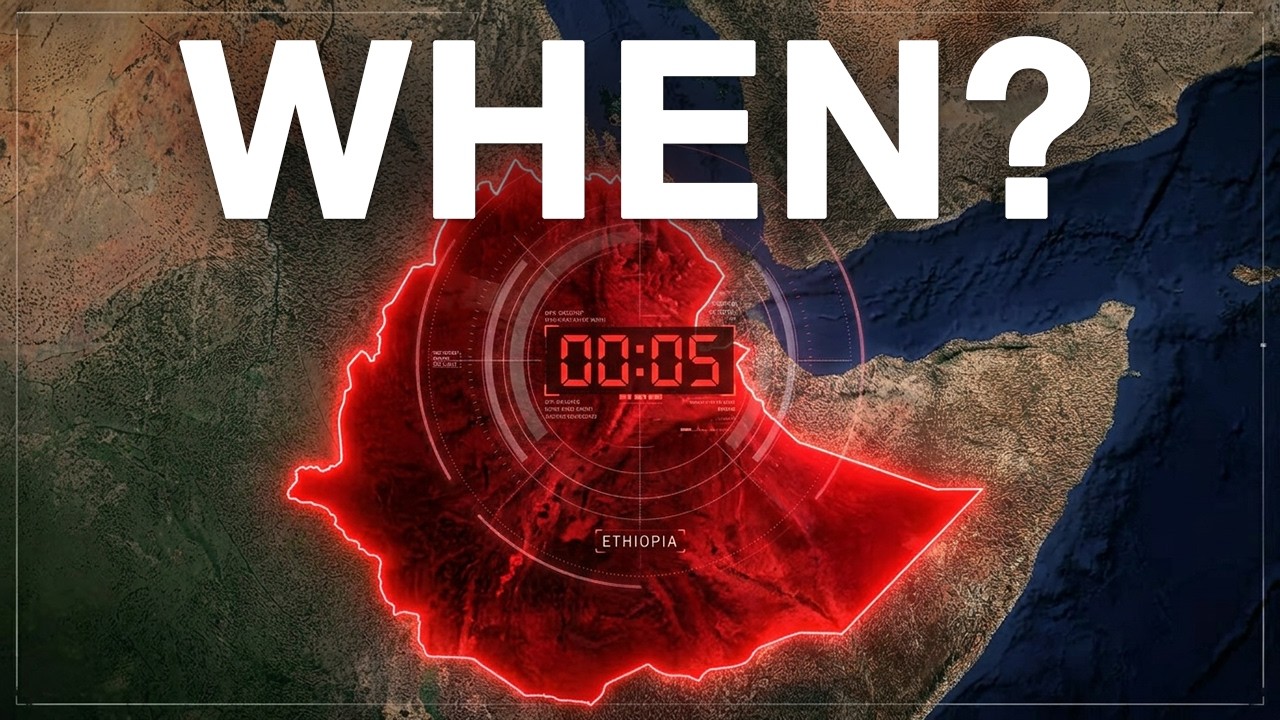
Ethiopia is About to Explode.
WarFronts
Overview
This video analyzes the escalating tensions in Ethiopia, highlighting the potential for a full-scale civil war that could engulf the entire Horn of Africa. It details the internal political dynamics, including Prime Minister Abiy Ahmed's consolidation of power and the Tigray People's Liberation Front's (TPLF) resurgence. The summary also explores the complex web of regional and international alliances, emphasizing how external actors and geopolitical rivalries could exacerbate the conflict. The critical role of the Strait of Hormuz in limiting immediate conflict due to fuel dependency is discussed, alongside the dire warnings from experts about the potential for a catastrophic regional conflagration.
Save this permanently with flashcards, quizzes, and AI chat
Chapters
- Ethiopia is on the brink of a major internal conflict, with global experts sounding alarms.
- The conflict involves the Ethiopian federal government led by Abiy Ahmed and the well-armed Tigray region.
- Neighboring countries like Eritrea and Somalia are also unstable, increasing regional risk.
- Powerful Middle Eastern nations are aligning with different factions, complicating the situation.
- Tensions escalated in late 2025 when a faction within Tigray's TPLF seized power, leading to accusations of attacks on civilians.
- Both sides engaged in military build-ups, with Ethiopia alleging Eritrean support for the TPLF.
- A potential full-scale war between Ethiopia and Tigray was averted by larger global events.
- A US-Israel war against Iran in early 2026 disrupted global oil markets and closed the Strait of Hormuz.
- Ethiopia's reliance on imported refined petroleum, largely passing through the Strait of Hormuz, forced a pause in military preparations.
- Both Ethiopian factions had to conserve fuel, making large-scale conflict temporarily unfeasible.
- The TPLF leveraged the pause to restore its pre-war regional government in April, with Debretsion Gebremichael elected president.
- Meanwhile, Prime Minister Abiy Ahmed was re-elected in a vote widely seen as lacking legitimacy, consolidating his power.
- Abiy's government has suppressed dissent, restricted press freedom, and excluded the Tigray region from the vote.
- An op-ed by Ethiopian and Tigrayan officials accused Eritrea of supporting an imminent TPLF attack, signaling renewed hostility.
- Regional experts believe Eritrea is partnering with the TPLF to keep Ethiopia fragmented.
- The conflict risks drawing in neighboring countries and international powers with competing interests.
- A renewed Tigray war could be worse than the last due to Eritrea's involvement and the Tigray forces' increased experience.
- Ethiopia faces internal instability from the Amhara (Fano militias) and Oromo (Oromo Liberation Army) regions.
- International powers like Egypt, UAE, Israel, Saudi Arabia, and Turkey are aligning with different regional factions, creating a complex geopolitical landscape.
- The conflict could trigger mass migration and further destabilize Sudan, Somalia, and South Sudan.
- Experts warn that leaders in Ethiopia, Eritrea, and the TPLF underestimate their ability to control a conflict.
- The current situation is highly dangerous, with all ingredients for a wider regional blow-up.
- The reopening of the Strait of Hormuz could remove the fuel constraint, unleashing pent-up military ambitions.
- Peace appears unlikely, as all parties seem to be angling towards some form of conflict.
Key takeaways
- Ethiopia is facing a high risk of a devastating civil war that could destabilize the entire Horn of Africa.
- The conflict is fueled by deep-seated historical grievances between the Ethiopian federal government and the Tigray region.
- Global geopolitical events, such as the conflict involving Iran, can temporarily halt regional conflicts by disrupting critical supply chains like oil.
- Prime Minister Abiy Ahmed's consolidation of power and the TPLF's resurgence have created a volatile internal political landscape.
- Regional and international powers are increasingly involved, aligning with different factions and increasing the risk of a wider proxy war.
- The leaders involved may be underestimating their ability to control the conflict, leading to a dangerous potential for escalation.
- The reopening of the Strait of Hormuz could remove a key constraint on fuel supplies, potentially triggering renewed military action.
Key terms
Test your understanding
- What are the primary factions involved in the potential conflict in Ethiopia, and what are their core grievances?
- How did the conflict between Iran and the US/Israel indirectly impact the situation in Ethiopia?
- Why is the Strait of Hormuz considered a critical factor in limiting the immediate outbreak of war in Ethiopia?
- What are the key internal and external factors that increase the risk of the Ethiopian conflict escalating into a wider regional war?
- What is the central miscalculation that regional experts believe Ethiopian and Tigrayan leaders are making regarding a potential conflict?