Former FBI Agent Explains How to Read Facial Expressions | WIRED
WIRED
Overview
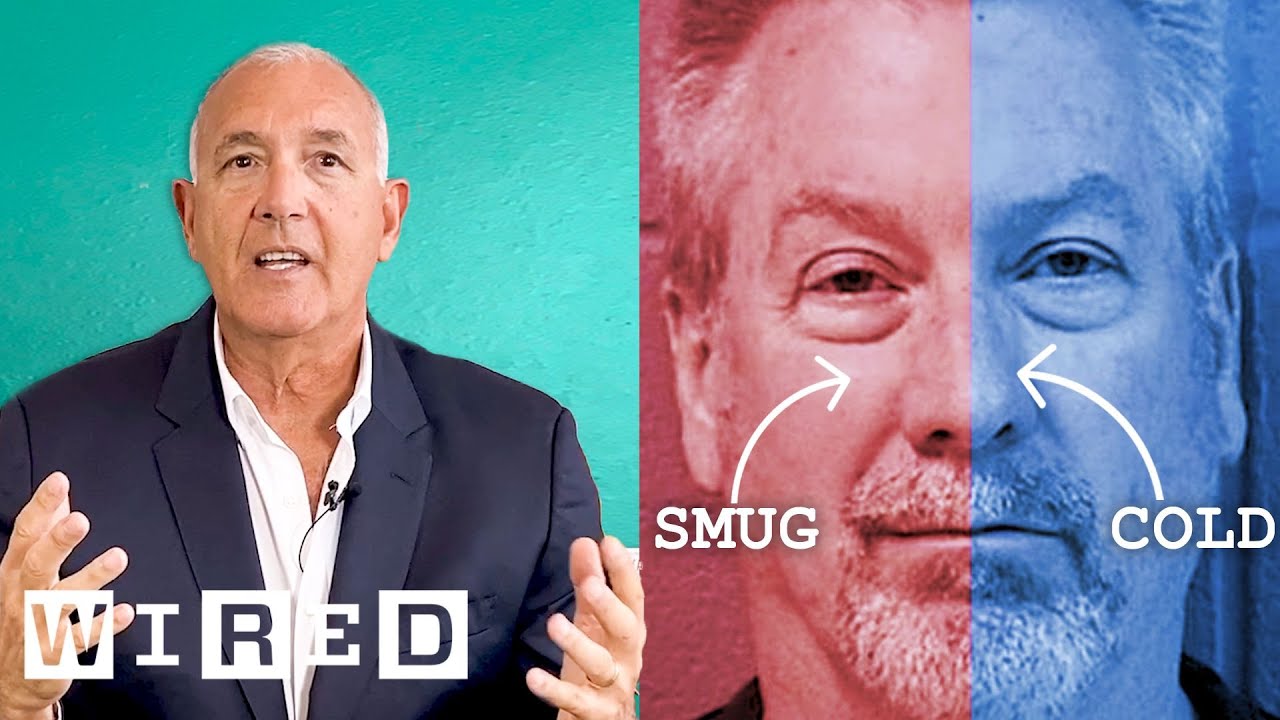
This video, featuring former FBI agent Joe Navarro, explores the significance of facial expressions in non-verbal communication. Navarro explains how we instinctively read faces from birth, focusing on cues related to comfort and discomfort. He details specific facial features like the forehead, eyebrows, nose, and lips, and how their movements convey emotions. The video also touches on the impact of masks on communication, the challenges and strategies for reading faces in virtual environments, and the concept of facial asymmetry (chirality) as an indicator of complex or hidden emotions. Ultimately, understanding facial cues is presented as crucial for effective interpersonal connection and self-awareness.
Save this permanently with flashcards, quizzes, and AI chat
Chapters
- Humans are naturally wired to read facial expressions from infancy, using them to understand emotions and intentions.
- The face is the most critical area for non-verbal communication, providing rich information about feelings.
- Facial cues can be broadly categorized as indicating either psychological comfort or discomfort.
- Comfort is associated with relaxed facial muscles, smiles, wider pupils, and a forward-leaning chin.
- Discomfort often manifests as forehead furrowing, squinting between the eyes, chin tucking, or chin vibration.
- Even subtle changes in features like hair (disarranged vs. neat) can offer clues.
- A smooth forehead suggests calmness, while a furrowed one indicates unease or concentration.
- Eyebrows act as 'exclamation points,' with an eyebrow flash signaling recognition or greeting.
- The glabella (area between eyebrows) can show disapproval through squinting or a sideways glance.
- The nose can reveal dislike through upward wrinkling (the 'bunny nose'), a behavior seen even in infants.
- The mouth and lips are highly expressive, conveying a wide range of emotions and intentions through various types of smiles (social, interested, secretive).
- Pupil dilation or constriction, though often subconscious, provides significant emotional information.
- Our brains constantly process this facial data, even if we aren't consciously aware of it.
- Faces continuously broadcast our emotions, sentiments, and desires.
- Historically, covering the mouth (like bank robbers) is associated with negative intent, while covering the eyes (like superheroes) is less inherently threatening.
- Masks significantly impede communication by obscuring key facial information, causing societal unease.
- Even with masks, emotions can still be deciphered through visible areas like the forehead, glabella, and eyes (squinting).
- When full facial cues are unavailable, we must rely more on other body parts like the neck, shoulders, hands, and feet for information.
- Video calls limit the visual field, often showing only the face or upper body, altering communication dynamics.
- Directly staring into a camera lens during video calls can feel aggressive and create discomfort for the viewer.
- Angling your head slightly can make the interaction feel more comfortable and relaxed for both parties.
- Encouraging synchrony, where participants subtly mirror each other's relaxed behaviors, builds rapport.
- Achieving synchrony indicates harmony and engagement on both conscious and subconscious levels.
- Facial chirality refers to asymmetry where different emotions might be displayed on the left and right sides of the face simultaneously.
- This asymmetry can make a face difficult to interpret at first glance.
- Covering one half of the face at a time can reveal distinct emotional expressions that were previously masked.
- When an emotion isn't equally expressed on both sides, it signals something unusual or requires further investigation.
- This phenomenon highlights that sometimes a face isn't presenting a single, clear emotion.
- We focus on faces out of necessity because they are primary tools for showing care and validating others' experiences.
- Studying facial expressions enhances self-understanding by revealing how our own non-verbals impact others.
- Understanding non-verbal communication, particularly facial cues, benefits both the individual and those they interact with.
- This knowledge fosters better relationships and more effective communication overall.
Key takeaways
- The face is the most crucial area for non-verbal communication, providing immediate insights into comfort and discomfort.
- Specific facial features like the forehead, eyebrows, nose, and lips offer distinct emotional signals that can be learned.
- While masks and virtual environments present challenges, focusing on visible cues and other body language can compensate.
- Facial asymmetry (chirality) can indicate complex or conflicting emotions that require closer examination.
- Developing the skill to read facial expressions enhances empathy and strengthens interpersonal connections.
- Consciously observing and interpreting facial cues improves self-awareness regarding your own communication impact.
- Effective non-verbal communication benefits both the sender and receiver, fostering better understanding and rapport.
Key terms
Test your understanding
- How does the brain initially categorize facial expressions, and what are the key indicators for each category?
- Describe how specific facial features like the glabella and the nose convey emotional information.
- What strategies can be employed to improve communication when facial expressions are partially obscured by masks or limited by video calls?
- Explain the concept of facial chirality and why recognizing it is important for interpreting emotions.
- How does achieving synchrony in virtual interactions contribute to building rapport and understanding?