7:03
How does a Thermal power plant work?
Sabin Civil Engineering
Overview
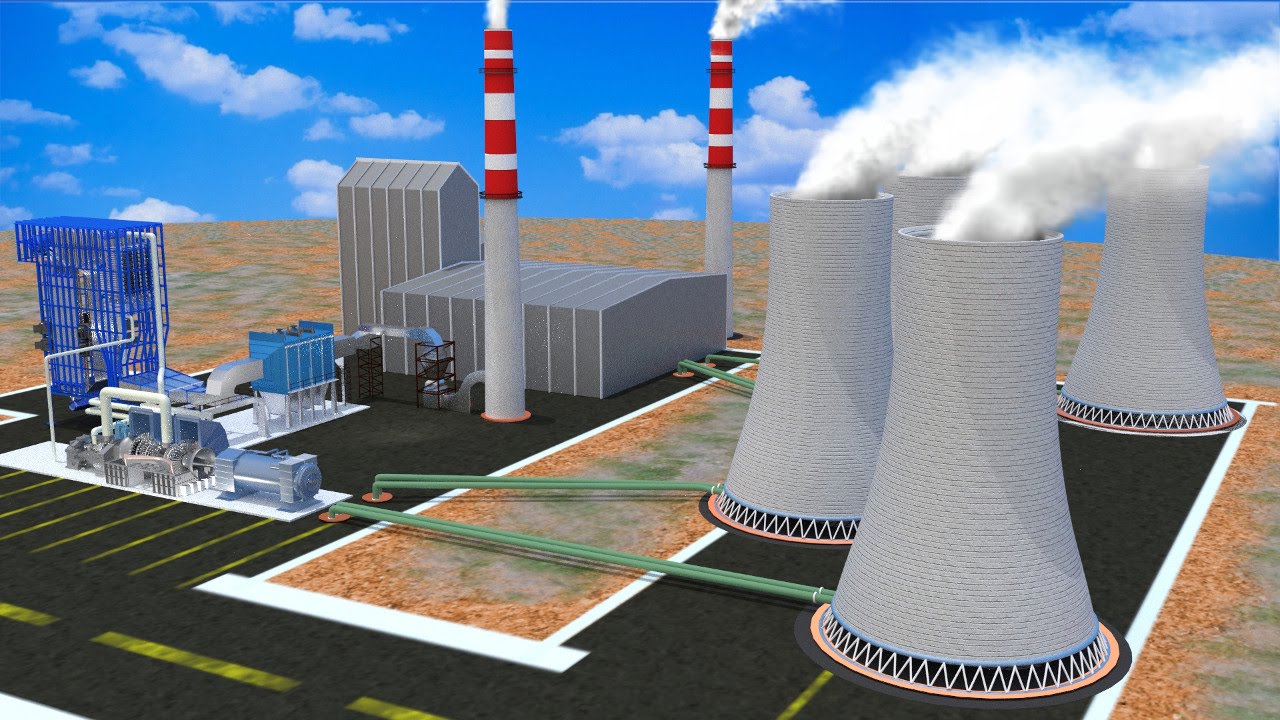
This video explains the step-by-step process of how a coal-based thermal power plant generates electricity. It details the Rankine cycle, the core thermodynamic principle, and introduces several techniques like superheating, reheating, and feedwater heating to improve efficiency and capacity. The explanation covers the journey of water from a liquid to high-pressure steam, its expansion through a turbine to generate mechanical energy, and its subsequent condensation and reheating to repeat the cycle. The video also touches upon environmental considerations, specifically how pollutants are removed from exhaust gases before release.
How was this?
Save this permanently with flashcards, quizzes, and AI chat
Chapters
- Electricity is generated by a generator, which is turned by a steam turbine.
- The steam turbine requires high-pressure, high-temperature steam to operate efficiently.
- After passing through the turbine, the steam's pressure and temperature drop.
- To repeat the cycle, the low-pressure steam must be converted back to high-pressure, high-temperature steam.
Understanding the basic Rankine cycle is fundamental to grasping how thermal power plants convert heat energy into electrical energy and why efficiency improvements are necessary.
The generator is turned by a steam turbine, which is the heart of the power plant.
- To efficiently increase steam pressure, it's first converted into liquid water in a condenser.
- In the condenser, cold water flowing through tubes cools the steam, causing it to condense.
- A pump then increases the pressure of this liquid water, often using multistage centrifugal pumps.
- This process returns the working fluid to a high-pressure state, ready for reheating.
This step is crucial for making the cycle practical and efficient, as compressing steam directly is highly energy-intensive.
Cold water flows through tubes in the condenser, and the steam rejects heat to this water, turning into liquid.
- Heat is added to the pressurized water using a boiler to raise its temperature back to its original high value.
- Modern plants typically use water-tube boilers where pulverized coal is burned to generate heat.
- Water first passes through an economizer to capture heat from flue gases, then through water walls where it turns into steam.
- A steam drum separates the pure steam, completing the return to the initial high-pressure, high-temperature state.
The boiler is where the thermal energy from fuel is transferred to the working fluid, creating the high-energy steam needed to drive the turbine.
Pulverized coal is burnt inside a water-tube boiler, and the incoming water flows through water walls, transforming into steam.
- Superheating involves adding more heat to the steam even after it has turned into a gas, increasing its temperature and thus cycle efficiency.
- Superheating is limited by the turbine's material tolerance, typically around 600 degrees Celsius.
- Reheating adds heat to the steam after it has passed through the first stage of the turbine, further increasing power output and efficiency.
- These techniques boost the overall performance of the power plant significantly.
These methods directly increase the energy extracted from the steam, leading to higher electricity generation from the same amount of fuel.
Adding more heat to the steam after it has been converted from liquid increases its temperature, making it 'super-heated'.
- Open feedwater heaters are used to remove dissolved gases from the water, preventing boiler material damage.
- Hot steam from the turbine is mixed with the feedwater, carrying away dissolved gases.
- This mixing process also preheats the feedwater, contributing to overall plant efficiency.
- These combined techniques allow modern plants to achieve efficiencies of 40-45%.
Removing impurities and preheating the water improves the longevity of plant components and squeezes more efficiency out of the thermal cycle.
Hot steam from the turbine is mixed into the feedwater, and the steam bubbles formed absorb dissolved gases.
- Waste heat is rejected from the condenser using cooling towers, where hot water is sprayed and cooled by air.
- This ensures a constant supply of cold water to the condenser for efficient steam condensation.
- Pollutants from burning coal are cleaned from exhaust gases using an Electrostatic Precipitator (ESP).
- The ESP uses high-voltage static electricity to capture pollutant particles before gases are released through the stack.
Efficient heat rejection is vital for the cycle's operation, and environmental controls are necessary to minimize the impact of power generation on the atmosphere.
An Electrostatic Precipitator uses charged plates to attract and remove soot and other pollutant particles from the exhaust gases.
Key takeaways
- Thermal power plants operate on a continuous cycle (Rankine cycle) involving steam generation, expansion through a turbine, condensation, and reheating.
- Converting steam to water in a condenser before pumping is a key step for efficient pressure increase.
- Superheating and reheating steam are critical techniques for maximizing the energy extracted and improving overall plant efficiency.
- Feedwater heating and deaeration not only improve efficiency but also protect vital plant components from damage.
- Modern thermal power plants achieve efficiencies between 40-45% due to these advanced techniques.
- Environmental controls, like Electrostatic Precipitators, are integrated to clean exhaust gases before release.
Key terms
Rankine CycleSteam TurbineGeneratorCondenserBoilerSuperheatingReheatingFeedwater HeaterEconomizerWater-tube BoilerElectrostatic Precipitator (ESP)
Test your understanding
- What is the primary function of the steam turbine in a thermal power plant?
- Why is it more efficient to condense steam into water before increasing its pressure, rather than compressing the steam directly?
- How do superheating and reheating contribute to the efficiency of a thermal power plant?
- What is the role of the condenser in the Rankine cycle, and how does a cooling tower assist this process?
- Explain the mechanism by which an Electrostatic Precipitator removes pollutants from exhaust gases.