Data Analytics & Business Analytics with AI|ML @ 9:30 AM (IST) by Mr.Sandeep Krishna Day-4
Naresh i Technologies
Overview
This video provides a foundational overview of data analytics and business analytics, emphasizing the process from data collection to storytelling. It clarifies key terms like structured, unstructured, and semi-structured data, and details the steps involved in analysis: cleaning, transforming, manipulating, analyzing, visualizing, deriving insights, and storytelling. The session highlights how various industries, including healthcare, production, insurance, food manufacturing, HR, and sports (specifically IPL), leverage data analytics for decision-making. It also touches upon the role of AI in data analysis, concluding that AI will augment rather than replace human roles by automating tasks and requiring human guidance for interpretation and strategic application.
Save this permanently with flashcards, quizzes, and AI chat
Chapters
- Data is any information in any format, but data analysts primarily work with structured, historical data.
- Data types include structured (tabular), unstructured (images, audio, video), and semi-structured (key-value pairs like JSON).
- Analysis is a multi-step process: collecting, understanding, cleaning, transforming, manipulating, analyzing, visualizing, finding insights, and storytelling.
- Data engineers collect data, while data analysts clean, transform, manipulate, and analyze it.
- Data cleaning addresses errors, invalid values, and unwanted spaces.
- Data transformation modifies data without changing its core meaning, like converting currency formats.
- Data manipulation involves operations like filtering, sorting, merging, and appending.
- Analysis focuses on summarizing data, often through group-by operations.
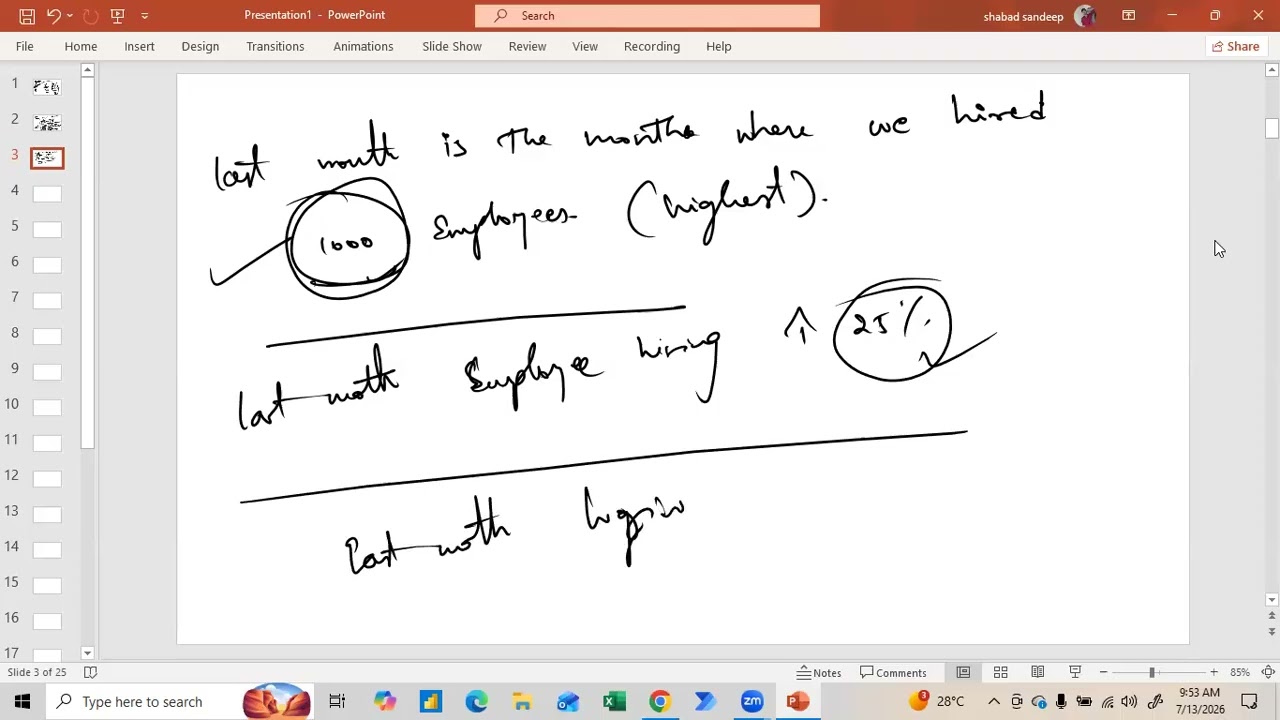
- Insights are data-driven outcomes expressed with specific numbers or percentages, not vague statements.
- Storytelling is the crucial final step of explaining and presenting data analysis findings to stakeholders.
- Effective communication is key to storytelling; simply presenting data without explanation is ineffective.
- Data analysts develop reports and visualizations, while business analysts provide recommendations based on these findings.
- Companies across various industries use data analytics for inventory management, demand forecasting, product development, and customer behavior analysis.
- The four types of data analysis are descriptive (what happened), diagnostic (why it happened), predictive (what might happen), and prescriptive (what should be done).
- Common data analysis tools include Excel, Power BI/Tableau, SQL, and Python, each with its own strengths and limitations.
- SQL is essential for querying structured data in databases, translating binary data into human-readable formats.
- DBMS and RDBMS are concepts for managing data, with RDBMS handling relationships between multiple tables.
- IPL franchises operate as businesses, using data analytics across departments like marketing, finance, and cricket performance.
- Stakeholders (e.g., CEO, coaches, marketing team) ask specific questions that data analysts aim to answer.
- Data sources include ball-by-ball match data, player statistics, ticket sales, and merchandise data.
- Key Performance Indicators (KPIs) like win percentage, average score, and strike rate are tracked to evaluate performance.
- AI can automate manual tasks in data analysis, such as writing SQL queries or generating code, increasing efficiency.
- AI is unlikely to completely replace data analyst jobs due to the need for human intervention in defining problems, interpreting results, and storytelling.
- High costs and the complexity of understanding nuanced human behavior are barriers to AI replacing all roles.
- Data analysts should focus on learning to work with AI tools rather than competing with them.
Key takeaways
- Data analysis is a structured process from data collection to storytelling, requiring distinct skills at each stage.
- Insights must be quantifiable and specific to be valuable for decision-making.
- Different industries leverage data analytics for diverse purposes, from optimizing inventory to improving player performance.
- Understanding the four types of data analysis (descriptive, diagnostic, predictive, prescriptive) helps frame business problems.
- Tools like Excel, SQL, and Python have specific applications and limitations, requiring analysts to choose appropriately.
- Storytelling and communication are critical skills for data analysts to translate findings into actionable recommendations.
- AI will augment, not replace, data analysts by automating repetitive tasks, freeing humans for higher-level strategic thinking and interpretation.
- The IPL serves as a practical example of how data analytics drives business decisions in a complex, data-rich environment.
Key terms
Test your understanding
- What is the primary difference between data cleaning and data transformation?
- Why is storytelling considered the most crucial step in the data analysis process?
- How can a medical agency use data analytics to improve its operations?
- Explain the four types of data analysis and provide a business example for each.
- How does AI impact the role of a data analyst, and what skills should analysts develop to work with AI?