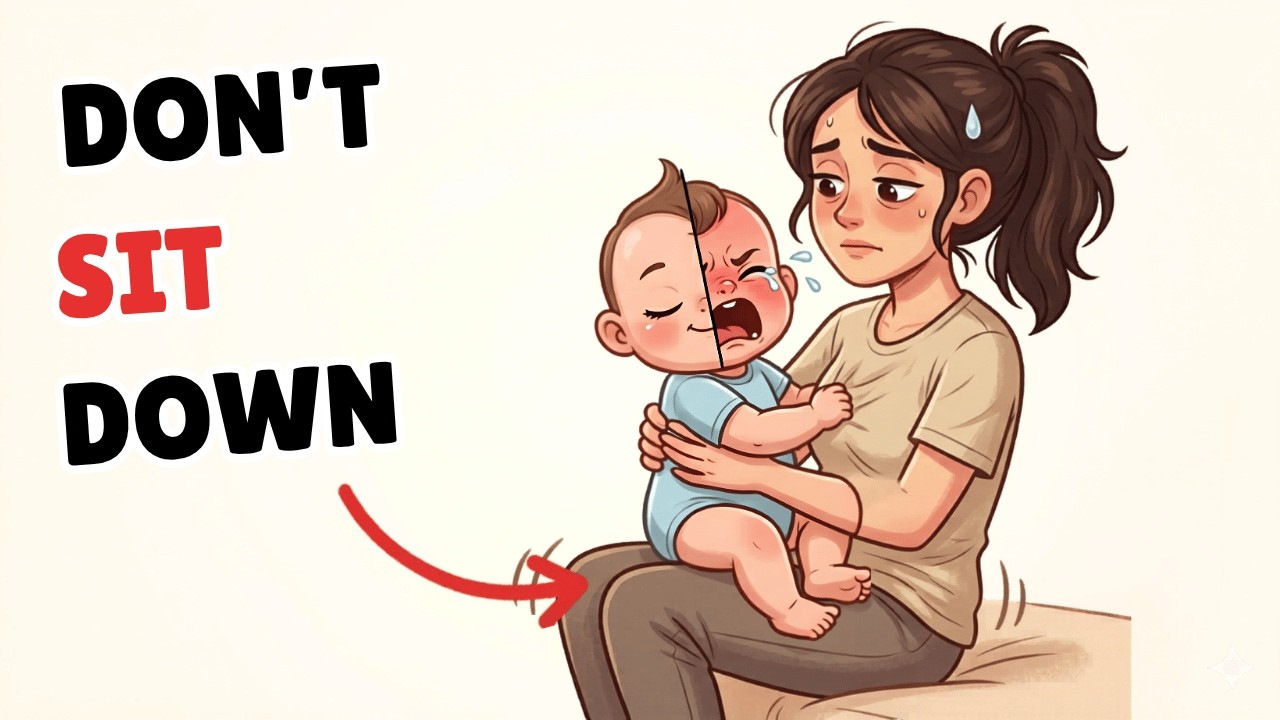
The Actual Reason Why Babies Hate When You Sit Down
The Nurture System
Overview
This video explains the biological and evolutionary reasons behind why babies often cry when their caregiver stops moving, specifically when they sit down. It highlights the role of the infant's vestibular system, which detects motion and interprets stillness as danger due to ancient survival instincts. The video discusses the "calming transport response" observed in both human babies and other mammals, emphasizing that this is a hardwired reflex, not a learned behavior or manipulation. It offers practical advice on how to transition to sitting down more smoothly by gradually decelerating movement, and reassures parents that this behavior is a normal, ancient biological function, not a reflection of their inadequacy.
Save this permanently with flashcards, quizzes, and AI chat
Chapters
- Babies often cry intensely the moment a caregiver stops walking and sits down, even if they were calm moments before.
- This behavior is not due to the baby being difficult, spoiled, or manipulative.
- Babies possess a highly developed vestibular system from before birth, acting as a motion detector.
- The baby's vestibular system interprets the cessation of movement as a signal of danger, a survival program older than humanity.
- Historically, a baby left still on the ground was vulnerable to predators; movement signified safety and the group's migration.
- Crying when movement stops is an ancient, natural selection-driven survival mechanism to ensure the caregiver continues moving and protecting.
- Research on the 'calming transport response' shows babies' heart rates drop and they relax when carried while walking.
- Conversely, when the caregiver sits, babies' heart rates spike, and they become tense and cry.
- This response is an automatic reflex, observed even in newborns with no prior experience, and is also present in other species like mice.
- Parents instinctively move (walk, sway, bounce) when their baby is distressed, even without instruction.
- This is a biological feedback loop: baby's distress triggers caregiver movement, which calms the baby, reducing caregiver stress and releasing oxytocin.
- This synchronized system strengthens the parent-infant bond and is a fundamental aspect of early human survival.
- To sit down without triggering the alarm, gradually decelerate movement over 60-90 seconds.
- Maintain a gentle rocking or swaying motion even while lowering into a seated position.
- Using tools like a rocking chair can help maintain the illusion of movement for the baby's vestibular system.
- A baby's need for movement when held is not a reflection of the parent's inadequacy or lack of love.
- The baby's brain is operating on ancient software designed for a different world, interpreting motion as safety.
- Parents are fulfilling a vital, ancient biological function by providing movement and reassurance, not failing when they need to sit.
Key takeaways
- Babies' crying when you sit down is a hardwired survival reflex triggered by their vestibular system detecting stillness as danger.
- This behavior is rooted in ancient evolutionary pressures where movement signified safety and stillness meant vulnerability.
- The 'calming transport response' is an automatic, biological reaction observed in newborns and across species, not a learned behavior.
- Parents instinctively engage in movement to calm their babies, creating a bi-directional biological feedback loop that strengthens bonding.
- Gradually decelerating movement and maintaining a sway when sitting can help bypass the baby's alarm system.
- A baby's need for movement is not a reflection of parental inadequacy but a sign their ancient brain is still processing threats from a bygone era.
- Understanding the 'why' behind this behavior can significantly reduce parental guilt and frustration.
Key terms
Test your understanding
- How does a baby's vestibular system contribute to their distress when a caregiver sits down?
- What is the evolutionary basis for a baby's instinctual need for movement?
- Describe the 'calming transport response' and why it's significant for understanding infant behavior.
- How can parents adapt their behavior to sit down while still meeting their baby's biological needs?
- Why is it important for parents to understand that this behavior is not a reflection of their own capabilities?