39:04
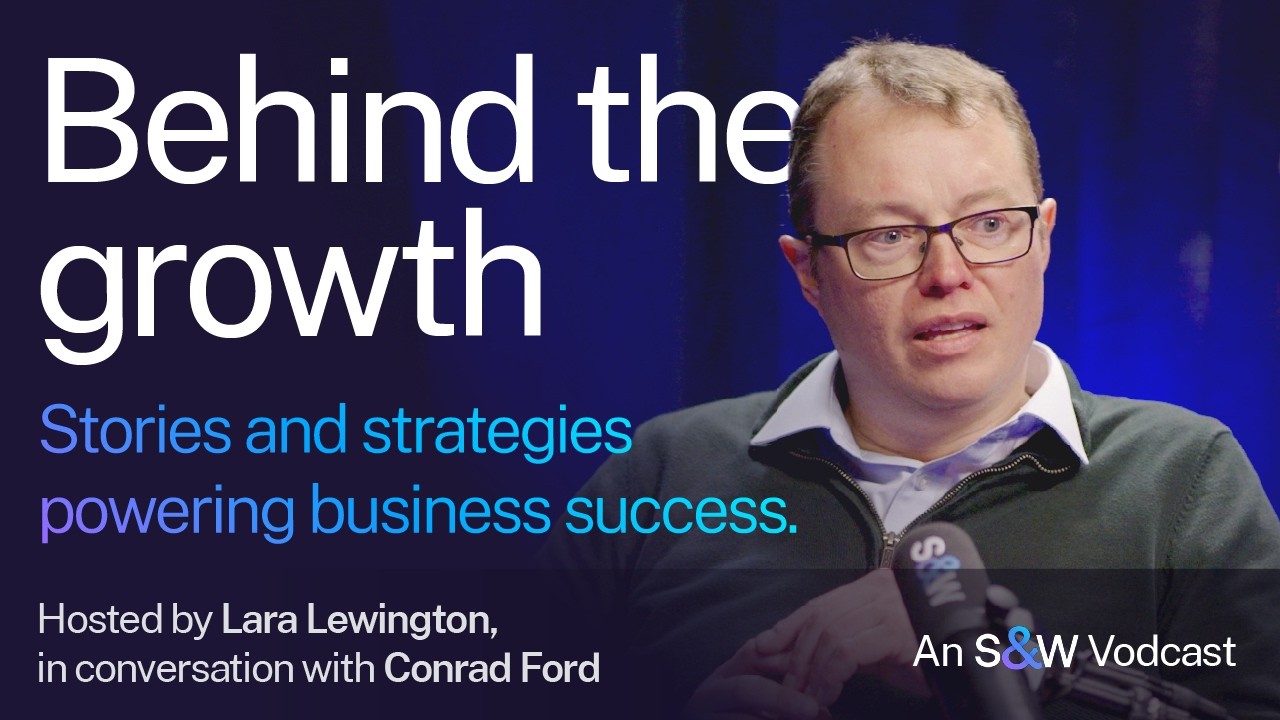
Behind the growth: Conrad Ford of Allica Bank
S&W
Overview
This video features Conrad Ford, Chief Strategy Officer at Allica Bank, discussing the journey of building and scaling a challenger bank in a regulated industry. He shares insights from his previous experience as a founder of Funding Options and details Allica Bank's strategy of focusing on underserved medium-sized businesses. The conversation highlights the importance of a 'high-tech, high-touch' approach, iterative development, building a strong culture and talent base, and navigating regulatory complexities. The discussion also includes expert commentary from S&W's Emily Berry and Andrew Jacobs on leadership, culture, and regulatory challenges in fintech.
How was this?
Save this permanently with flashcards, quizzes, and AI chat
Chapters
- Conrad Ford transitioned from a corporate banking career to founding Funding Options, a business lending comparison service.
- As a sole founder, he experienced burnout and the realization that the business's success was tied to his personal capacity.
- Building a strong leadership team and governance structure was crucial to enable his eventual departure from Funding Options.
- He then moved to Allica Bank, a challenger bank focused on established SMEs, leveraging his founder experience in strategy, marketing, and product.
Understanding the founder's journey from sole operator to scaling a regulated bank provides context for the strategic decisions and challenges faced by Allica Bank.
Conrad's analogy of the founder being the 'brain of the body' illustrates the personal bottleneck experienced in a sole-founder model and the necessity of building external leadership.
- Allica Bank targets established Small and Medium-sized Enterprises (SMEs) with 10-100 employees, a segment underserved by traditional 'universal banks'.
- Universal banks struggle to serve these SMEs because they are too complex for mass-market digital solutions but too low-value for high-touch corporate coverage models.
- Allica Bank was built from the ground up with technology, processes, and people focused on this specific customer segment, which represents a significant portion of the economy.
- The 'friction' or 'awkwardness' that larger banks found in serving this segment became Allica's core opportunity.
Identifying and serving an overlooked market segment is a key growth strategy, and Allica's focus on established SMEs demonstrates how to find a 'soft underbelly' in a competitive market.
The analogy of universal banks being 'jack of all trades' with a 'soft underbelly' highlights their strategic weakness in serving the mid-sized business segment.
- The high barrier to entry for obtaining a banking license is a significant competitive advantage ('moat').
- Allica Bank initially focused on a single product (lending) and a single channel (intermediaries) to gain traction, rather than attempting everything at once.
- The strategy employs a 'high-tech, high-touch' model, where digital tools enhance human interaction rather than replacing it.
- The core technology bet was that sufficiently good digital offerings would encourage self-service for routine transactions, while expert human support would be available for critical moments or issues.
A phased product and channel rollout, combined with a balanced technology approach, allows for focused execution and adaptation in a complex, regulated environment.
The decision to delay the complex task of acquiring business current accounts (switching banks is difficult) and focus first on lending products illustrates a strategic 'wedge' approach.
- Exceptional talent and a strong culture are paramount for building an exceptional company, especially as it scales.
- Founders must transition from being the sole decision-maker to empowering a team, avoiding becoming a bottleneck.
- Allica Bank emphasizes a 'stubborn on vision, flexible on details' approach, prioritizing rapid iteration and learning from customer feedback over rigid business plans.
- Risk is managed through constant, iterative change rather than large, disruptive transformations, a principle supported by regulatory studies.
A focus on people and a culture of continuous improvement are essential for sustainable growth and adaptability in a dynamic market.
Jeff Bezos's concept of 'one-way doors' and 'two-way doors' is used to illustrate how Allica prioritizes making most decisions reversible and quick, reserving deep consideration for truly irreversible choices.
- Trust is paramount in banking, and Allica's 'North Star' is to be the most recommended business bank.
- Recommendations from trusted advisors (like accountants) and word-of-mouth are key drivers of trust and customer acquisition.
- The regulatory hurdle of becoming a bank is a significant barrier to entry that protects Allica from many tech competitors.
- Balancing robust compliance and capital requirements with entrepreneurial DNA is Allica's 'superpower'.
In a regulated industry, building trust through consistent delivery and leveraging regulatory barriers as a competitive advantage are critical for long-term success.
The orange bowler hat serves as a recognizable brand icon, similar to Direct Line's red telephone, aiding brand recall and association with the bank's identity.
- Scaling requires founders to delegate and build strong advisory networks (legal, accounting, consulting) to avoid becoming bottlenecks.
- Maintaining the founder's original culture becomes increasingly challenging but is vital, with regulators like the FCA placing greater emphasis on conduct and culture.
- Regulated businesses face unique complexities, requiring specialized advice on compliance, capital, and tax optimization, with higher investor scrutiny.
- Iterative change is often less risky than large transformations, especially in regulated environments, and requires ongoing support from trusted advisors.
External expertise and a strong internal culture are crucial complements to a founder's vision, especially when navigating the intricate landscape of regulated industries.
The FCA's focus on conduct and culture, predicated on pillars like vision, leadership, and people management, underscores the regulatory importance of these non-financial aspects.
Key takeaways
- Identify and focus on an underserved market segment where incumbents have strategic weaknesses.
- A 'high-tech, high-touch' approach balances digital efficiency with essential human interaction.
- Prioritize building exceptional talent and a strong, adaptable culture as the company scales.
- Embrace iterative development and learning from customer feedback, being flexible on execution details while remaining firm on the core vision.
- In regulated industries, the high barrier to entry can be a significant competitive advantage.
- Trust is built through consistent delivery and strong recommendations from existing clients and advisors.
- Managing risk effectively often involves continuous, small adjustments rather than infrequent, large-scale changes.
Key terms
Challenger BankSME (Small and Medium-sized Enterprise)Universal BankRegulatory BarrierHigh-Tech, High-TouchNorth StarIterative DevelopmentCultureTalent AcquisitionOne-Way Doors / Two-Way Doors
Test your understanding
- How does Allica Bank differentiate itself from traditional 'universal banks' in its approach to serving SMEs?
- What is the 'high-tech, high-touch' model, and why is it strategically important for Allica Bank?
- Explain the concept of 'stubborn on vision, flexible on details' and how it applies to Allica's growth strategy.
- Why is building a strong company culture particularly challenging and important during rapid scaling?
- How can the regulatory requirements of being a bank be leveraged as a competitive advantage rather than just a hurdle?