AI-Generated Video Summary by NoteTube
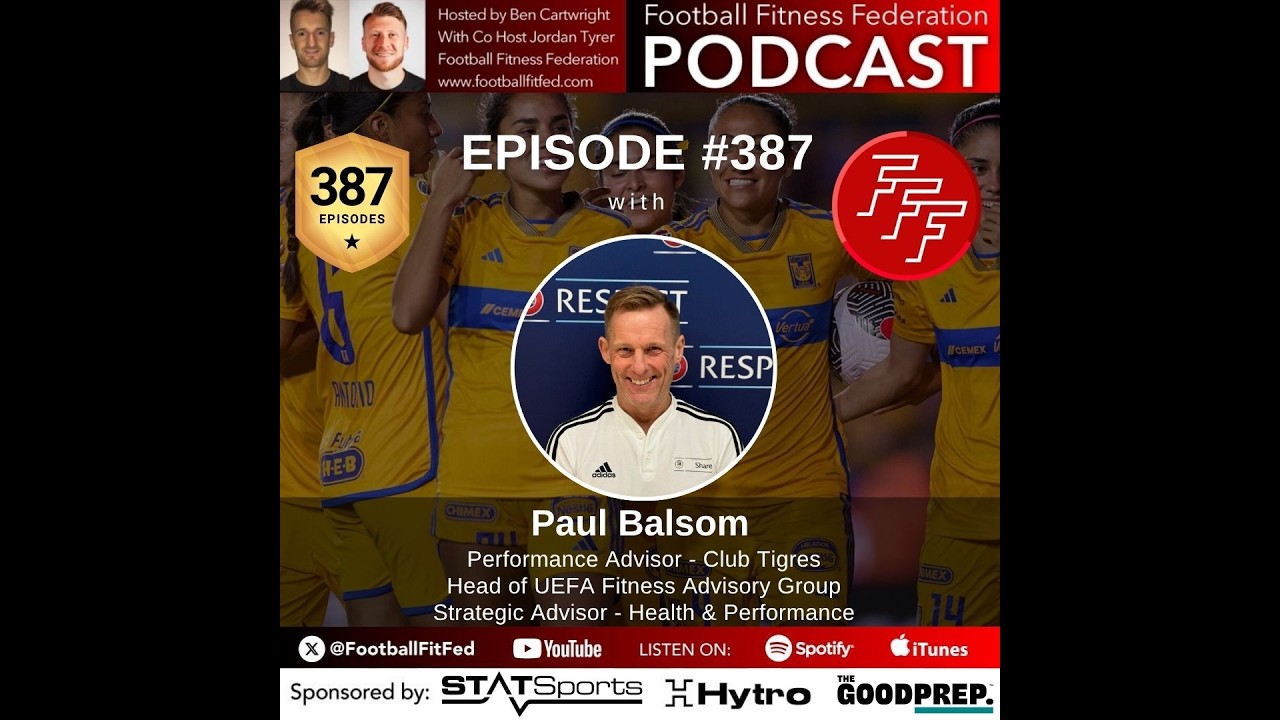
#387 "Lessons from UEFA's Fitness Expert"
Football Fitness
Overview
This podcast episode features Paul Bson, UEFA's Head of the Fitness Advisory Group, discussing the evolution of football fitness and performance. Bson shares his extensive career journey, from early sports science in the 1980s to his current roles. He highlights the increasing pressures on modern players due to social media and intense scrutiny, contrasting it with the past. The conversation delves into the advancements in technology and data analytics, the changing landscape of job titles within performance departments, the crucial difference between coaching and instructing, and the growing importance of game understanding for fitness professionals. Bson also touches upon the rise of AI in sports, its potential to enhance real-time analysis and injury prediction, and the complex issue of private coaching and its integration with club structures. The episode emphasizes the need for continuous professional development, effective communication, and a player-centered approach in football performance.
This summary expires in 30 days. Save it permanently with flashcards, quizzes & AI chat.
Chapters
- •Paul Bson, UEFA's Head of Fitness Advisory Group, is the guest.
- •Bson's career began in sports science in the mid-80s, with studies in the UK and USA.
- •He completed his PhD in exercise physiology in Stockholm.
- •His experience includes working with the Swedish FA, Swedish national team, and Premier League clubs like Bolton, Southampton, and Leicester City.
- •Currently, he also works with Tigres in Mexico and UEFA.
- •Early 80s relied on books and research articles; technology like heart rate monitors was rudimentary.
- •The core principles of being on the grass and communicating with coaches and players remain.
- •Technology and data now facilitate insights but must be translated to on-pitch actions.
- •Gaining player trust and effective communication are timeless necessities.
- •Players today face multiplied stresses: physical, mental, and social media pressure.
- •This pressure may lead to players finishing careers earlier, not later.
- •Every decision and action on the pitch is intensely scrutinized, leading to immense stress.
- •Players receive significant online abuse, even death threats, for mistakes.
- •Technology has tremendously advanced player tracking and physiological monitoring.
- •Data collection is extensive, but its effective use depends on understanding and multidisciplinary team collaboration.
- •A player-centered approach is crucial for leveraging data to impact performance.
- •The balance between data insights and practical application for coaches is key.
- •There's a trend towards specialization, with many fitness coaches not having 'fitness' in their title (e.g., 'performance').
- •The proliferation of titles like 'deceleration coach' might be excessive.
- •Job titles can sometimes be influenced by legal or previous employment reasons.
- •The distinction between 'coaching' (on-field, active intervention) and 'instructing' (less direct) is important.
- •Coaching involves adapting drills, correcting errors, and providing feedback.
- •Instructing is more about setting up and letting drills run.
- •Fitness coaches must understand the boundaries of their role to avoid encroaching on football coaches' territory.
- •The 'art of coaching' develops with experience and understanding of player needs and game context.
- •Fitness strategies should align with the head coach's playing style.
- •The short tenure of head coaches creates challenges for long-term fitness planning.
- •Understanding different roles (analyst, physio) is vital for coaches.
- •Continuous professional development and open communication within multidisciplinary teams are essential.
- •AI can significantly speed up processes and improve efficiency in data analysis and reporting.
- •The next frontier is using AI for real-time insights during training and matches.
- •AI can help identify patterns, potential issues like 'team collapse,' and flag deviations from predicted player behavior.
- •AI insights can inform human intervention and communication with coaches, but final decisions remain human.
- •AI, combined with technology like scal tracking, can aid in injury prediction.
- •It assists in risk assessment and asset protection by providing data beyond visual observation.
- •Decisions to substitute players based on data (e.g., knee angle) are complex, balancing risk and immediate game needs.
- •This is essentially risk management, where data informs difficult decisions.
- •Private coaches and support staff are increasingly common, from youth levels to elite players.
- •Reasons include dissatisfaction with club services, desire for individualized attention, or consistency.
- •The biggest challenge is load management and lack of awareness of external training.
- •Clubs are adopting strategies like sharing load data and allowing external coaches access to training.
- •The trend of private chefs and physios is generally positive if collaborative.
- •Extra fitness work with private coaches requires careful monitoring to avoid overloading players.
- •Lack of qualifications and insurance among some external providers is a significant concern.
- •Education for players, agents, and coaches on best practices and risks is crucial.
- •Education is key to improving understanding and collaboration across all areas of football performance.
- •UEFA is working to integrate fitness content into coaching diplomas to bridge gaps.
- •A new UEFA Fitness LinkedIn page is launching soon.
- •Paul Bson is available on LinkedIn.
Key Takeaways
- 1Modern football players face unprecedented physical and mental pressures, amplified by social media scrutiny.
- 2While technology and data have revolutionized performance analysis, the fundamental need for effective communication and player trust remains.
- 3The landscape of performance departments is evolving with increased specialization and new job titles, blurring lines between roles.
- 4Distinguishing between 'coaching' (active intervention) and 'instructing' is vital for fitness professionals to maximize their impact.
- 5AI offers significant potential to enhance efficiency, provide real-time insights, and aid in injury prediction, but human oversight is essential.
- 6The rise of private coaches presents both opportunities for individualized development and challenges in load management and oversight.
- 7Continuous professional development, open communication, and a player-centered approach are critical for success in football performance.
- 8Education is paramount for all stakeholders—players, coaches, and support staff—to navigate the complexities of modern football performance and mitigate risks.