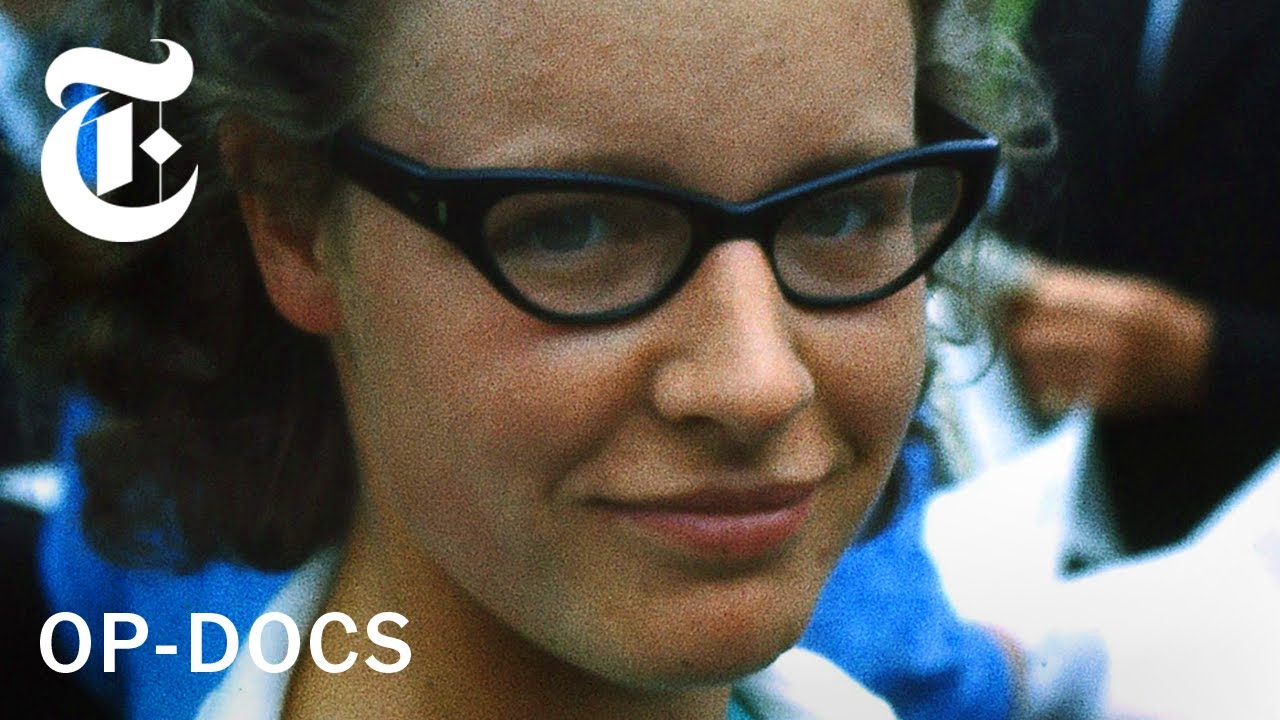
16:17
I Changed Astronomy Forever. He Won the Nobel Prize for It. | 'Almost Famous' by Op-Docs
New York Times Opinion
Overview
This video chronicles the groundbreaking discovery of pulsars by Jocelyn Bell Burnell, highlighting the significant challenges she faced as a woman in a male-dominated scientific field during the 1960s. Despite her pivotal role in identifying these celestial objects, the narrative emphasizes the societal biases and systemic sexism that led to her being overlooked for the Nobel Prize awarded for the discovery. The story also touches upon Bell Burnell's personal journey, her resilience in the face of impostor syndrome and discrimination, and her later advocacy for women and minorities in science, ultimately becoming a celebrated role model.
How was this?
Save this permanently with flashcards, quizzes, and AI chat
Chapters
- Jocelyn Bell Burnell aspired to be an astronomer from a young age but lacked visible female role models.
- She encountered early gender discrimination in school, being directed to domestic science instead of the science lab.
- Her parents' Quaker beliefs, emphasizing the value of education for all, supported her pursuit of science.
- Bell Burnell's early exposure to astronomy books, particularly Fred Hoyle's work, solidified her desire to become a radio astronomer.
This chapter establishes the societal context and personal drive that shaped Bell Burnell's early scientific journey, illustrating the systemic barriers she had to overcome.
Being sent to cookery class instead of the science lab on the first day of secondary school.
- At the University of Glasgow, she was the only woman in a class of 50, facing harassment like whistling and cat-calling.
- Despite initial self-doubt and impostor syndrome, she applied to and was accepted by Cambridge University.
- She resolved to work exceptionally hard to combat feelings of inadequacy and the fear of being dismissed from Cambridge.
This section details the persistent sexism Bell Burnell faced in higher education and her internal strategies for coping with these challenges and the academic environment.
The tradition of male students whistling and banging desks when a woman entered the lecture theater at the University of Glasgow.
- Bell Burnell was responsible for building a specific type of radio telescope, an 'agricultural frame' array, which took two years with a small team.
- She operated the telescope and analyzed the vast amounts of data generated, which involved meticulously reviewing daily charts.
- Her primary research goal was to identify quasars, a then-hot topic in astrophysics.
This chapter explains the practical, labor-intensive aspects of early radio astronomy research and Bell Burnell's direct, hands-on role in the project.
The description of the telescope construction involving a 'caterpillar of people carrying cables' and the daily analysis of 'almost 100 foot a day' of chart paper.
- While analyzing data, Bell Burnell detected an anomalous, regular signal that did not match known celestial objects or interference.
- Her supervisor, Tony Hewish, initially dismissed the signal as interference, but Bell Burnell's persistent observations and data collection proved otherwise.
- She discovered a series of regular pulses, one and a third seconds apart, which led to a new research direction.
- Further observations confirmed the existence of these unusual signals, which were later identified as pulsars.
This is the core scientific discovery, illustrating the process of identifying an unknown phenomenon through careful observation and overcoming initial skepticism.
Observing a 'string of pulses one and a third seconds apart' on the chart recordings that defied initial explanations.
- Bell Burnell stumbled upon a discussion about publishing the discovery, realizing she was excluded from key decisions.
- The discovery was announced at a Cambridge colloquium, with prominent astronomers like Fred Hoyle present.
- While the scientific community was intrigued, the popular press focused on Bell Burnell's appearance and personal life rather than her scientific contribution.
- She was relegated to the 'human interest' aspect of the story, asked about her marital status and physical measurements, diminishing her role as a scientist.
This chapter critically examines the unequal recognition for the pulsar discovery, highlighting how societal biases and sexism overshadowed Bell Burnell's scientific achievement in public perception.
Press photographers asking Bell Burnell to undo buttons on her blouse or inquiring about her bust, waist, and hip measurements.
- In 1974, the Nobel Prize for the discovery of pulsars was awarded jointly to Tony Hewish and Martin Ryle, excluding Bell Burnell.
- Bell Burnell, who was leaving Cambridge for personal reasons, felt that her status as a graduate student and a woman contributed to her being overlooked.
- She expressed pleasure that pulsars were recognized as Nobel-worthy, despite her personal exclusion.
- Bell Burnell continued a successful career in various fields of astronomy, finding fulfillment in interesting work and collaborations, and later received other prestigious awards like the Breakthrough Prize.
This section addresses the controversial Nobel Prize decision and Bell Burnell's perspective on it, emphasizing her continued dedication to science and her eventual broader recognition.
The analogy of a 'skipper and crew' used to differentiate the roles of conceiving the discovery versus executing the observation and analysis.
- Bell Burnell became a prominent advocate for women and minority groups in science, aiming to provide opportunities she was denied.
- She used a significant prize award ($3 million Breakthrough Prize) to establish studentships for underrepresented groups in physics.
- She embraces her role as a visible and positive role model for young women interested in STEM fields.
- Her journey demonstrates the importance of perseverance, the impact of systemic bias, and the power of mentorship.
This final chapter focuses on Bell Burnell's lasting impact beyond her initial discovery, showcasing her commitment to fostering a more inclusive scientific community.
Using a $3 million prize to fund research studentships for minority students through the Institute of Physics.
Key takeaways
- Scientific discovery often involves meticulous, painstaking work and the ability to identify anomalies in vast datasets.
- Societal biases, particularly sexism, can significantly hinder recognition and career progression for talented individuals, even when their contributions are fundamental.
- Overcoming impostor syndrome requires self-awareness and a commitment to diligent work, rather than letting self-doubt dictate one's path.
- The process of scientific inquiry involves collaboration, but also requires clear attribution of individual contributions.
- True scientific impact extends beyond initial discoveries to inspiring future generations and advocating for inclusivity.
- Personal resilience and a clear vision of one's goals are crucial for navigating challenging academic and professional environments.
- The popular media's framing of scientists can perpetuate harmful stereotypes, often focusing on superficial aspects rather than intellectual achievements.
Key terms
PulsarRadio astronomerQuasarRadio telescopeImpostor syndromeData analysisAstrophysicsColloquiumNobel PrizeBreakthrough Prize
Test your understanding
- What were the primary challenges Jocelyn Bell Burnell faced as a woman pursuing astronomy in the 1960s?
- How did Bell Burnell's approach to data analysis lead to the discovery of pulsars?
- Why is it significant that the Nobel Prize for pulsars was awarded to Hewish and Ryle, but not Bell Burnell?
- What strategies did Bell Burnell employ to cope with impostor syndrome and the hostile environment at Cambridge?
- How has Jocelyn Bell Burnell used her later career and recognition to advocate for underrepresented groups in science?