18:18
Endocrine System Part 1
Anne Jacobs
Overview
This video introduces the endocrine system, explaining its role in long-distance communication within the body using hormones. It contrasts the endocrine system with the nervous system, highlighting differences in speed, duration, and distance of signaling. The video then details key endocrine organs, focusing on the hypothalamus and pituitary gland as a central control system. It explains the distinct structures and functions of the anterior and posterior pituitary and how they are regulated by the hypothalamus through neural and hormonal pathways, illustrating these with examples like the thyroid and adrenal glands.
How was this?
Save this permanently with flashcards, quizzes, and AI chat
Chapters
- The endocrine system uses hormones to communicate signals throughout the body, coordinating responses.
- Hormones are released into the bloodstream and travel to target cells, enabling long-distance communication.
- Unlike the nervous system's rapid, short-distance signaling via neurotransmitters, the endocrine system provides slower but longer-lasting effects.
- Many organs can produce hormones, but traditionally recognized endocrine organs are specialized for this function.
Understanding the endocrine system is crucial because it regulates many vital bodily functions, from metabolism and growth to mood and reproduction, often in conjunction with the nervous system.
Hormones can travel from the brain to affect organs in the pelvic cavity, demonstrating the long-distance communication capability.
- The hypothalamus and pituitary gland in the brain act as a master control system for the endocrine system.
- Other endocrine organs include the pineal gland, thyroid gland, parathyroid glands, thymus gland, adrenal glands, pancreas, testes, and ovaries.
- Some organs, like the kidneys and heart, can also produce hormones but are not primarily considered endocrine organs.
- The pancreas has both endocrine and exocrine functions, while the thymus's primary role is in the immune system.
Recognizing the locations and primary functions of these organs helps in understanding how different parts of the body are interconnected through hormonal signaling.
The adrenal glands are named for their location 'above' (ad-) the 'kidney' (renal).
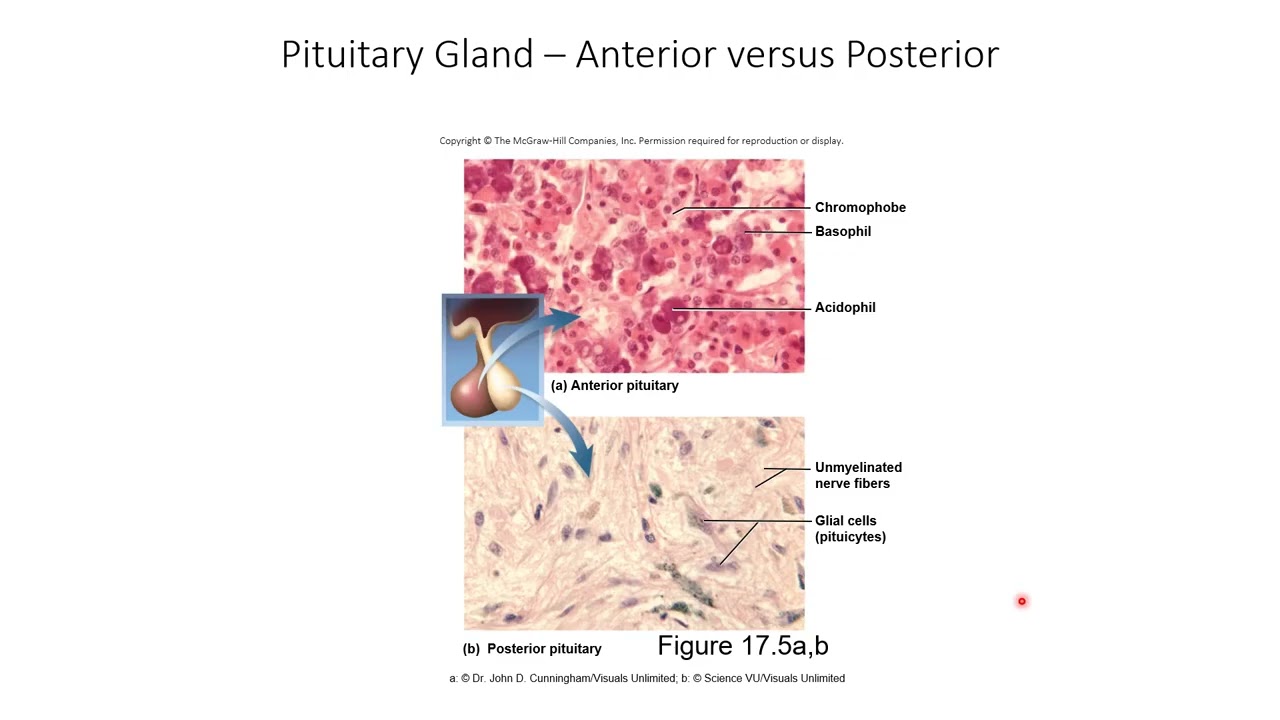
- The pituitary gland, located below the hypothalamus, is divided into the anterior and posterior pituitary.
- The posterior pituitary is composed of nervous tissue and is an extension of the hypothalamus, storing hormones produced in the hypothalamus.
- The anterior pituitary is glandular tissue and is regulated by hormones released from the hypothalamus into a specialized blood vessel network called the hypophyseal portal system.
- This interconnectedness makes the hypothalamus and anterior pituitary a central regulatory hub for many endocrine functions.
The unique structural and functional relationship between the hypothalamus and the pituitary gland explains how the brain exerts significant control over many other endocrine glands and bodily processes.
Neurons originating in the hypothalamus extend axons down to the posterior pituitary, where hormones are synthesized and stored.
- The hypothalamus communicates with the anterior pituitary using releasing hormones (RH) that stimulate hormone secretion, or inhibiting hormones (IH) that suppress it.
- Examples include thyrotropin-releasing hormone (TRH) from the hypothalamus stimulating thyroid-stimulating hormone (TSH) from the anterior pituitary, which then acts on the thyroid gland.
- Other examples involve gonadotropin-releasing hormone (GnRH) acting on the gonads, and corticotropin-releasing hormone (CRH) acting on the adrenal cortex.
- Growth hormone-releasing hormone (GHRH) stimulates the anterior pituitary to release growth hormone, which acts directly on body tissues.
- The hypothalamus typically inhibits prolactin release via prolactin-inhibiting hormone (PIH).
Understanding these hierarchical control pathways, like the HPA axis (Hypothalamus-Pituitary-Adrenal), is fundamental to grasping how the body maintains homeostasis and responds to various stimuli.
Thyrotropin-releasing hormone (TRH) from the hypothalamus signals the anterior pituitary to release thyroid-stimulating hormone (TSH), which then tells the thyroid gland to produce thyroid hormone (TH).
Key takeaways
- The endocrine system is a vital communication network that uses hormones traveling through the bloodstream to regulate bodily functions over long distances.
- The nervous system and endocrine system share communication roles but differ significantly in speed, duration, and signaling distance.
- The hypothalamus and pituitary gland form a crucial control center for much of the endocrine system's activity.
- The anterior and posterior pituitary glands have distinct embryological origins and tissue types, leading to different mechanisms of hormone release.
- Hormonal regulation often involves a cascade, where the hypothalamus influences the pituitary, which in turn influences other endocrine glands.
- Understanding the specific hormones and their target organs is key to comprehending complex physiological processes.
- While certain organs are primarily endocrine, others can also produce hormones, highlighting the widespread nature of hormonal signaling.
Key terms
Endocrine SystemHormoneBloodstreamTarget CellsNervous SystemNeurotransmitterHypothalamusPituitary GlandAnterior PituitaryPosterior PituitaryHypophyseal Portal SystemReleasing Hormone (RH)Inhibiting Hormone (IH)
Test your understanding
- How does the endocrine system's communication differ from the nervous system's in terms of speed and distance?
- What are the primary roles of the hypothalamus and pituitary gland within the endocrine system?
- Explain the structural and functional differences between the anterior and posterior pituitary glands.
- Describe the mechanism by which the hypothalamus controls the anterior pituitary, including the role of the hypophyseal portal system.
- Provide an example of a hormonal cascade initiated by the hypothalamus and involving the anterior pituitary and another endocrine gland.